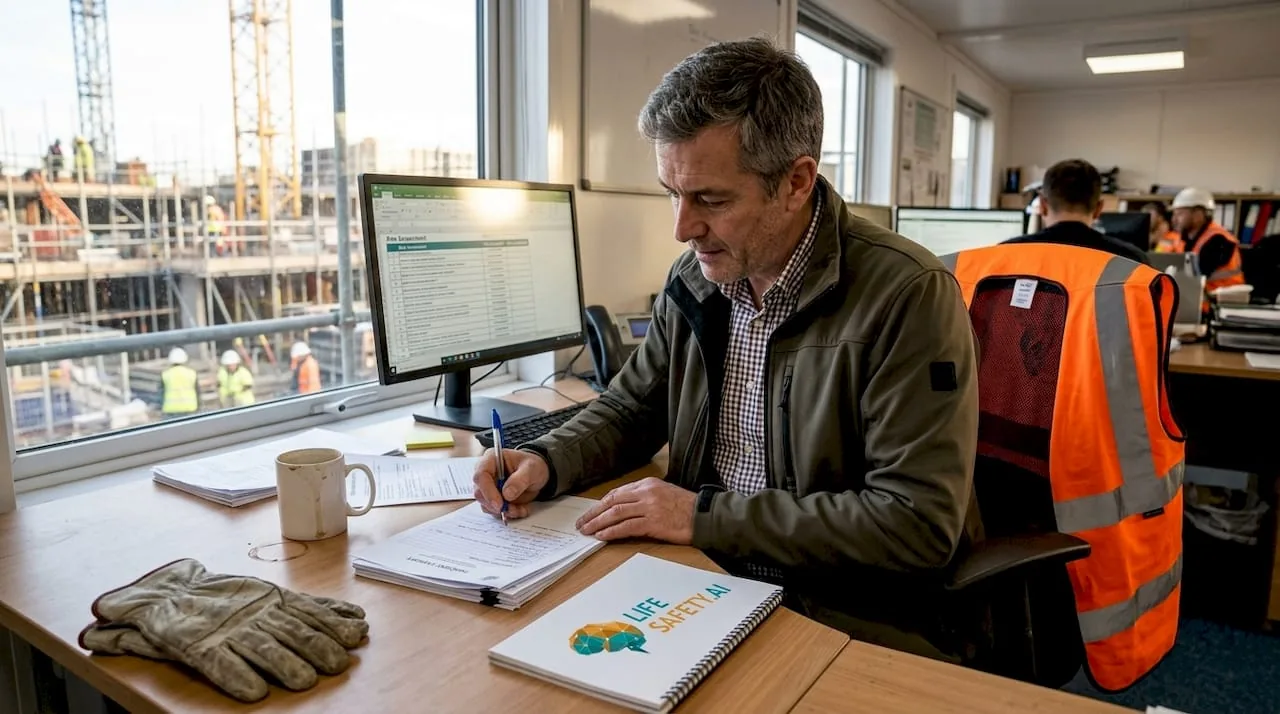
Why automate safety management for compliance gains
Why automate safety management for compliance gains
TL;DR:
- Traditional safety management is slow, fragmented, and reactive, increasing organisational risk.
- Automation enhances hazard detection, compliance, and incident response, yielding significant efficiency gains.
- Effective automation requires ongoing oversight, proper training, and integration into a strong safety culture.
Construction and manufacturing remain the UK’s most hazardous sectors. With 35 fatal injuries in construction recorded in 2024/25 alone, representing 28% of all workplace fatalities, and manufacturing accounting for 51,000 non-fatal injuries over three years, the pressure on health and safety officers has never been greater. Traditional, paper-based safety management simply cannot keep pace with the scale of risk. Automation offers a genuine shift: faster reporting, stronger compliance, and proactive hazard identification. In this article, we cover the core benefits of safety automation, how it aligns with UK regulations, what real organisations have achieved, and the pitfalls to avoid along the way.
Table of Contents
- The problem with traditional safety management
- How automation transforms safety management
- Automation in action: Real-world impact and outcomes
- Challenges, risks and best practices when automating
- Why automation should support, not replace, your safety culture
- Explore smarter safety management solutions
- Frequently asked questions
Key Takeaways
| Point | Details |
|---|---|
| UK injury rates are high | Manufacturing and construction face serious risks that demand better safety management. |
| Automation drives real results | Case studies show dramatic reductions in injuries, admin burden, and compliance gaps when using automation. |
| Tech supports—not replaces—people | Human oversight paired with smart tools delivers the best safety outcomes, not technology alone. |
| Best practices are key | Success depends on combining automation with culture, governance, and ongoing engagement. |
The problem with traditional safety management
Manual safety processes have served UK workplaces for decades, but they carry significant structural weaknesses. Paper forms get lost. Spreadsheets go out of date. Follow-up actions fall through the gaps when a site manager is pulled in three directions at once. The result is a reactive approach: teams respond to incidents after they occur rather than preventing them in the first place.
This matters enormously in high-risk environments. When a near-miss goes unrecorded because the reporting process is cumbersome, a pattern of hazard goes undetected. When audit trails are fragmented across different folders and filing cabinets, demonstrating compliance during an HSE inspection becomes a stressful scramble. These are not hypothetical scenarios. They are the lived reality for many health and safety officers across UK construction and manufacturing sites today.
“UK manufacturing reported 51,000 non-fatal injuries over three years, while construction recorded 35 fatal injuries in 2024/25, the highest sector share at 28% of all workplace fatalities.”
The consequences of these gaps are serious. Missed hazards escalate into reportable incidents under RIDDOR (Reporting of Injuries, Diseases and Dangerous Occurrences Regulations). Delayed reporting exposes organisations to regulatory penalties. Incomplete data trails make it nearly impossible to learn from incidents and improve. Efforts to reduce site injuries are undermined when the very systems meant to capture safety data are unreliable.
Here are the most common pain points health and safety officers tell us they face with traditional processes:
- Slow incident reporting, often completed hours or days after the event
- Incomplete hazard records due to paper forms being misplaced or illegible
- Fragmented communication between site teams, managers, and head office
- Missed follow-up actions with no automated reminder or escalation system
- Difficulty demonstrating compliance when operational safety guidelines require thorough documentation
- Reactive rather than proactive risk management, responding to harm rather than preventing it
These are not minor inconveniences. They represent genuine organisational risk, both in human and financial terms. The case for change is clear.
How automation transforms safety management
Recognising these barriers, automation offers a fundamental shift in approach. Rather than relying on individuals to remember, record, and chase up safety tasks manually, software and AI handle the routine work automatically, freeing your team to focus on judgment and leadership.
The most impactful processes that automation addresses include hazard identification through task analysis, real-time monitoring via IoT sensors, automated audit checklists, predictive alerts based on data patterns, and compliance verification against UK regulations. AI in safety management now enables systems to flag potential hazards before they cause harm, a capability that was simply not available with manual approaches.
Critically, modern platforms apply UK-specific frameworks automatically. AI software applies regulations including CDM 2015 (Construction Design and Management Regulations) and WAHR 2005 (Work at Height Regulations), integrating compliance checks directly into daily workflows. This means your team is not separately consulting legislation; the system guides them through compliant processes as standard.
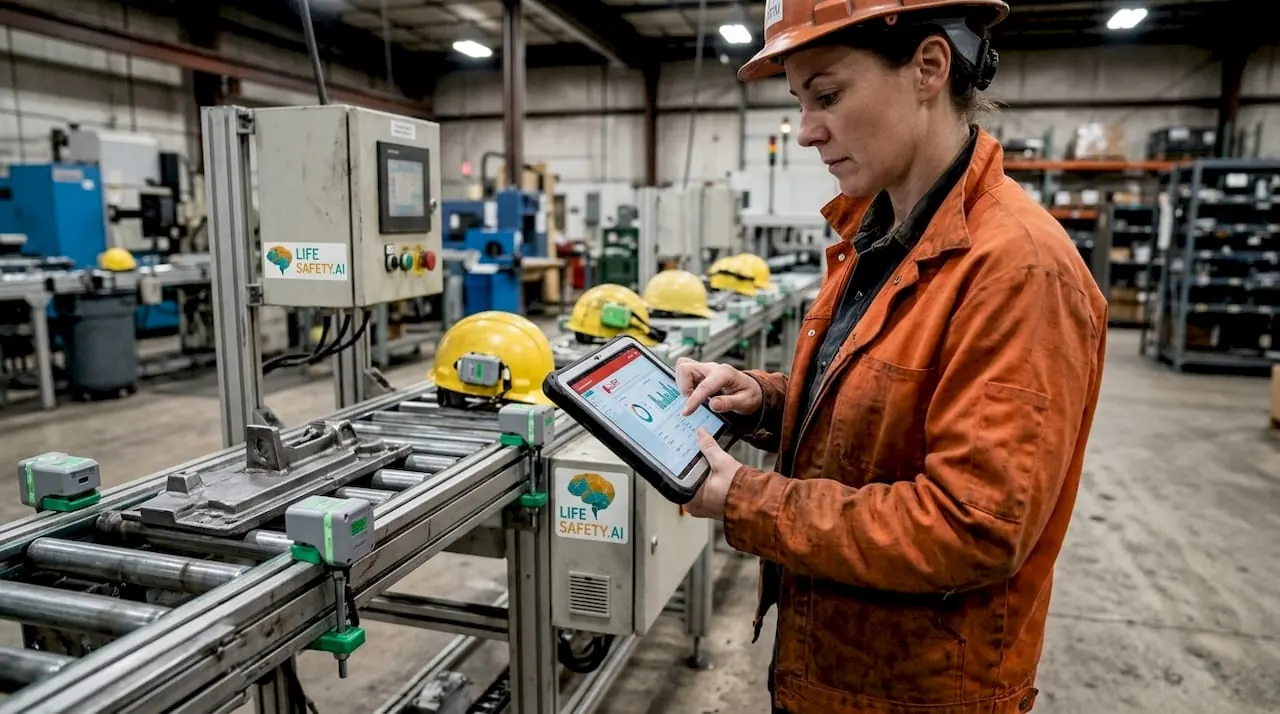
IoT integration adds another layer. Sensors on plant, equipment, and personal protective equipment feed live data into safety dashboards, enabling real-time monitoring of site conditions. Site safety technology such as radio and sensor systems now connects directly with software platforms, creating a joined-up picture of risk across an entire site. AI-powered PPE detection is one example of how visual monitoring can automate compliance checks that would otherwise require constant manual supervision.
| Safety function | Traditional method | Automated approach |
|---|---|---|
| Incident reporting | Paper form, hours or days later | Mobile logging, real-time |
| Hazard identification | Manual walkthrough, periodic | Continuous sensor and AI monitoring |
| Audit trail | Physical files, incomplete | Digital, timestamped, searchable |
| Regulatory compliance | Manual cross-referencing | Automated checklist aligned to CDM/WAHR |
| Response speed | Dependent on individual availability | Instant alert and escalation |
Pro Tip: When evaluating automation platforms, look specifically for built-in alignment to UK regulatory frameworks such as CDM 2015 and RIDDOR. A system that requires you to manually configure compliance rules adds complexity and risk rather than reducing it.
Automation in action: Real-world impact and outcomes
But what does this actually look like in practice? Here are tangible results from UK organisations that have made the shift to automated safety management.
The numbers are striking. Case study results from leading UK organisations show: Eurovia achieved a 90% reduction in administrative time, Crossrail cut safety management costs by 60%, Strata Homes increased data collection by 65%, and Mitie recorded a 14% decrease in time lost to injury alongside a 140% increase in hazard reporting.
These are not marginal improvements. They represent a fundamental change in how safety is managed, measured, and improved. The 140% increase in hazard reporting at Mitie is particularly telling: automation does not just speed up existing processes, it surfaces hazards that were previously going unrecorded entirely.
Automated safety inspections play a significant role in these results. When inspections are guided by digital checklists, completed on mobile devices, and automatically logged to a central system, the quality and consistency of data improves dramatically. Drone technology in safety and remote monitoring extend this further, enabling inspection of areas that are difficult or dangerous to access manually.
| Metric | Manual approach | Automated approach |
|---|---|---|
| Admin time per incident | High, often 2 to 4 hours | Reduced by up to 90% |
| Safety management cost | Baseline | Reduced by up to 60% |
| Hazard reports filed | Limited by manual effort | Increased by up to 140% |
| Lost time injury rate | Higher | Reduced by up to 14% |
Here is a typical sequence of improvements organisations experience after introducing automation:
- Immediate reduction in reporting time as mobile logging replaces paper forms
- Improved data quality as structured digital inputs replace free-text paper records
- Faster hazard identification as patterns emerge from centralised data
- Stronger audit readiness as complete, timestamped records are always accessible
- Lower incident rates as proactive alerts prevent escalation of near-misses
These outcomes are achievable. The evidence from UK organisations is consistent and compelling.
Challenges, risks and best practices when automating
Despite the clear benefits, automation is not without potential stumbling blocks. Understanding these risks is essential for any health and safety officer planning a rollout.
The most significant concern is complacency. When a system is doing much of the monitoring work, there is a genuine risk that human attention drifts. Over-reliance on automation can erode the situational awareness that experienced safety professionals bring to a site. Complex automated systems also introduce new categories of hazard: software failures, sensor malfunctions, and connectivity issues can create blind spots if teams assume the technology is always working correctly.
Automation in high-hazard environments requires human oversight and transparency. AI tools must be explainable: your team needs to understand why an alert was triggered, not just that it was. This is particularly important under UK health and safety law, where the duty of care rests with people, not systems.
Common mistakes to avoid during an automation rollout:
- Treating automation as a one-off project rather than an ongoing programme requiring review
- Insufficient training for frontline workers who interact with the system daily
- Ignoring edge cases where the system may not perform as expected
- Removing human checkpoints from critical decision-making processes
- Failing to test the system under realistic site conditions before full deployment
Best practice centres on governance. Establish clear ownership for the platform, schedule regular reviews of system performance, and maintain human-in-the-loop processes for high-risk decisions. In practical terms, that means supervisors still verify serious alerts, managers still review trends, and competent persons still sign off critical controls. Automation should strengthen your management system, not dilute accountability.
It is also important to consider data quality and legal defensibility. If your organisation is relying on automated records to demonstrate compliance during an HSE investigation, those records must be complete, timestamped, and traceable. This is especially relevant where incidents may trigger RIDDOR reporting, contractor coordination duties under CDM 2015, or evidence requirements linked to the Building Safety Act on higher-risk projects.
A robust rollout plan should include:
- Baseline mapping of current safety processes, delays, and compliance gaps
- Configuration against UK legal duties, including reporting thresholds, inspection schedules, and escalation rules
- Pilot deployment on a live site or operational area before wider rollout
- Training and competency checks for supervisors, operatives, and administrators
- Performance review using measurable indicators such as reporting speed, action closure rates, and audit findings
Organisations that approach automation with this level of discipline are far more likely to achieve sustainable compliance gains rather than short-lived efficiency wins.
Why automation should support, not replace, your safety culture
Even the best platform cannot create a positive safety culture on its own. Culture is built through leadership, trust, communication, and consistent action. Automation can reinforce those behaviours, but it cannot substitute for them.
This distinction matters because some organisations make the mistake of treating software as the solution rather than as an enabler. A dashboard may show open actions, but it cannot by itself create accountability. An AI model may flag unsafe behaviour, but it cannot replace a supervisor who understands the pressures, constraints, and realities of a live construction or manufacturing environment.
Used properly, however, automation can make a strong safety culture more visible and more effective. It can reduce friction in reporting, encourage near-miss capture, and ensure corrective actions are not forgotten. It can also help leaders spot trends earlier and intervene before a problem becomes a serious incident.
- Workers are more likely to report hazards when the process is quick and accessible on mobile devices
- Managers gain clearer visibility of recurring risks across multiple sites or shifts
- Safety teams can focus on prevention rather than spending disproportionate time on administration
- Leadership decisions improve when they are based on live, structured evidence rather than incomplete anecdotal reports
For UK duty holders, this people-first approach is essential. The legal framework does not permit responsibility to be delegated to technology. Employers, principal contractors, site managers, and accountable persons still retain their statutory duties. Automation should therefore be positioned as a support mechanism that helps competent people discharge those duties more effectively.
The strongest results tend to come from organisations that combine digital systems with visible leadership behaviours:
- Leaders actively review safety data and discuss it in operational meetings
- Supervisors respond quickly to reports so workers see that raising concerns leads to action
- Teams are trained not just on the tool but on why the process matters
- Near-miss reporting is encouraged without blame, so learning happens before injury occurs
In other words, automation works best where there is already a commitment to learning, accountability, and prevention. It amplifies good practice. It does not replace it.
Explore smarter safety management solutions
The case for automation is no longer theoretical. In high-risk sectors where compliance demands are rising and operational complexity is increasing, manual systems are becoming harder to defend. Digital safety management offers a practical route to faster reporting, stronger audit trails, better visibility of risk, and more consistent compliance with UK regulations.
For organisations managing multiple contractors, dispersed sites, or high volumes of inspections, the gains can be substantial. Automated workflows help ensure incidents are captured promptly, actions are tracked to completion, and evidence is available when regulators, clients, or internal auditors ask for it. That is particularly valuable where obligations under RIDDOR, CDM 2015, and the Building Safety Act require timely, defensible records.
LifeSafety.ai supports this shift with tools designed for real operational environments. From digital safety inspections and structured action tracking to AI-assisted monitoring and compliance workflows, the platform helps teams move from reactive administration to proactive risk management.
If you are reviewing your current approach, focus on the areas where automation can deliver immediate value:
- Incident and near-miss reporting that can be completed in real time on site
- Inspection programmes with standardised checklists and automatic evidence capture
- Corrective action management with reminders, escalation, and closure tracking
- Compliance dashboards that show status across projects, contractors, and locations
- Audit-ready records that reduce the scramble before HSE visits or client reviews
The goal is not simply to digitise paperwork. It is to create a safer, more responsive management system that helps your organisation prevent harm and demonstrate control. That is where automation delivers its real compliance gains.
Frequently asked questions
What does automated safety management actually include?
It typically includes digital incident reporting, mobile inspections, automated reminders, corrective action tracking, sensor or camera integrations, analytics dashboards, and compliance workflows aligned to UK regulations. More advanced systems may also use AI to identify patterns, flag high-risk conditions, or support PPE and behavioural monitoring.
Can automation help with RIDDOR compliance?
Yes. Automation can improve the speed and accuracy of incident capture, preserve evidence, and help teams identify whether an event may meet RIDDOR reporting thresholds. It does not replace competent judgement, but it can significantly reduce delays and missing information that often undermine compliant reporting.
Is automation suitable for construction sites as well as manufacturing facilities?
Yes. In construction, automation can support inspections, contractor coordination, permit controls, and compliance with CDM 2015. In manufacturing, it can help with machinery safety, behavioural monitoring, maintenance alerts, and incident analysis. The key is configuring the system to the operational risks and legal duties of each environment.
Will automation reduce the need for safety professionals?
No. It should reduce administrative burden, not professional oversight. Safety professionals remain essential for interpreting context, making decisions, engaging workers, and ensuring legal duties are met. The best systems free competent people to spend more time on prevention and leadership.
What is the biggest risk when introducing automation?
The biggest risk is over-reliance. If teams assume the system is always correct or always functioning, they may miss failures, blind spots, or unusual conditions. That is why governance, testing, training, and human review remain critical parts of any rollout.
How should organisations start?
Start with a defined problem rather than a technology wish list. Identify where delays, missing records, repeated hazards, or audit weaknesses are occurring. Then pilot automation in those areas, measure the results, and expand in a controlled way. This approach is usually more effective than attempting a full transformation all at once.
Related Articles

HSE for Data Centres
Data-centre HSE is electrical plant, COSHH, permits and night-shift people risk. LifeSafety.ai puts UK compliance and live dashboards in one system.
Risk Assessment vs Method Statement (RAMS): Key Differences
A risk assessment identifies what could cause harm; a method statement sets out how the work will be done safely. Here is how they differ, what UK law actually requires, and when you need both.

Employee Incident Report form: RIDDOR-Ready Template Guide
Ensure workplace safety with our RIDDOR-ready employee incident report form. Download the template and streamline your incident reporting today!