
Top safety compliance standards every UK business must know
Top safety compliance standards every UK business must know
TL;DR:
- UK health and safety law primarily relies on the Health and Safety at Work etc. Act 1974, with strong emphasis on risk assessment and professional judgement.
- Sector-specific regulations such as CDM 2015, PUWER, COSHH, and LOLER impose practical duties on planning, equipment, and hazardous work.
- A proactive safety culture, supported by clear records, worker engagement, and digital tools, is essential for effective compliance and incident prevention.
Navigating overlapping health and safety obligations is one of the most demanding responsibilities a safety officer faces in the UK. With 124 worker fatalities in 2024/25 across Great Britain, 35 of which occurred in construction alone, the stakes are higher than ever. Whether you operate on a construction site, a manufacturing floor, or both, staying ahead of the regulatory landscape is not optional. This article walks you through the core legislation, sector-specific regulations, and supporting standards that form the backbone of UK health and safety compliance, helping you make informed decisions and build a genuinely safer workplace.
Table of Contents
- Core health and safety legislation: the foundation
- Sector-critical regulations: construction and work equipment
- Specific controls: hazardous substances, lifting, and working at height
- Supporting standards: risk management, PPE, and monitoring
- Why UK compliance means mindset, not just checklists
- Streamline compliance with the right digital tools
- Frequently asked questions
Key Takeaways
| Point | Details |
|---|---|
| Legal foundation | The Health and Safety at Work etc. Act 1974 (HSWA) is the backbone of all workplace safety compliance in the UK. |
| Sector-specific standards | Regulations like CDM 2015, PUWER, and COSHH define critical industry-specific duties for construction and manufacturing. |
| Practical compliance steps | Competency, vigilant risk assessment, and thorough documentation are essential daily compliance practices. |
| Hierarchy of controls | Eliminating hazards is always preferred, with PPE as a last resort after all other measures. |
| Digital efficiency | Adopting digital safety management tools can streamline compliance and reduce administrative burden. |
Core health and safety legislation: the foundation
Every compliance obligation you hold traces back to a single piece of legislation. The Health and Safety at Work etc. Act 1974 (HSWA) is the primary statute governing workplace safety across all industries in Great Britain. It places a duty on employers to ensure, so far as is reasonably practicable, the health, safety, and welfare of all employees and anyone else who may be affected by work activities.
The phrase “reasonably practicable” is central to how UK law works. It means you must weigh the level of risk against the cost, time, and effort needed to address it. This is not a loophole. It is an expectation that you apply genuine professional judgement rather than simply following a script. Understanding the foundational safety regulations behind HSWA is therefore critical before engaging with any sector-specific framework.
As a health and safety officer, your core duties under HSWA include:
- Conducting and reviewing suitable risk assessments
- Establishing and communicating safe systems of work
- Providing adequate training, information, and supervision
- Ensuring safe plant, equipment, and environments
- Cooperating with HSE inspectors and enforcement authorities
HSWA also extends responsibilities to designers, suppliers, and those in control of premises, not just direct employers. This broad application is what makes it the legal backbone for all further regulations in the UK. In higher-risk environments, this foundation also interacts with reporting duties under RIDDOR, and in certain built environment contexts it supports wider governance expectations under the Building Safety Act, particularly where duty holders must demonstrate competence, accountability, and robust risk management.
“The employer must ensure that the workplace is safe and without risks to health, so far as is reasonably practicable.” Health and Safety at Work etc. Act 1974, Section 2
For those working in construction, strong construction site safety tips build directly on this HSWA foundation. Understanding the legal baseline prepares you to interpret and apply every additional regulation with confidence. Even sector-specific standards like decking standards for UK projects derive their authority from HSWA’s overarching framework.
Sector-critical regulations: construction and work equipment
Building on the legal framework, the following regulations directly impact your daily operations, especially on-site. Two of the most important are CDM 2015 and PUWER.
CDM 2015 applies to all construction projects in the UK, covering everything from small refurbishments to major infrastructure schemes. It assigns specific duties to clients, principal designers, principal contractors, designers, and contractors. Each role carries distinct obligations around planning, coordination, and risk management, and those responsibilities apply from the very first concept through to project completion.
Key CDM 2015 obligations include:
- Appointing a principal designer on projects with more than one contractor
- Preparing and maintaining a Construction Phase Plan
- Producing a Health and Safety File at project completion
- Ensuring all duty holders are suitably competent
- Notifying the HSE when projects exceed specific thresholds
PUWER mandates that work equipment must be suitable for its intended purpose, properly maintained, and used only by those who are trained and competent. This covers an enormous range of items including hand tools, power tools, vehicles, and complex machinery.
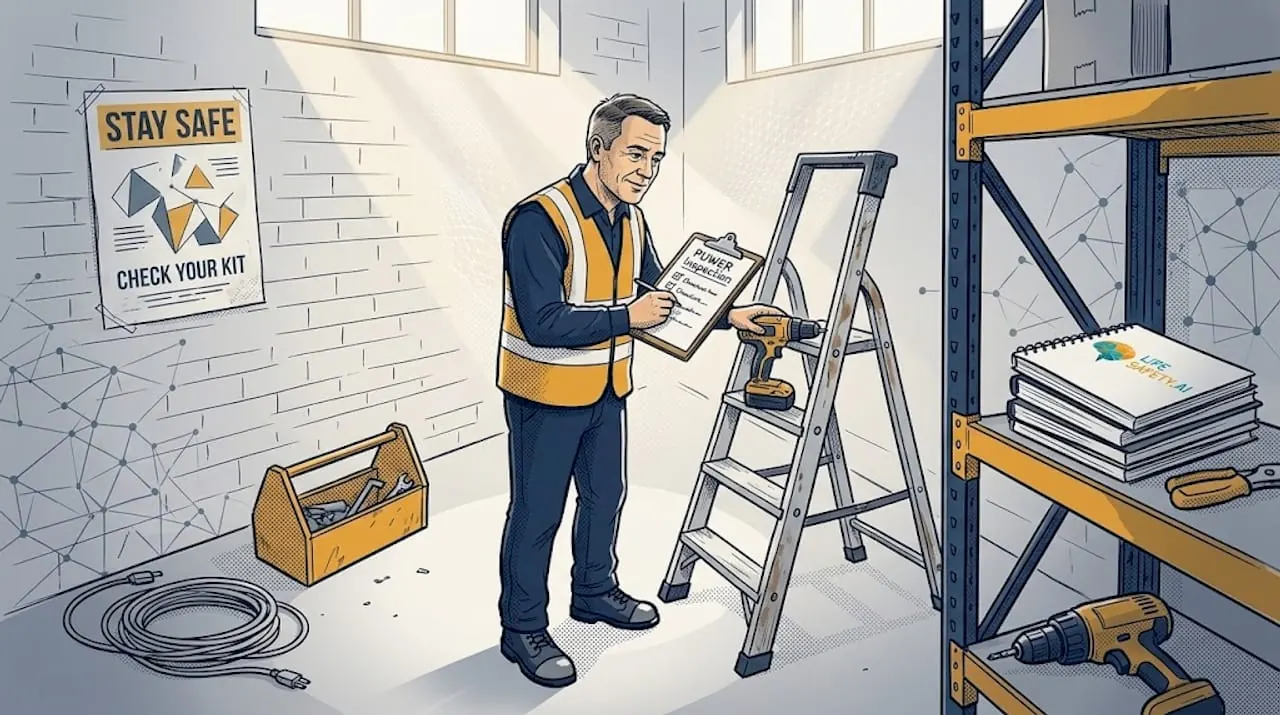
Pro Tip: Even routine equipment such as ladders, drills, and cutting tools falls under PUWER. Regular documented checks are not optional and are frequently scrutinised during HSE inspections.
The construction sector’s fatality rate sits well above the all-industry average, a stark reminder that these regulations carry life-or-death significance. Effective CDM 2015 compliance requires structured planning from day one, not an afterthought at project handover. Reviewing 2026 decking regulation compliance guidance offers a useful example of how CDM and PUWER intersect in practice for specific construction activities. Tracking equipment checks and manual handling data alongside CDM records gives you a complete operational picture.
Where projects involve occupied higher-risk buildings or complex refurbishment, organisations should also consider how CDM interfaces with the Building Safety Act. While the legal regimes are distinct, both demand clear duty holder accountability, evidence of competence, and reliable information management throughout the project lifecycle.
Specific controls: hazardous substances, lifting, and working at height
Beyond broad regulations, it is vital to grasp the detailed controls for the highest-risk areas in your industry.
COSHH requires thorough assessment and control of all hazardous substances used or produced in the workplace. The hierarchy of control under COSHH runs in this order:
- Eliminate the substance entirely
- Substitute with a less hazardous alternative
- Apply engineering controls such as ventilation
- Implement administrative controls including job rotation
- Provide PPE only as a last resort
LOLER enforces rigorous planning and supervision for all lifting operations, including cranes, fork-lift trucks, hoists, and even patient-lifting equipment in care settings. Thorough examinations by a competent person are mandatory at defined intervals, and all records must be retained.
Work at Height Regulations 2005 mirror the COSHH hierarchy: avoid working at height where possible, prevent falls where you cannot avoid it, and minimise the consequences where prevention alone is insufficient. Falls from height remain the single largest cause of fatal injuries in construction.
The table below summarises the key requirements under each standard:
| Regulation | Main focus | Key requirement |
|---|---|---|
| COSHH | Hazardous substances | Assess, control, train, monitor |
| LOLER | Lifting equipment | Regular examination, competent persons, records |
| Work at Height | Fall prevention | Hierarchy: avoid, prevent, minimise |
Pro Tip: Keeping comprehensive records of training, equipment examinations, and health surveillance is your strongest defence during an audit. Thorough COSHH assessments and well-written method statements demonstrate proactive, principle-led compliance. Reviewing industrial equipment safety best practices can also support your preparation under LOLER and COSHH for specialist activities.
Supporting standards: risk management, PPE, and monitoring
With high-risk specifics covered, let us examine the essential standards that reinforce compliance across your organisation.
The Management of Health and Safety at Work Regulations 1999 (MHSWR) build directly on HSWA by requiring formal risk assessments, defined preventive arrangements, health surveillance where applicable, and structured training programmes. MHSWR makes the general duties of HSWA operationally explicit.
PPE Regs 2022 require employers to provide, maintain, and train workers on appropriate PPE. All equipment must meet current UKCA or EN standards. Critically, PPE is always the last line of defence, not the first response to a hazard.
“Collective protection measures must always take priority over individual protective equipment.” Core principle, UK PPE Regulations 2022
The comparison below highlights the distinct focus of each regulation:
| Provision | MHSWR | PPE Regulations 2022 |
|---|---|---|
| Risk assessment | Mandatory, documented | Specific to PPE selection |
| Training | Required for all employees | Required for correct PPE use |
| Review triggers | Change in process or risk | Equipment condition, new hazards |
| Key focus | Preventive arrangements | Last-resort protective equipment |
For health and safety officers, your critical compliance tasks include:
- Completing and regularly reviewing written risk assessments
- Providing suitable PPE where residual risk remains
- Recording all incidents, near misses, and RIDDOR-reportable events
- Maintaining health surveillance records where required
- Conducting and documenting safety audits on a scheduled basis
Understanding the importance of safety reporting within MHSWR means your monitoring processes actively drive improvement. Embedding structured safety audits into your calendar makes compliance a continuous habit rather than a reactive scramble.
It is also important to ensure that incident escalation routes are clear. Where an injury, dangerous occurrence, occupational disease, or specified event meets the reporting threshold, prompt action under RIDDOR is essential. Good monitoring is not just about collecting data; it is about recognising when legal reporting duties are triggered and responding without delay.
Why UK compliance means mindset, not just checklists
Having covered the standards in detail, here is what matters most in practice: mindset over method.
The most common mistake we see is organisations treating compliance as a documentation exercise. They complete the forms, file the records, and assume they are protected. But UK health and safety law does not reward paperwork for its own sake. It expects employers and duty holders to understand the risks created by their work, apply proportionate controls, and review those controls when conditions change.
That is why the phrase reasonably practicable matters so much. It requires active judgement. A generic risk assessment copied from a previous project will not help if site conditions, workforce capability, sequencing, or equipment use have changed. Likewise, a method statement that no one reads or follows is not a control measure in any meaningful sense.
In practical terms, a strong compliance mindset means:
- Reviewing risks dynamically rather than relying on static documents
- Consulting workers who understand the real conditions on site or on the shop floor
- Checking whether controls are actually working, not just whether they were issued
- Escalating defects, unsafe acts, and near misses before they become reportable incidents
- Maintaining competence across supervisors, operators, contractors, and managers
This is especially important in construction and manufacturing, where conditions can shift quickly. A delivery route changes. A subcontractor introduces unfamiliar equipment. A production line is modified. A lifting plan no longer reflects the actual load path. In each case, legal compliance depends on whether the organisation notices the change and responds appropriately.
HSE enforcement action often reveals the same pattern: the issue was not a complete absence of documents, but a failure to translate those documents into real-world control. That is why safety culture matters. When supervisors challenge unsafe shortcuts, when workers report concerns early, and when leaders act on findings rather than burying them, compliance becomes resilient.
For higher-risk buildings and complex projects, this mindset also aligns with the direction of the Building Safety Act, which places increasing emphasis on accountable duty holders, competence, and the quality of information maintained through design, construction, and occupation. The message is consistent across UK regulation: evidence matters, but only when it reflects genuine control.
Good compliance is not the presence of forms. It is the presence of effective controls, competent people, and timely decisions.
If you want fewer incidents, fewer surprises during audits, and stronger legal defensibility, focus on whether your systems change behaviour. That is the difference between superficial compliance and a genuinely safer workplace.
Streamline compliance with the right digital tools
Even highly capable safety teams can struggle when compliance information is scattered across paper files, spreadsheets, email chains, and disconnected apps. The more complex your operations become, the more important it is to centralise safety data and make it usable in real time.
The right digital tools help organisations move from reactive administration to proactive control. Instead of chasing signatures, searching for the latest version of a RAMS pack, or manually compiling inspection records before an audit, teams can access live information, assign actions, and demonstrate compliance more efficiently.
For UK businesses, digital safety systems are particularly valuable for:
- Managing risk assessments, method statements, and permit workflows in one place
- Tracking CDM 2015 documentation such as Construction Phase Plans and duty holder records
- Recording PUWER inspections, maintenance checks, and equipment defects
- Maintaining COSHH inventories, safety data references, and exposure controls
- Scheduling LOLER examinations and retaining evidence of competent inspection
- Capturing incidents, near misses, and RIDDOR triggers with clear escalation routes
- Producing audit trails that support HSE inspections, internal reviews, and client assurance
LifeSafety.ai is designed to support exactly this kind of operational control. By connecting assessments, inspections, actions, and reporting in one environment, safety teams can reduce duplication and improve visibility across projects and sites. That means less time spent on administration and more time spent addressing actual risk.
Useful capabilities include:
- CDM compliance workflows for construction duty holders and project records
- COSHH assessment tools to standardise hazardous substance controls
- Method statement management for consistent task planning and communication
- Safety audit modules that create repeatable inspection routines and action tracking
- Integrated platform features that support evidence-based compliance across construction and manufacturing
Digital tools do not replace competent judgement, supervision, or leadership. What they do is make those functions easier to deliver consistently. In a regulatory environment shaped by HSWA, HSE enforcement expectations, RIDDOR reporting duties, CDM 2015 coordination, and the growing accountability culture around the Building Safety Act, that consistency is a major advantage.
If your current system makes it hard to find records, prove inspections happened, or identify overdue actions, that is not just an efficiency problem. It is a compliance risk. The right platform helps you close that gap.
Frequently asked questions
What is the main health and safety law for UK businesses?
The main law is the Health and Safety at Work etc. Act 1974 (HSWA). It sets the overarching duty on employers to protect employees and others affected by work activities, so far as is reasonably practicable. Most other workplace safety regulations sit beneath this framework.
Which regulations matter most in construction?
For construction, the most critical regulations typically include CDM 2015, the Work at Height Regulations 2005, PUWER, LOLER, COSHH, and duties under RIDDOR. Depending on the project, the Building Safety Act may also be highly relevant, especially for higher-risk buildings and duty holder accountability.
Does PUWER only apply to large machinery?
No. PUWER applies to a very wide range of work equipment, including ladders, hand tools, power tools, vehicles, and fixed machinery. If equipment is used at work, it is likely to fall within PUWER’s scope and must be suitable, maintained, and used by competent people.
When is PPE enough on its own?
Usually, it is not. Under UK safety law, PPE is the last line of defence. Employers should first consider elimination, substitution, engineering controls, and administrative controls. PPE is used where residual risk remains after stronger control measures have been applied.
What should be recorded for compliance purposes?
You should maintain records of risk assessments, training, inspections, maintenance, equipment examinations, health surveillance where required, incidents, near misses, corrective actions, and any RIDDOR-reportable events. In construction, you should also retain key CDM 2015 documents such as the Construction Phase Plan and Health and Safety File.
How often should risk assessments be reviewed?
Risk assessments should be reviewed whenever there is reason to believe they are no longer valid, or when there has been a significant change in work activity, equipment, substances, personnel, or environment. They should also be reviewed after incidents, near misses, enforcement action, or audit findings.
How can digital tools improve compliance?
Digital tools improve compliance by centralising records, standardising workflows, reducing missed inspections, improving action tracking, and making it easier to demonstrate legal compliance during audits or HSE inspections. They are especially useful where multiple sites, contractors, or high-risk activities are involved.
Final thought
UK safety compliance is not built on one regulation, one form, or one annual audit. It is built on a connected system of legal duties, competent people, effective controls, and reliable evidence. From HSWA and MHSWR to CDM 2015, PUWER, COSHH, LOLER, RIDDOR, and the wider accountability culture reinforced by the Building Safety Act, the expectation is clear: identify risk, control it properly, and prove that your arrangements work in practice.
For safety leaders in construction and manufacturing, the most effective approach is to combine sound legal understanding with disciplined operational delivery. When that is supported by strong reporting, regular review, and the right digital systems, compliance becomes more than an obligation. It becomes a practical framework for preventing harm.
Related Articles

HSE for Data Centres
Data-centre HSE is electrical plant, COSHH, permits and night-shift people risk. LifeSafety.ai puts UK compliance and live dashboards in one system.

Risk Assessment vs Method Statement (RAMS): Key Differences
A risk assessment identifies what could cause harm; a method statement sets out how the work will be done safely. Here is how they differ, what UK law actually requires, and when you need both.

Employee Incident Report form: RIDDOR-Ready Template Guide
Ensure workplace safety with our RIDDOR-ready employee incident report form. Download the template and streamline your incident reporting today!