Why Safety Reporting Matters: Compliance that Saves Lives
Why safety reporting matters: improve compliance and save lives
TL;DR:
- Most safety incidents in construction and manufacturing go unreported, risking worker safety.
- Effective safety reporting supports legal compliance, risk management, and workplace learning.
- Digital and AI-driven tools improve reporting rates, identify trends, and foster a positive safety culture.
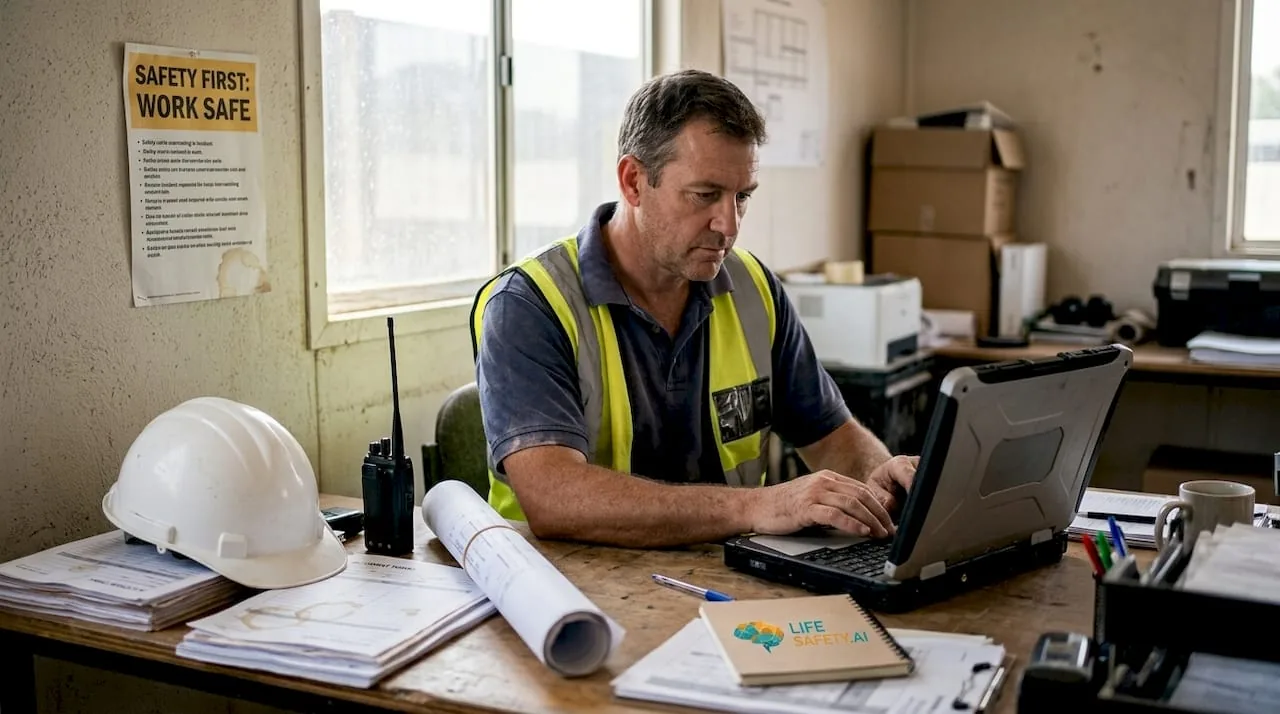
Most safety incidents in construction and manufacturing go unreported. That is not speculation; it is a persistent, well-documented problem that quietly undermines compliance frameworks and puts workers at genuine risk every single day. When near-misses and minor injuries disappear without a record, organisations lose the data they need to spot dangerous patterns before they become fatalities. Strong incident reporting is not just a regulatory obligation. It is one of the most powerful tools available to health and safety professionals who want to build safer, smarter, and more resilient workplaces. This guide explains the legal drivers, cultural factors, and practical methods that make safety reporting genuinely transformative.
Table of Contents
- The role of safety reporting in compliance and risk management
- How safety reporting strengthens workplace culture and learning
- Practical methodologies: From paper to AI-driven safety reporting
- Overcoming barriers: Common pitfalls and how to boost reporting rates
- Our perspective: What people get wrong about safety reporting
- Take your incident reporting to the next level
- Frequently asked questions
Key Takeaways
| Point | Details |
|---|---|
| Compliance saves lives | Robust incident reporting helps spot risks, correct gaps, and protect workers in high-risk industries. |
| Culture drives reporting | No-blame, learning-focused environments vastly improve reporting participation and outcomes. |
| Modern tools make reporting easy | AI-powered systems boost efficiency, data quality, and staff engagement in health and safety. |
| Voluntary systems add value | Beyond legal duties, voluntary reporting provides insights to prevent future incidents. |
The role of safety reporting in compliance and risk management
For any construction or manufacturing business operating in the UK, safety reporting sits at the heart of legal compliance. The primary statutory framework is RIDDOR, the Reporting of Injuries, Diseases and Dangerous Occurrences Regulations 2013. Under RIDDOR, responsible persons must report specific categories of work-related incidents to the Health and Safety Executive (HSE), including fatalities, specified injuries, over-seven-day incapacitation injuries, occupational diseases, and dangerous occurrences. Our RIDDOR reporting guide covers the full scope of what must be submitted and when.
Beyond mandatory reporting, voluntary systems such as the Voluntary Occurrence Reporting (VOR) scheme and the Mandatory Occurrence Reporting (MOR) system in higher-risk sectors provide additional channels for capturing incidents that fall outside RIDDOR thresholds. These systems are invaluable because they catch the near-misses and minor events that often precede serious accidents. Reporting enables HSE to identify risks, investigate incidents, and publish data for industry-wide improvements.
“Accurate, timely reporting is not simply an administrative task. It is the foundation upon which meaningful risk management is built, enabling organisations and regulators alike to act on real evidence rather than assumption.”
The business case for rigorous reporting is equally compelling. Accurate data from your incident management features allows you to identify which tasks, locations, or teams carry the highest risk. It also demonstrates due diligence to insurers, clients, and enforcement bodies. In sectors governed by CDM 2015 and influenced by the Building Safety Act, that evidence trail matters. It supports better contractor oversight, stronger principal contractor controls, and more defensible decisions when incidents are reviewed by regulators or clients.
Mandatory vs voluntary reporting: a quick comparison
| Feature | Mandatory (RIDDOR) | Voluntary (VOR/MOR) |
|---|---|---|
| Legal obligation | Yes | No |
| Scope | Defined incident types only | Near-misses, minor events, observations |
| Submitted to | HSE | Relevant regulator or internal system |
| Primary purpose | Regulatory compliance | Learning and improvement |
| Record retention | Minimum 3 years | Recommended 3 years or more |
Key obligations for UK employers include:
- Reporting specified injuries immediately by telephone, followed by an online report within 10 days
- Reporting over-seven-day injuries within 15 days of the incident
- Keeping records of all reportable incidents for a minimum of three years
- Maintaining records of dangerous occurrences even where no injury resulted
Using HSE guidance alongside your internal reporting system ensures nothing slips through the gaps. It also helps organisations align operational reporting with broader governance duties under site management plans, contractor controls, and building safety accountability arrangements.
How safety reporting strengthens workplace culture and learning
Compliance is only one dimension of effective safety reporting. The wider impact on workplace culture is arguably just as significant. When organisations shift their focus from blame to learning, something remarkable happens: reporting rates rise, near-misses surface more readily, and teams begin to treat safety as a shared responsibility rather than a management imposition.
The evidence is clear. No-blame culture and voluntary reporting systems boost reporting rates and learning, directly addressing the chronic under-reporting that affects so many construction and manufacturing sites. Following the Grenfell Tower tragedy, the Building Safety Regulator introduced a VOR system specifically to encourage those working on higher-risk buildings to share concerns without fear of retribution. Early results showed a meaningful increase in reports from frontline workers who had previously stayed silent.
Building a positive safety culture requires deliberate effort at every level of the organisation. It is not enough to issue a policy and expect behaviour to change overnight. Leaders must visibly champion reporting, act on what is reported, and close the feedback loop with the people who submitted concerns.
Key behaviours that underpin a functional reporting culture include:
- Trust: Workers must believe that reporting will not result in punishment or embarrassment
- Open communication: Managers should discuss incidents and near-misses openly in team briefings
- Feedback loops: Every report should receive a visible response, even if only to acknowledge receipt
- Psychological safety: Staff need to feel that raising a concern is valued, not tolerated
- Visible improvements: When a report leads to a change, communicate it clearly to the team
The near miss reporting module on a well-designed digital platform can make a significant difference here, reducing the friction that often stops workers from reporting in the first place.
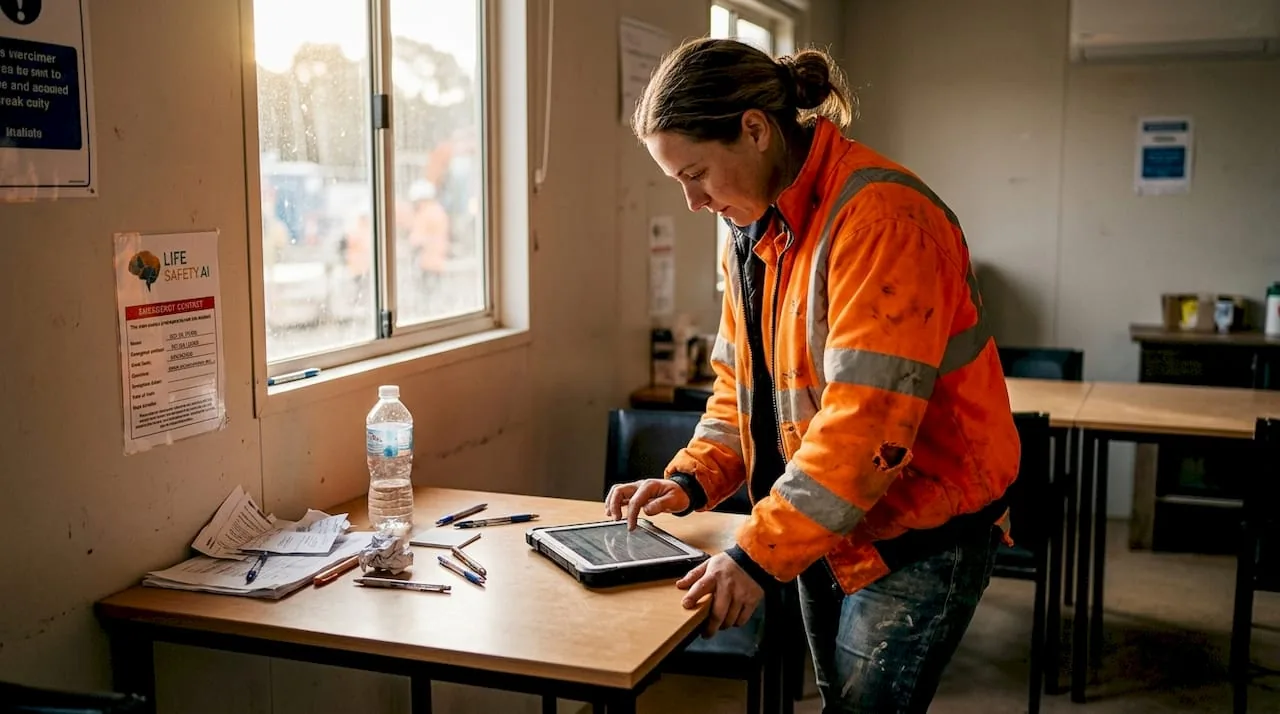
Pro Tip: Short, mobile-friendly reporting forms completed in under two minutes consistently outperform lengthy paper-based systems. The easier it is to report, the more your team will do it.
Practical methodologies: From paper to AI-driven safety reporting
Understanding why reporting matters is one thing. Knowing how to do it well is where many organisations still struggle. The journey from paper-based systems to AI-driven platforms represents a genuine leap in capability, speed, and insight.
Here is how a well-structured incident reporting process should work, from the moment an event occurs to final resolution:
- Immediate notification: The worker involved or a witness notifies their supervisor and, where required, contacts emergency services
- Initial record: A first-account report is logged as quickly as possible, capturing time, location, individuals involved, and a brief description
- Secure the scene: Preserve evidence and prevent further harm before any investigation begins
- Formal investigation: A responsible person conducts a root cause analysis, reviewing risk assessments and method statements
- RIDDOR assessment: Determine whether the incident meets the threshold for statutory reporting under RIDDOR methodology
- Corrective actions: Assign and track remedial measures with clear ownership and deadlines
- Record keeping: Store all documentation securely for a minimum of three years, as required by RIDDOR
- Review and learning: Share findings with the wider team and update risk assessments accordingly
Comparing reporting system types
| Criteria | Paper/manual | Digital | AI-driven |
|---|---|---|---|
| Speed of logging | Slow | Fast | Very fast |
| Accuracy | Variable | High | Very high |
| Staff participation | Low | Moderate to high | High |
| Trend identification | Manual, slow | Semi-automated | Automated, real-time |
| Integration with assessments | Difficult | Possible | Seamless |
Our digital incident reporting module and AI-powered safety platforms are designed to move your team through this process efficiently. Integrating reporting with your risk assessments ensures that each incident automatically triggers a review of relevant controls.
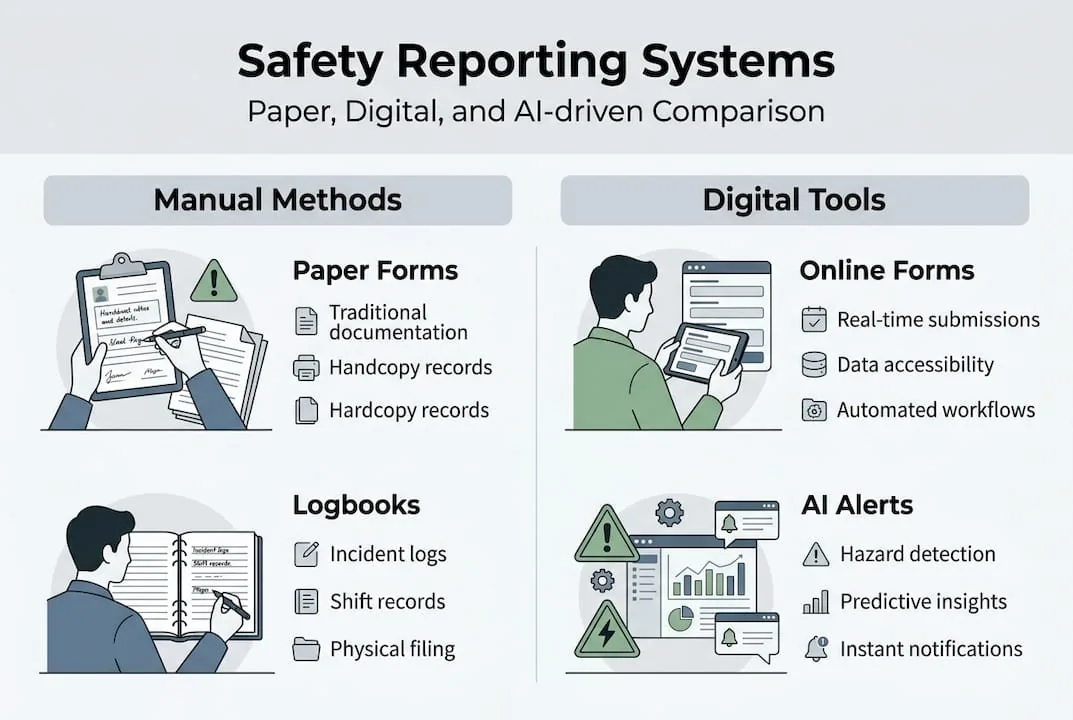
Pro Tip: AI systems can flag emerging trends across multiple sites simultaneously, identifying patterns that a busy health and safety manager might not spot until after a serious incident has occurred. That pre-emptive capability is one of the most compelling reasons to upgrade from manual systems.
Overcoming barriers: Common pitfalls and how to boost reporting rates
Even with the right processes in place, many organisations find that reporting rates remain stubbornly low. The barriers are often human rather than technical, and addressing them requires a combination of leadership, training, and smarter tooling.
The most common obstacles include fear of blame or disciplinary action, a belief that minor incidents are not worth reporting, overly complex or time-consuming forms, and a lack of visible feedback from management. When workers submit a report and never hear anything back, they quickly conclude that reporting is pointless.
Feedback loops, training, and simple reporting systems are vital to overcoming under-reporting, particularly for near-misses that carry no immediate consequence but signal underlying risk.
Practical steps to increase engagement across your construction or manufacturing site:
- Leadership signalling: Senior managers should report incidents themselves and discuss them openly, setting the tone from the top
- Simplify the process: Reduce forms to the essential fields and make them accessible on mobile devices
- Anonymous channels: Offer an option to report without attaching a name, particularly for sensitive concerns
- Regular training: Short, focused refreshers on what to report and how to do it keep the process front of mind
- Visible follow-through: Display the improvements that have resulted from recent reports on noticeboards or in team meetings
- Automated reminders: Use technology to prompt teams after incidents and during routine site reviews so reporting becomes habitual rather than exceptional
These measures are especially important on complex projects where multiple contractors, shifting work fronts, and changing site conditions can obscure accountability. Under CDM 2015, duty holders must coordinate effectively, and a weak reporting culture often signals wider failures in communication and control. In higher-risk buildings, the expectations created by the Building Safety Act make transparent reporting even more important.
Another common pitfall is treating reporting as a compliance endpoint rather than the start of improvement. A submitted form does not reduce risk on its own. The value comes from investigation quality, action tracking, and whether lessons are actually embedded into revised method statements, toolbox talks, inductions, and supervision practices.
Our perspective: What people get wrong about safety reporting
One of the biggest misconceptions about safety reporting is that more reports mean a less safe business. In reality, the opposite is often true. A site with very low reporting may not be safer; it may simply be quieter, less transparent, or more fearful. High-quality reporting usually indicates that workers trust the system enough to use it.
Another mistake is focusing only on reportable injuries. That approach misses the weak signals that matter most. Near-misses, unsafe conditions, and repeated low-level events often reveal failing controls long before a serious injury occurs. Organisations that only react to harm are always operating behind the risk.
We also see businesses overcomplicate the process. If reporting requires too many fields, too much duplication, or too much managerial gatekeeping, participation drops. Frontline workers need a process that is quick, clear, and accessible on the devices they already use. Supervisors and safety managers then need structured workflows behind the scenes to investigate, escalate, and close out actions properly.
Finally, many organisations underestimate the strategic value of reporting data. When linked to inspections, audits, permits, and risk assessments, incident data becomes a decision-making asset. It helps identify recurring hazards, problematic subcontractors, weak supervision, and locations where controls are repeatedly bypassed. That is where digital and AI-enabled systems deliver real value: not just by collecting reports, but by turning them into operational intelligence.
- Low reporting is not automatically good news; it may indicate fear, apathy, or poor visibility
- Near-miss data is essential because serious incidents are often preceded by smaller warning signs
- Complex forms suppress participation, especially on busy sites and production floors
- Data only matters if acted upon through investigations, corrective actions, and updated controls
- Integrated systems outperform isolated logs because they connect incidents to wider compliance duties
Take your incident reporting to the next level
If your current reporting process relies on paper forms, delayed follow-up, or fragmented spreadsheets, there is a strong chance you are missing critical risk information. Modern reporting should be immediate, structured, and connected to the rest of your safety management system.
LifeSafety.ai helps UK construction and manufacturing teams improve reporting quality without adding administrative burden. With mobile-first workflows, integrated incident reporting, linked risk assessments, and smarter trend analysis, teams can move from reactive paperwork to proactive prevention.
That means:
- Faster capture of incidents and near-misses from site or shop floor
- Clearer evidence for RIDDOR and internal compliance reviews
- Better visibility of recurring hazards across projects, shifts, and contractors
- Stronger action tracking so corrective measures are completed on time
- Improved learning loops that support a healthier reporting culture
For organisations managing principal contractor duties, complex supply chains, or higher-risk building work, these capabilities are not just convenient. They support stronger governance, better assurance, and more defensible compliance under UK law.
Speak to LifeSafety.ai about smarter safety reporting
Frequently asked questions
What incidents must be reported under RIDDOR?
RIDDOR requires responsible persons to report specific work-related incidents including fatalities, specified injuries, over-seven-day incapacitation injuries, certain occupational diseases, and dangerous occurrences. If you are unsure, review the HSE criteria and document your decision-making process.
Why should we report near-misses if they are not legally required?
Near-misses provide early warning signs of failing controls. Reporting them helps organisations identify patterns, improve risk assessments, and prevent more serious incidents. In practice, strong near-miss reporting is one of the clearest indicators of a mature safety culture.
How long should incident records be kept?
For RIDDOR-reportable incidents, records must be kept for at least three years. Many organisations retain records for longer where contractual, insurance, or governance requirements apply, particularly on major projects and higher-risk buildings.
How can we improve reporting rates on site?
Make reporting simple, mobile-friendly, and visibly useful. Reduce form length, train teams regularly, provide feedback on submitted reports, and ensure leaders actively support a no-blame approach. Anonymous reporting options can also help where trust is still developing.
What is the benefit of digital or AI-driven reporting tools?
Digital systems improve speed, consistency, and accessibility. AI-driven tools go further by identifying trends, highlighting recurring hazards, and helping safety teams prioritise action before incidents escalate. They are particularly valuable for organisations managing multiple sites or contractors.
How does safety reporting support CDM 2015 and the Building Safety Act?
Strong reporting creates an evidence trail that supports coordination, monitoring, and continuous improvement. Under CDM 2015, it helps duty holders identify failures in planning, supervision, and control. In the context of the Building Safety Act, transparent reporting supports stronger accountability and better management of higher-risk building concerns.
Related Articles

HSE for Data Centres
Data-centre HSE is electrical plant, COSHH, permits and night-shift people risk. LifeSafety.ai puts UK compliance and live dashboards in one system.
Risk Assessment vs Method Statement (RAMS): Key Differences
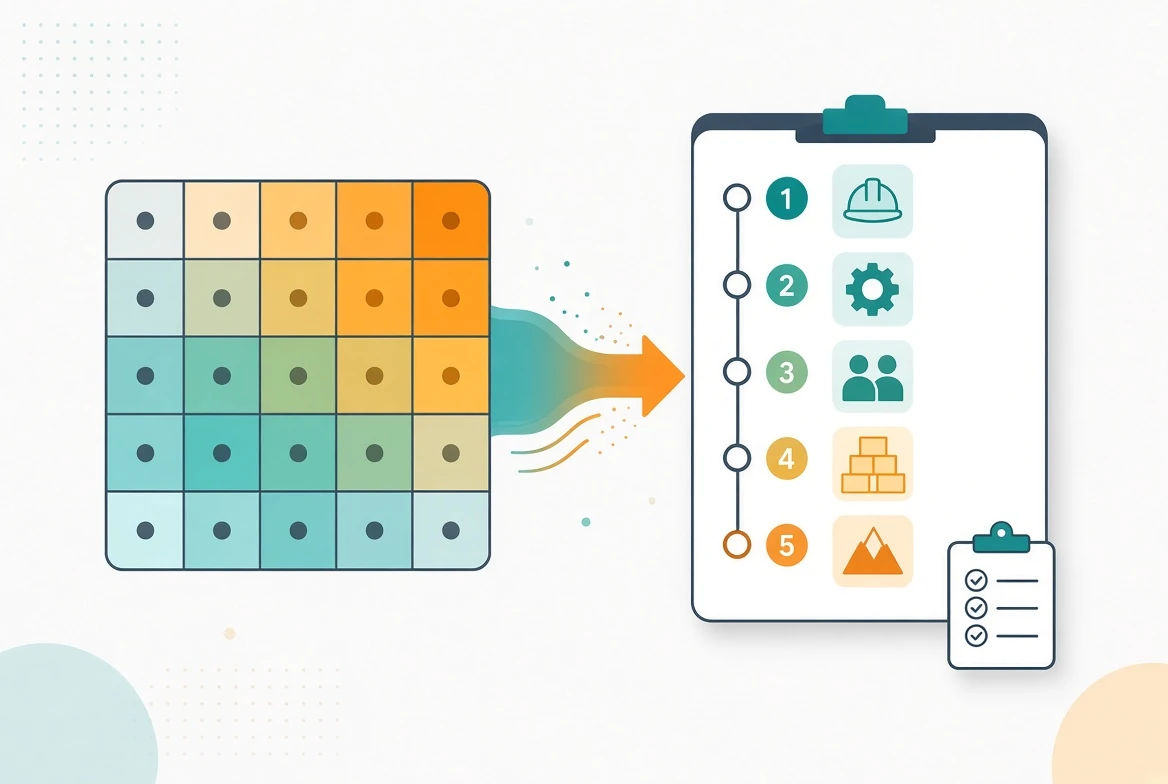
A risk assessment identifies what could cause harm; a method statement sets out how the work will be done safely. Here is how they differ, what UK law actually requires, and when you need both.

Employee Incident Report form: RIDDOR-Ready Template Guide
Ensure workplace safety with our RIDDOR-ready employee incident report form. Download the template and streamline your incident reporting today!