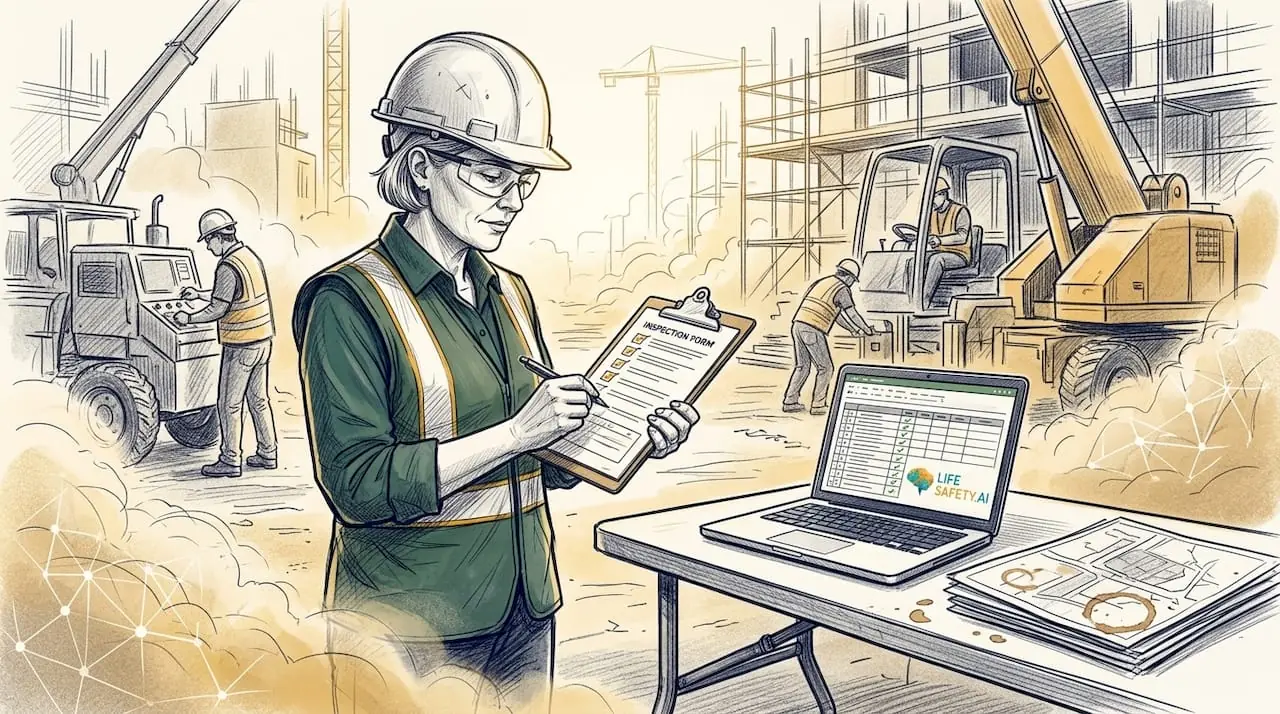
Site safety monitoring best practices: 2026 guide
Site safety monitoring best practices: 2026 guide
Effective site safety monitoring is not just about spotting hazards. It is about ensuring issues are corrected, recorded, escalated where necessary, and prevented from recurring in line with UK expectations under HSE guidance, CDM 2015, RIDDOR, and the wider duty to manage risk proactively.
TL;DR
- Effective site safety monitoring requires closing the hazard detection loop by fixing, recording, and preventing issues from recurring.
- Implementing a tiered inspection system, engaging workers, digitising records, and leveraging technology improves hazard control and compliance.
- The success of monitoring programmes depends on leadership authority, consistent follow-up, and integrated digital tools such as LifeSafety to manage hazards proactively.
Monitoring site safety effectively is one of the most demanding responsibilities in construction management. Many organisations conduct inspections regularly, yet incidents still occur because the monitoring process stops at observation. It never closes the loop. Applying genuine site safety monitoring best practices means building a system where hazards are not just spotted but fixed, recorded, and prevented from recurring. This guide covers the practical methods that health and safety professionals, site managers, and safety consultants can implement right now to sharpen their monitoring programmes and strengthen compliance across every phase of a project.
Key takeaways
| Point | Details |
|---|---|
| Use a tiered inspection structure | Separate routine hazard spotting, targeted system checks, and audit reviews to capture risk at every level. |
| Close every corrective action | Inspection programmes fail when corrective actions remain open beyond the next inspection cycle. |
| Engage workers during walkthroughs | Workers surface hazards that paperwork alone will never reveal; engagement is a core monitoring skill. |
| Digitise your documentation | Continuous digital record-keeping outperforms last-minute preparation when unannounced inspections occur. |
| Match your approach to site complexity | Manual, hybrid, and fully digital monitoring each suit different scales of operation and risk profiles. |
1. Understanding site safety monitoring best practices
Before you can refine your monitoring programme, you need a clear picture of why most programmes underperform. The most common failure point is not the inspection itself. It is what happens afterwards. Hazards get noted, a form gets filed, and the issue sits unresolved until the next walkthrough.
Effective site safety monitoring best practices are built around a corrective-action loop. You identify a hazard, assign a responsible person, set a realistic deadline, verify the fix, and archive the record. Without that loop, your monitoring programme is documentation theatre, not risk control.
In UK construction, this matters because monitoring is closely tied to legal duties. Under CDM 2015, dutyholders must plan, manage, and monitor construction work so it is carried out without risks to health or safety. Where an incident crosses reporting thresholds, RIDDOR obligations may also apply. A weak monitoring process therefore creates both operational and regulatory exposure.
2. Planning a tiered safety monitoring programme
Not every inspection serves the same purpose, and conflating inspection levels is one of the most common errors we see on complex sites. Differentiating monitoring types between routine hazard spotting, system checks for high-risk activities, and audit-level management reviews prevents critical control failures from going undetected.
Here is how to structure those tiers in practice:
- Routine hazard inspections: Conducted daily or weekly by supervisors. These cover housekeeping, PPE compliance, equipment condition, access routes, and obvious site hazards. They are fast, targeted, and operationally focused.
- System checks for high-risk activities: Scheduled around specific operations such as working at height, hot works, confined space entry, and lifting operations. These verify that permits are in place, controls are active, and the workforce is briefed.
- Audit-level management reviews: Conducted monthly or quarterly by a senior safety professional or joint health and safety committee. These assess whether the overall safety management system is functioning, not just whether the site looks safe today.
Assigning named responsibilities at each tier matters enormously. When everyone is responsible, nobody is. Formalise who conducts each inspection type, when, and what the output must include.
A practical monitoring flow for construction sites
Pro Tip: Adjust inspection frequency dynamically based on site phase and risk profile. A site during groundworks carries different risks than one during cladding installation. Review your schedule at each project stage, not just at mobilisation.
3. Conducting meaningful site walkthroughs
A walkthrough is only as good as the preparation behind it. Before entering the site, review the previous inspection findings, check which permits are active, and identify which high-risk activities are scheduled for that day. This preparation ensures you observe the right things at the right time.
During the walkthrough, prioritise high-risk activities such as work at height, lifting operations, and confined space entry first. Observe both unsafe acts and unsafe conditions. The distinction matters: an unsafe condition is a physical hazard; an unsafe act is a behaviour that creates risk. Both require different responses.
Engaging workers directly is a non-negotiable element of effective walkthroughs. Ask open questions about the task, the controls in place, and any concerns they have noticed. Workers who feel genuinely consulted surface hazards that no checklist will ever capture. Management participation during walkthroughs also reinforces accountability and signals that safety is a leadership priority, not a compliance function.
Document findings comprehensively. Photographs with geotags and timestamps, clear descriptions of the hazard, and proposed corrective actions must all be recorded before you leave the area. For serious hazards, immediate action is not optional. Stop the work, control the exposure, and notify the responsible supervisor on the spot.
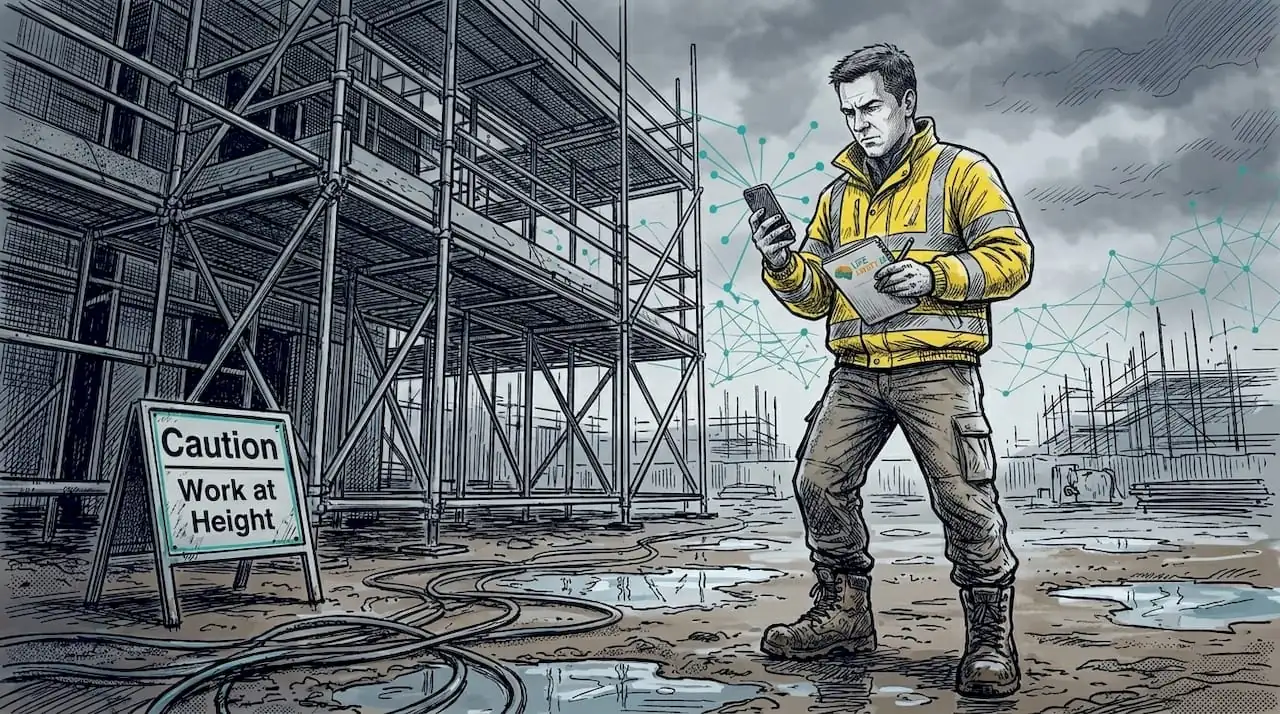
Pro Tip: Vary your walkthrough routes and times. Predictable inspections prompt temporary compliance. Unannounced visits at different times of day reveal the site’s true operating culture.
4. Keeping inspection records that drive corrective action
Documentation is only useful when it is organised for use, not just for storage. A well-structured documentation system covering logs, safety programmes, training records, and equipment inspection records enables rapid audit response and fewer regulatory citations.
The following practices will transform your record-keeping from reactive to genuinely useful:
- Link every finding to a named responsible person and a resolution deadline. Vague assignments produce vague results. “Supervisor to fix” achieves nothing; “John Davies, scaffolding team lead, to remedy loose handrail by 14 July 2026” does.
- Track findings to closure before the next inspection cycle. The critical differentiator between programmes that reduce risk and those that generate paperwork is whether corrective actions are verified as complete.
- Feed findings back into your risk assessments. If an inspection repeatedly flags the same issue, that is a signal your risk assessment or control measure is inadequate. Update it.
- Archive records accessibly. Whether digital or physical, records must be retrievable within minutes during an unannounced inspection. Organise by date, location, and hazard type.
Continuous documentation discipline is far more effective than emergency preparation before an inspection visit. Sites that maintain daily records consistently receive fewer citations and are better positioned to demonstrate compliance.
In a UK context, robust records also support evidence of monitoring under CDM 2015, help demonstrate suitable and sufficient arrangements to the HSE, and provide a reliable audit trail if an event later becomes reportable under RIDDOR. Where higher-risk buildings are involved, disciplined records also support the information management expectations emerging from the Building Safety Act regime.
5. Leveraging technology for smarter safety monitoring
The gap between a competent safety professional and a truly high-performing safety programme is increasingly filled by technology. AI-powered monitoring platforms provide live hazard alerts, data insights, and efficient reporting that manual systems simply cannot match at scale.
The practical gains are significant. Consider the difference between these two approaches:
| Feature | Manual system | Digital or AI-powered system |
|---|---|---|
| Inspection recording | Paper forms, typed up later | Mobile entry, instant cloud storage |
| Corrective action tracking | Spreadsheet or email chains | Automated reminders with closure verification |
| Trend analysis | Manual data compilation | Automated dashboards with leading indicators |
| Audit readiness | Scrambling to collate records | Continuous, real-time record availability |
| Hazard alerts | Post-walkthrough reporting | Real-time notifications to responsible parties |
Digital checklists completed on mobile devices reduce transcription errors and accelerate follow-up. Safety performance tracking through analytics identifies trends that human reviewers miss, such as recurring near-misses in a particular work zone or a spike in PPE non-compliance on specific shifts. Integrating your inspection data with safety performance tracking and incident reporting modules gives you a single source of truth for risk control.
Pro Tip: When deploying digital monitoring tools, start with your highest-risk activities first. The ROI of technology is most visible where the hazard consequences are most severe, which also builds internal buy-in for wider adoption.
6. Comparing monitoring approaches and choosing the right one
No single monitoring approach suits every site. The right choice depends on scale, risk profile, available resources, and your compliance obligations under CDM 2015 and RIDDOR. Structured inspections combined with periodic audits provide balanced oversight, but the delivery method should match your operational context.
| Approach | Strengths | Limitations | Best suited to |
|---|---|---|---|
| Manual walkthroughs only | Low cost, builds relationships | Inconsistent, slow follow-up | Small sites, low complexity |
| Hybrid (paper plus digital support) | Familiar format, improved tracking | Partial data visibility | Medium sites transitioning to digital |
| Fully digital or AI-powered | Real-time alerts, full audit trail | Requires training, upfront investment | Large or multi-site operations |
For small or short-duration sites, a disciplined manual programme with a well-maintained site diary may be sufficient. For larger projects with multiple subcontractors and concurrent high-risk activities, the case for a fully digital approach is strong. The volume of monitoring data generated daily simply exceeds what a manual system can track reliably.
Whichever approach you choose, the core requirements remain the same: documented findings, assigned responsibilities, verified closures, and records accessible for audit at any point. The delivery method changes; the standards do not.
My honest take on why monitoring programmes fail
I’ve spent years reviewing safety monitoring programmes across construction sites of every size, and the pattern is almost always the same. The documentation is in good order. The checklists are thorough. The inspection calendar looks impressive. But the programme still underperforms because the organisation has confused activity with control.
In practice, monitoring programmes usually fail for a handful of repeat reasons:
- No authority behind findings. Inspectors identify issues, but supervisors or subcontractors do not feel compelled to act quickly.
- Corrective actions are not chased to closure. The same defects appear week after week because nobody owns the follow-up.
- Monitoring is too predictable. Teams learn when inspections happen and temporarily improve standards for the visit.
- Data is fragmented. Inspection notes, permits, incidents, and training records sit in separate systems, making trend analysis weak or impossible.
- Leadership treats monitoring as compliance paperwork. If senior management only asks whether the form was completed, rather than whether the risk was reduced, the site will respond accordingly.
The strongest programmes I see are not necessarily the most complex. They are the ones where site leadership is clear that unresolved hazards are unacceptable, where workers are encouraged to speak up, and where records are used to improve future planning rather than simply defend past decisions.
If you want a blunt assessment, this is it: most monitoring programmes do not fail because people do not care about safety. They fail because the system makes it too easy to record a problem and too hard to prove it was fixed. Once you reverse that balance, performance improves quickly.
How Lifesafety supports your site safety monitoring
Lifesafety is designed to help safety teams move beyond passive inspection records and into active risk control. Instead of relying on disconnected paper forms, spreadsheets, and email trails, teams can manage monitoring in one place with clearer accountability and faster follow-up.
- Mobile inspections and walkthroughs: Record hazards on site with photos, timestamps, and location context.
- Corrective action workflows: Assign actions to named individuals, set deadlines, and verify closure with evidence.
- Integrated site diary records: Maintain a reliable daily record of conditions, events, and site activity for audit and investigation purposes.
- Performance dashboards: Spot recurring issues, overdue actions, and leading indicators before they contribute to incidents.
- Audit-ready documentation: Keep inspection records, action histories, and supporting evidence accessible when clients, principal contractors, or regulators request them.
For organisations managing multiple projects, this kind of joined-up visibility is especially valuable. It supports more consistent standards across sites, improves contractor oversight, and helps demonstrate that monitoring arrangements are suitable and sufficient under UK safety law.
If your current process still depends on manually collating records before a visit from the client or the HSE, there is a strong case for modernising the workflow. The goal is not technology for its own sake. The goal is faster hazard control, better evidence, and fewer gaps between inspection and action.
FAQ
What is the purpose of site safety monitoring?
The purpose of site safety monitoring is to identify hazards, verify that controls are working, assign corrective actions, and provide evidence that risks are being managed. In UK construction, it also supports compliance with duties under CDM 2015 and helps organisations demonstrate effective management if reviewed by the HSE.
How often should construction site inspections be carried out?
There is no single frequency that suits every project. Routine inspections may be daily or weekly, while targeted checks should align with high-risk activities such as lifting operations, hot works, excavation, or work at height. Inspection frequency should increase when site risk increases, when phases change, or when repeated findings indicate controls are slipping.
What should be included in an inspection record?
A strong inspection record should include the date, time, location, inspector, observed hazard, risk level, immediate controls taken, responsible person, target completion date, and evidence of closure. Supporting photographs and links to relevant permits, RAMS, or training records make the record far more useful.
How does site safety monitoring relate to RIDDOR?
Monitoring itself is not a RIDDOR report, but effective monitoring helps prevent reportable incidents and creates a clear evidence trail if one occurs. If an event meets reporting criteria, accurate inspection and corrective action records can help establish what controls were in place, what was known, and whether earlier warning signs were missed.
Is a digital monitoring system necessary for smaller sites?
Not always. Smaller sites can still operate effectively with a disciplined manual process, provided findings are documented clearly and actions are closed promptly. However, even smaller projects benefit from digital tools when multiple contractors are involved, when records need to be shared quickly, or when the client expects stronger audit visibility.
What is the biggest mistake in safety monitoring?
The biggest mistake is failing to close the loop. Spotting hazards without assigning ownership, setting deadlines, and verifying completion creates the appearance of control without the reality of it. That is where many otherwise well-run programmes fall short.
Related Articles

Incident reporting software comparison: UK guide 2026
Discover our incident reporting software comparison for UK workplaces. Explore top options like Lifesafety, SafetyCulture, and more.

Safety management solutions for construction: UK SMS guide
Discover essential safety management solutions for construction sites in the UK. Learn how a mobile-first SMS can enhance safety and compliance.

Best Health and Safety Software for UK Workplaces: A Guide
Discover the best health and safety software for UK workplaces in 2026. Explore top picks like Lifesafety for compliance and efficiency!