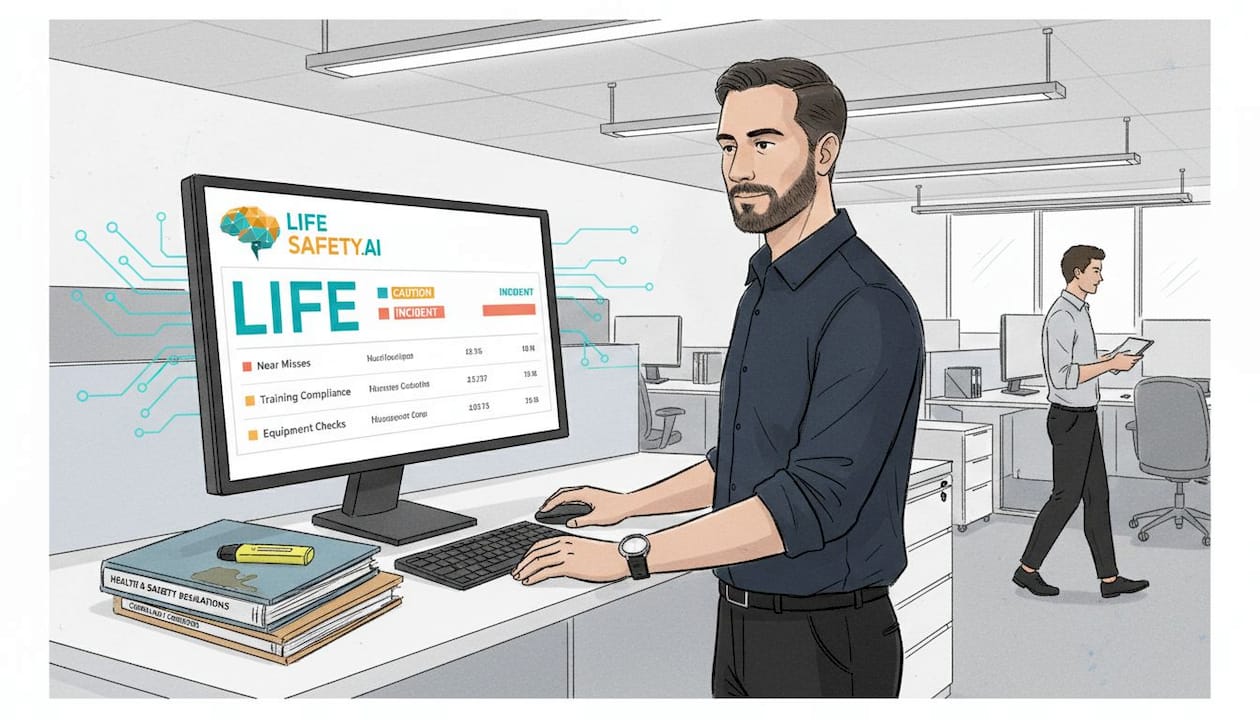
Safety dashboards: Real-time compliance and risk insights
Safety dashboards: Real-time compliance and risk insights
TL;DR:
- Safety dashboards are essential tools for real-time visibility and proactive risk management in UK construction and manufacturing.
- They centralise safety data, automate compliance workflows, and can significantly reduce injuries and manual administration when implemented well.
- Effective use still depends on human oversight, a strong reporting culture, and careful alignment with HSE, RIDDOR, CDM 2015, and wider compliance duties.
UK construction and manufacturing remain among the most hazardous working environments in the country. With 51,000 non-fatal injuries recorded annually in manufacturing alone between 2021 and 2024, the pressure on health and safety managers to act faster and smarter has never been greater. Traditional paper-based systems simply cannot keep pace with the complexity of modern site risk. Safety dashboards are changing that. They give you real-time visibility across your entire operation, turning raw incident data into clear, actionable intelligence. This guide explains exactly what safety dashboards are, how they work, and why they are fast becoming essential tools for compliance-focused managers across UK industry.
Table of Contents
- What are safety dashboards?
- Key features and mechanics of AI-driven dashboards
- Why safety dashboards matter: Compliance and risk reduction
- Nuances, risks, and best practices with AI safety dashboards
- A reality check: Why dashboards are not a magic bullet
- How to unlock safer workplaces with LifeSafety.ai
- Frequently asked questions
Key Takeaways
| Point | Details |
|---|---|
| Real-time safety insights | Safety dashboards give managers instant visibility over risks, trends, and compliance issues across sites and teams. |
| Proven risk reduction | Evidence shows dashboards can cut injuries and manual workload by over 50% when paired with disciplined action. |
| Balanced KPIs essential | Successful dashboards track both leading and lagging indicators to support prevention as well as reporting. |
| Culture drives success | No dashboard is effective unless it is supported by genuine workforce engagement, leadership commitment, and clear accountability. |
What are safety dashboards?
A safety dashboard is a digital visual tool that monitors, analyses, and reports key health, safety, and environment metrics in real time. You may also hear them called EHS dashboards or HSE dashboards. The terminology varies, but the purpose is consistent: bring all your critical safety data into one place so you can see what is happening, spot trends early, and respond before incidents escalate.
For health and safety managers in construction and manufacturing, this matters enormously. Sites generate vast amounts of safety-relevant data every day, from near-miss reports to inspection findings and training records. Without a centralised system, that information sits in spreadsheets, email chains, and paper files. Dashboards solve that fragmentation problem.
Our safety dashboard overview explains how a well-configured dashboard centralises incident logs, audit results, permit statuses, and compliance records into a single, navigable interface. You get a live picture of your safety performance rather than a retrospective report written days after the fact.
Here is a quick comparison of traditional safety management versus dashboard-driven management:
| Aspect | Traditional approach | Dashboard-driven approach |
|---|---|---|
| Data visibility | Delayed, fragmented | Real-time, centralised |
| Incident reporting | Paper or email | Mobile, instant |
| Compliance tracking | Manual checks | Automated alerts |
| Trend identification | Slow, reactive | Proactive, AI-assisted |
| Audit readiness | Time-consuming | Always audit-ready |
The industries that benefit most are those where risk is constant and the cost of failure is high. Construction sites, manufacturing floors, logistics hubs, and energy facilities all operate in environments where a missed hazard can become a serious injury within minutes. Dashboards give managers the situational awareness to intervene before that happens. The HSE software transformation already under way across UK industry shows that organisations adopting these tools are pulling ahead on both safety performance and regulatory compliance.
Key features and mechanics of AI-driven dashboards
Understanding what a safety dashboard does is one thing. Understanding what a modern, AI-driven dashboard does is quite another. The gap between a basic reporting tool and a genuinely intelligent platform is significant, and it matters for how much value you extract from the technology.
Modern platforms integrate IoT sensors, mobile reporting, and automated alerts alongside configurable checklists and analytics for KPIs including near-miss rates, training completion, and audit scores. That combination transforms safety management from a reactive process into a proactive one.
Here are the core features you should expect from a capable AI-driven dashboard:
- IoT integration: Sensors on equipment and around site feed live condition data directly into the dashboard, flagging anomalies automatically.
- Mobile incident reporting: Workers log near-misses, hazards, and incidents from their phones in seconds, improving data quality and reporting rates.
- Automated notifications: Managers receive instant alerts when a threshold is breached or a deadline is missed, removing the need for manual chasing.
- Configurable checklists: Inspection and audit checklists are built into the platform and completed digitally, creating an auditable trail.
- Predictive analytics: AI analyses historical patterns to predict where incidents are most likely to occur, allowing you to act before something goes wrong.
The compliance dashboard features available through LifeSafety.ai demonstrate how these capabilities combine to give managers a genuinely intelligent view of site safety. You can explore the full range of AI safety modules to see how each component fits together.
The key performance indicators most commonly tracked include TRIR (Total Recordable Incident Rate), LTIFR (Lost Time Injury Frequency Rate), near-miss frequency, and training compliance rates. KPI benchmarks for manufacturing and construction give you a useful reference point when setting targets.
Pro Tip: Configure your dashboard to display both leading indicators such as near-miss reports and training completion, and lagging indicators such as TRIR and LTIFR. Leading indicators tell you where risk is building. Lagging indicators tell you where it has already materialised. You need both to manage safety effectively.
Why safety dashboards matter: Compliance and risk reduction
Capabilities are compelling, but outcomes are what justify investment. The evidence for safety dashboards is strong. UK manufacturers using safety dashboards have recorded up to a 67% reduction in injuries and a 50% reduction in manual workload. Those are not marginal gains. They represent a fundamental shift in how safety is managed.
“Dashboards are not just reporting tools. They are the operational nerve centre for safety compliance in high-risk environments.”
For UK managers, compliance with HSE regulations, CDM 2015, and RIDDOR requirements is non-negotiable. Dashboards simplify that compliance burden significantly. Here is how:
- Less paperwork: Digital records replace manual forms, reducing administrative time and the risk of lost documentation.
- Faster issue resolution: Automated alerts ensure hazards are flagged and assigned to the right person immediately, cutting response times.
- Auditable records: Every inspection, incident, and corrective action is logged with a timestamp, making HSE inspections straightforward.
- Consistent processes: Standardised digital checklists ensure nothing is missed during site inspections or safety audits.
For construction site safety, dashboards are particularly valuable because sites change rapidly. New contractors arrive, conditions shift, and permit-to-work requirements evolve constantly. A live dashboard keeps everyone aligned.
Here is a practical sequence for aligning your dashboard with UK regulatory requirements:
- Map your existing compliance obligations, including HSE, CDM 2015, RIDDOR, relevant BS standards, and where applicable the Building Safety Act.
- Configure your dashboard KPIs to reflect those obligations directly.
- Set automated alerts for compliance deadlines, inspections, permit reviews, and training expiry dates.
- Assign corrective actions digitally and track them to closure with clear ownership.
- Use the dashboard’s reporting function to generate audit-ready documentation for internal review and regulator scrutiny.
Building a strong safety culture alongside your dashboard implementation is equally important. The CDM compliance module within LifeSafety.ai is designed to support exactly this kind of structured, regulation-aligned approach. Case studies from health and safety toolkit deployments reinforce that organisations following this structured process see the fastest and most sustained improvements.
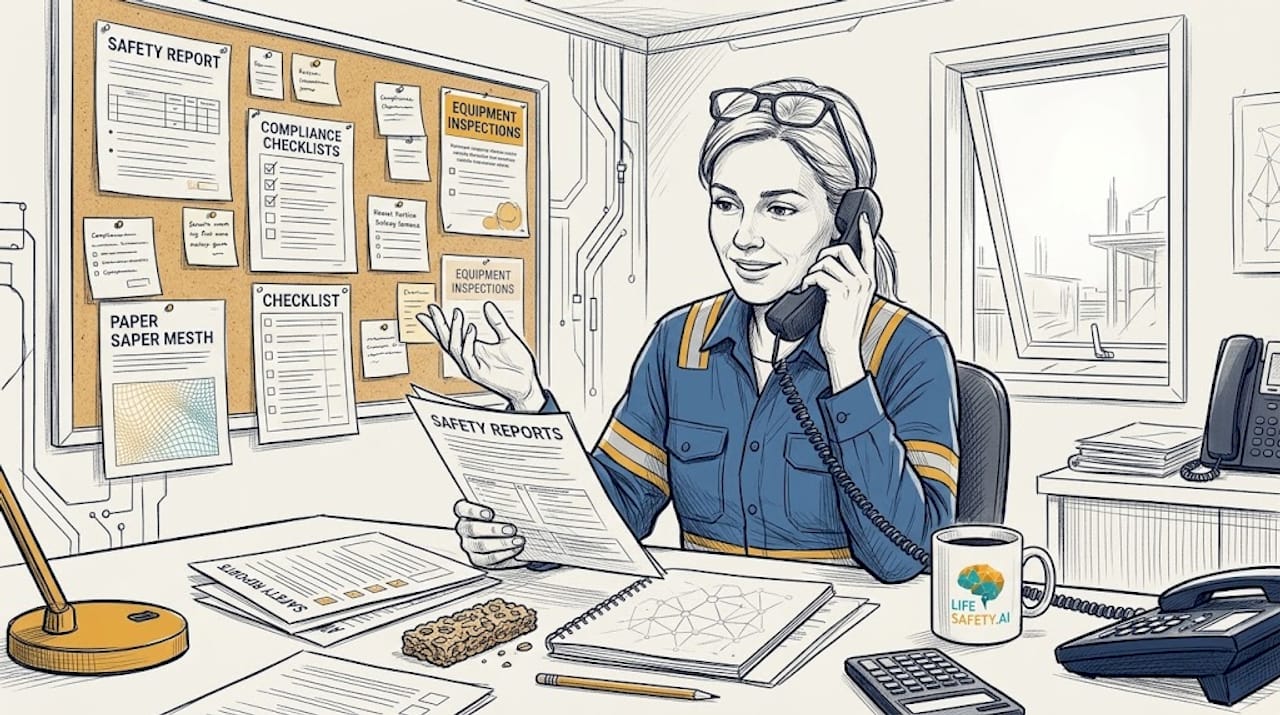
Nuances, risks, and best practices with AI safety dashboards
Knowing the capabilities is crucial, but understanding the caveats and best approaches ensures dashboards truly support safety goals. No technology is without limitation, and AI-driven safety tools are no exception.
Effective dashboards balance leading and lagging indicators, require human oversight, and carry genuine risks including AI bias and cybersecurity vulnerabilities. These are not reasons to avoid the technology. They are reasons to implement it thoughtfully.
The most common pitfalls managers encounter include:
- Over-reliance on automation: Assuming the dashboard will catch everything leads to complacency. AI flags patterns; humans must interpret and act.
- AI bias: If historical data reflects past blind spots, such as underreported near-misses, the AI’s predictions will inherit those gaps.
- Cybersecurity exposure: Safety data is sensitive. A poorly secured platform creates risk rather than reducing it.
- Dashboard fatigue: Too many alerts and metrics overwhelm users, leading to important signals being ignored.
- Neglecting culture: Deploying a dashboard without engaging your workforce in why it matters produces low-quality data and low adoption.
The principle of keeping humans in the loop is fundamental. Your dashboard should surface information and recommend actions. Experienced safety professionals must make the final call. Integrating your dashboard with a strong safety culture is what separates organisations that see genuine improvement from those that simply have an expensive reporting tool.
For KPI balance advice, leading indicators such as near-miss rates and safety observation frequency are particularly valuable because they give you time to intervene.
Pro Tip: Use a RAG (Red, Amber, Green) status system on your dashboard for every key metric. Red means immediate action required. Amber means monitor closely. Green means on track. This simple visual framework helps your team prioritise without needing to interpret raw numbers under pressure.
A reality check: Why dashboards are not a magic bullet
We have seen the power of dashboards, but it is important to stay grounded. A dashboard does not make a workplace safe on its own. It does not replace competent supervision, suitable and sufficient risk assessments, safe systems of work, or workforce consultation. It makes those activities more visible, more measurable, and easier to manage.
This distinction matters because some organisations invest in software expecting instant transformation. In practice, the dashboard is only as good as the processes and behaviours around it. If incidents are not reported, if inspections are rushed, or if corrective actions are not closed out, the dashboard will simply display poor-quality information more efficiently.
There are several reasons dashboards should be viewed as enablers rather than cures:
- They depend on data quality: Incomplete, delayed, or inaccurate reporting undermines every metric on screen.
- They do not replace legal duties: Employers, principal contractors, and dutyholders still retain their obligations under UK law.
- They cannot create trust by themselves: Workers must feel safe to report hazards and near-misses without blame.
- They require governance: Someone must own KPI definitions, alert thresholds, user permissions, and review cycles.
- They need follow-through: A red status without action is just a red box on a screen.
For organisations operating under CDM 2015 or within higher-risk building environments affected by the Building Safety Act, this point is especially important. Regulators will not be impressed by a polished dashboard if underlying controls are weak. They will look for evidence of planning, competence, coordination, monitoring, and corrective action.
The most mature organisations treat dashboards as part of a wider operating model. They combine digital visibility with:
- Regular site walks and leadership tours
- Structured toolbox talks and workforce briefings
- Clear permit-to-work controls
- Competence and refresher training management
- Routine review of incidents, near-misses, and lessons learned
In other words, the dashboard should support professional judgement, not substitute for it. When used this way, it becomes a force multiplier for safety teams rather than a distraction.
How to unlock safer workplaces with LifeSafety.ai
If you want the benefits of real-time safety dashboards without the usual implementation friction, LifeSafety.ai provides a practical route forward for UK construction and manufacturing teams. The platform is designed to help organisations move from fragmented reporting to structured, auditable, and proactive safety management.
Rather than treating dashboards as isolated reporting screens, LifeSafety.ai connects them to the workflows that matter most in day-to-day compliance:
- Incident and near-miss reporting with clear escalation paths
- Compliance dashboards that surface overdue actions, inspections, and training gaps
- CDM 2015 support for construction dutyholders managing coordination and documentation
- Audit trails that help demonstrate due diligence during internal reviews and HSE visits
- AI-assisted insights that highlight patterns before they become serious events
For organisations trying to improve reporting discipline, reduce manual administration, and strengthen audit readiness, that joined-up approach is critical. A dashboard is most valuable when it is connected to action management, compliance evidence, and leadership oversight.
You can explore relevant solutions here:
A sensible rollout usually follows a staged path:
- Identify the highest-risk processes and reporting gaps in your current system.
- Choose a small set of meaningful KPIs linked to legal and operational priorities.
- Digitise inspections, incident capture, and corrective action tracking first.
- Train managers and frontline teams on how to use the dashboard and why accurate reporting matters.
- Review dashboard outputs regularly and use them to drive real interventions, not just monthly reporting.
Done properly, this approach helps create safer workplaces, stronger compliance evidence, and better decision-making at every level of the organisation.
Frequently asked questions
What is a safety dashboard?
A safety dashboard is a digital interface that brings together key health and safety data, such as incidents, near-misses, inspections, training status, and corrective actions, into one real-time view. It helps managers monitor performance, identify trends, and respond faster to emerging risks.
How do safety dashboards help with RIDDOR and HSE compliance?
They help by centralising records, timestamping actions, tracking investigations, and highlighting overdue tasks. While a dashboard does not replace legal judgement on whether an event is reportable under RIDDOR, it makes it much easier to gather evidence, monitor deadlines, and maintain an auditable trail for HSE scrutiny.
What KPIs should a safety dashboard include?
A strong dashboard should include both leading indicators and lagging indicators. Common examples include near-miss frequency, safety observations, inspection completion, training compliance, TRIR, LTIFR, overdue corrective actions, and audit scores.
Are AI-driven safety dashboards reliable?
They can be highly effective, but they are not infallible. Their reliability depends on data quality, sensible configuration, cybersecurity controls, and human review. AI should support decision-making, not replace competent safety professionals.
Which sectors benefit most from safety dashboards?
They are especially valuable in high-risk, fast-changing environments such as construction, manufacturing, logistics, utilities, and energy. These sectors generate large volumes of safety data and face significant operational and regulatory consequences if hazards are missed.
Can a dashboard improve safety culture?
It can support safety culture, but it cannot create it on its own. Culture improves when leaders act on the information provided, workers are encouraged to report openly, and the organisation uses dashboard insights to drive visible improvements rather than blame.
Final thought
Safety dashboards are becoming a core part of modern compliance management because they turn scattered information into operational clarity. For UK dutyholders navigating HSE expectations, RIDDOR reporting, CDM 2015 coordination, and broader governance demands, that clarity matters. The organisations seeing the best results are not the ones with the flashiest dashboards. They are the ones using real-time insight to support disciplined action, stronger culture, and better risk control every day.
Related Articles
Risk Assessment vs Method Statement (RAMS): What’s the Difference?
A risk assessment identifies what could cause harm; a method statement sets out how the work will be done safely. Here is how they differ, what UK law actually requires, and when you need both.

Employee incident report form: RIDDOR-ready template for safety managers
Ensure workplace safety with our RIDDOR-ready employee incident report form. Download the template and streamline your incident reporting today!

OSHA regulations explained for UK safety managers
Learn how OSHA regulations differ from UK safety laws. Discover essential actions for compliance and protect your workplace effectively.