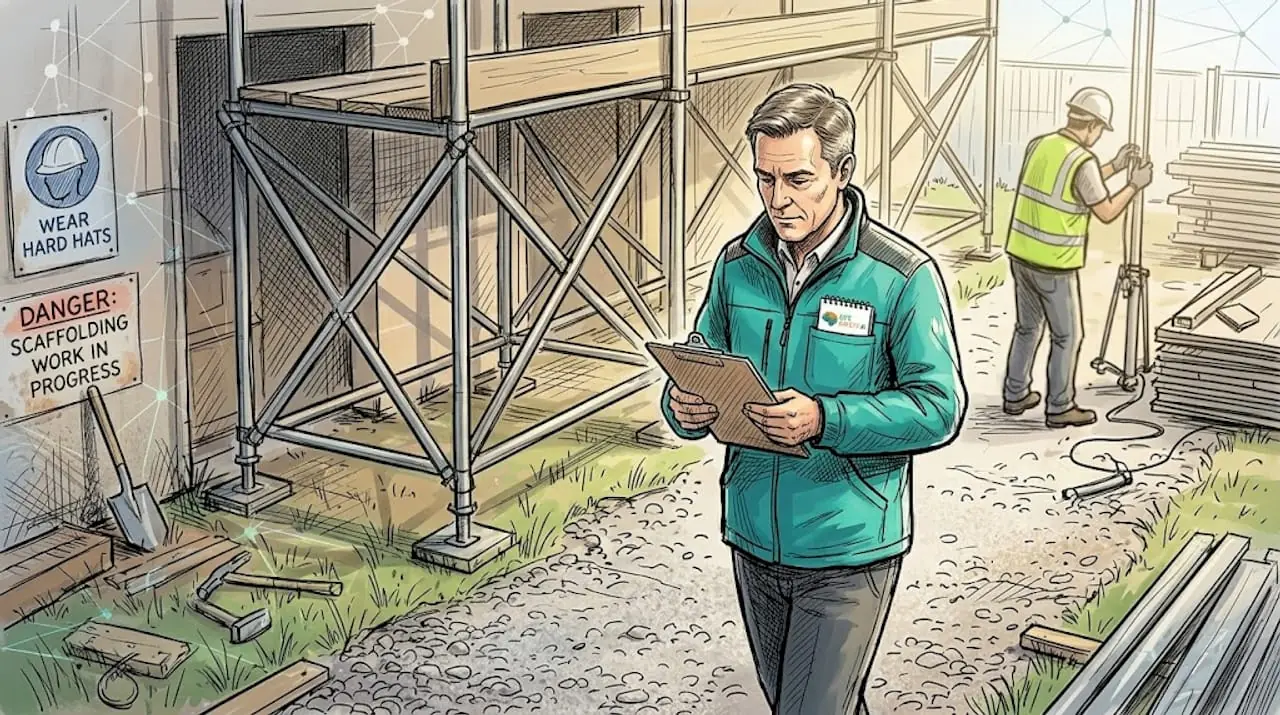
Workplace Risk Management: Building Safer, Compliant Sites
Workplace risk management: Building safer sites and compliance
A practical guide to building safer construction and manufacturing environments through effective risk assessment, proportionate controls, and continuous review aligned with UK HSE expectations.
TL;DR:
- Workplace risk management is a vital process that protects workers, ensures legal compliance, and improves operational safety.
- It involves identifying hazards, assessing risks, implementing controls based on the hierarchy of control, and continually reviewing assessments as conditions change.
Workplace risk management is often misunderstood as little more than a bureaucratic exercise, a folder of signed forms gathering dust in a site cabin. In reality, it is the foundation upon which safe, legally compliant operations are built in construction and manufacturing. When it is done well, it protects your workers from foreseeable harm, keeps your organisation on the right side of UK law, and actively improves how your site functions day to day. This article walks you through what risk management truly means, how the process works in practice, and how modern tools are transforming the way leading safety teams stay ahead of evolving hazards.
Table of Contents
- What workplace risk management really means
- The five-step risk management process explained
- Key hazards in construction and manufacturing: What to watch for
- Making controls count: The hierarchy of control in action
- Maintaining and improving your risk management system
- Why the best-run sites treat risk management as a living cycle, not a tick-box chore
- AI-powered support for next-level risk management
- Frequently asked questions
Key Takeaways
| Point | Details |
|---|---|
| Cycle, not a tick-box | Effective risk management is an ongoing process, not a one-off paperwork requirement. |
| Hierarchy matters | Legally and practically, controlling risks requires prioritising higher-level solutions before PPE. |
| Physical and health risks | Both accident hazards and occupational health drivers—like stress and MSDs—should be addressed. |
| Review and update regularly | Regularly reviewing and updating your risk assessments keeps you compliant and your staff safe. |
| AI can enhance systems | Modern AI-powered tools support more proactive, data-driven, and effective risk management. |
What workplace risk management really means
The term “risk management” covers far more ground than many people realise. Under UK HSE guidance, risk management is the process of identifying hazards, assessing who could be harmed and how, controlling the risks with suitable and sufficient preventive and protective steps, and then recording and reviewing the assessment. That definition carries real legal weight in construction and manufacturing, where CDM 2015, RIDDOR, and the Management of Health and Safety at Work Regulations 1999 all demand documented, active engagement with site hazards.
A critical point that experienced safety officers appreciate is this: a risk assessment must be “suitable and sufficient”, meaning it protects people from any harm that can reasonably be predicted. It does not need to be overly complicated or technically elaborate. What it does need is genuine, site-specific thinking rather than a copy-and-paste generic document.
“Suitable and sufficient does not mean perfect or exhaustive. It means proportionate, practical, and genuinely protective for the specific risks present in your workplace.” — UK HSE guidance
The main steps of a workplace risk assessment in the UK context include:
- Hazard identification: What on your site or shop floor could cause harm?
- Who is at risk: Which workers, contractors, or visitors could be affected, and in what way?
- Evaluation of controls: Are existing precautions adequate, or are further measures needed?
- Record and communicate: Document findings and share them with relevant personnel.
- Review and update: Revisit the assessment whenever conditions change.
What separates effective risk management from box-ticking is intent. Good risk assessment standards focus on finding real solutions, not generating paper trails. And in sectors where manual handling in construction contributes significantly to musculoskeletal injuries, getting this right matters enormously.
The five-step risk management process explained
The HSE’s five-step process gives safety managers a clear, repeatable framework that works in both large construction projects and busy manufacturing facilities. It is not a one-time task. It is a cycle that continues as your work evolves.
- Identify the hazards. Walk the site, consult workers, review maintenance logs, and examine any previous incident data. Consider physical hazards such as machinery and working at height, as well as health hazards like chemical exposure and repetitive strain.
- Decide who might be harmed and how. Think beyond your direct employees. Sub-contractors, delivery drivers, cleaning staff, and visitors may all be exposed to your site’s hazards.
- Evaluate the risks and decide on controls. Use the hierarchy of control to determine whether you can eliminate, reduce, or manage each risk. Existing controls should be tested against real conditions, not assumptions.
- Record your findings and implement them. The risk assessment module in a digital platform makes this step far more efficient than paper-based systems. Records must be accessible and meaningful.
- Review your assessment and update as necessary. Any change in equipment, process, personnel, or working environment should trigger a review. This is where many sites fall short.
| Step | Key activities | Useful tools |
|---|---|---|
| Identify hazards | Site walkthrough, worker interviews, incident history | Inspection checklists, mobile apps |
| Who might be harmed | Workforce mapping, contractor records | Personnel management modules |
| Evaluate and control | Hierarchy of control, existing measure review | Risk scoring matrices |
| Record findings | Document controls and responsibilities | Digital risk assessment platforms |
| Review and update | Change triggers, health surveillance data | Automated review alerts |
Risk management compliance depends on keeping risk assessments current as work practices, equipment, and risks change. The HSE is explicit that reviews should happen regularly and that organisations should consider changes before they happen, not just react after an incident.
Pro Tip: Even a brief, clearly written assessment beats a lengthy, generic document. If your risk assessment reflects the real conditions on your site and identifies practical controls, it is already doing its job under HSE expectations.
Key hazards in construction and manufacturing: What to watch for
Once you understand the process, the next step is knowing which hazards deserve your closest attention. Common workplace risks across construction and manufacturing fall broadly into two categories: physical hazards and health hazards. Both can lead to serious injury, long-term illness, and significant regulatory consequences.
Physical hazards to prioritise:
- Slips, trips, and falls on uneven surfaces, especially on active construction sites
- Working at height, including scaffolding, roof work, and elevated platforms
- Moving machinery and plant, including vehicles in shared pedestrian zones
- Struck-by incidents involving overhead loads or swinging equipment
- Electrical hazards from temporary installations or damaged cables
Health hazards that are frequently under-recognised:
- Musculoskeletal disorders (MSDs) from repetitive lifting, awkward postures, or prolonged vibration
- Stress and mental health pressures, particularly in high-pressure project environments
- Noise-induced hearing loss from sustained exposure to loud machinery
- Respiratory risks from dust, fumes, or solvent vapours without adequate COSHH health management
- Dermatitis and skin conditions from contact with cement, oils, or cleaning agents
Signals that health hazards may be under-appreciated on your site:
- High levels of short-term absence or frequent reports of aches and pains
- Workers consistently skipping rest breaks or reporting fatigue
- Increasing use of PPE as a first rather than last resort
- Lack of occupational health referrals despite known exposure risks
The distinction between physical and health hazards matters because they are identified, controlled, and monitored differently. Physical hazards are often visible and immediately reportable. Health hazards tend to develop gradually, making them harder to catch without structured monitoring. Reviewing construction site hazards through a dual lens keeps both categories on your radar.
Understanding the signals and building proactive safety workflows that address both types of risk gives your safety system real depth.
Making controls count: The hierarchy of control in action
Recognising a hazard is only half the battle. Choosing and applying the right controls determines whether your risk management system genuinely protects people or simply satisfies an audit trail. The hierarchy of control provides a legally recognised framework for prioritising the most effective measures.
- Elimination: Remove the hazard entirely. Can the task be redesigned to avoid the risk altogether? This is the most effective control and should always be considered first.
- Substitution: Replace the hazardous material or process with a safer alternative. For example, switching to a water-based adhesive instead of a solvent-based product reduces inhalation risk significantly.
- Engineering controls: Use physical means to separate workers from hazards. Guarding on machinery, local exhaust ventilation for dust, and barriers around elevated work areas all fall into this category.
- Administrative controls: Change how work is organised or carried out. Job rotation to reduce MSD exposure, permit-to-work systems for high-risk tasks, and revised shift patterns are all administrative measures.
- Personal Protective Equipment (PPE): The last line of defence. PPE does not eliminate the hazard; it only reduces exposure. It should supplement higher-level controls, never replace them.
“Controls often overlap in practice, and applying several levels simultaneously is frequently necessary. Even where higher-level controls are in place, lower-level measures may still be needed.” — RoSPA guidance on practical applications
A common mistake we see in both construction and manufacturing is over-reliance on PPE. Handing out hard hats and hi-vis vests is visible and straightforward, but it addresses symptoms rather than causes. Your risk assessment hierarchy should push you to ask whether elimination or engineering controls are genuinely feasible before defaulting to PPE.
Another frequent error is failing to revisit controls when new risks emerge. A new piece of equipment, a change in site layout, or the introduction of a new material can all shift your risk profile in ways that existing controls do not address. Updating manual handling controls whenever you introduce new lifting tasks, for example, keeps your assessments relevant and legally defensible.
Pro Tip: Challenge your team to move up the hierarchy whenever possible. Layering controls is often necessary in dynamic environments, but the goal should always be to reduce reliance on the lowest-level measures over time.
Maintaining and improving your risk management system
Even a well-written assessment loses value if it is not maintained. In practice, many organisations complete a risk assessment at mobilisation, file it away, and only revisit it after an incident, complaint, or client audit. That approach leaves gaps in compliance and, more importantly, gaps in protection.
Under UK law, risk assessments must be reviewed if they are no longer valid or if there has been a significant change. On construction projects, that can happen frequently: new trades arrive, temporary works evolve, access routes shift, plant movements increase, and sequencing changes. In manufacturing, process modifications, maintenance shutdowns, staffing changes, and new materials can all alter the risk picture.
A robust system for maintaining and improving risk management should include:
- Scheduled reviews at defined intervals based on risk level and operational change
- Trigger-based reviews following incidents, near misses, equipment changes, layout changes, or new substances
- Worker consultation so frontline teams can flag practical issues with controls
- Inspection and audit findings feeding directly into assessment updates
- Training refreshers when procedures or controls change
- Clear ownership for actions, deadlines, and verification of completion
Reviewing assessments should not be limited to accident prevention. It should also cover occupational health trends, such as repeated reports of discomfort, increased sickness absence, or exposure monitoring results. These indicators often reveal weaknesses in controls long before a reportable injury occurs.
For higher-risk environments, integrating inspections, observations, permit-to-work controls, and incident learning into one connected process makes the system far more resilient. This is particularly relevant where RIDDOR reporting, CDM dutyholder coordination, or Building Safety Act accountability requirements demand a clear audit trail.
| Review trigger | Why it matters | Recommended response |
|---|---|---|
| Incident or near miss | May show controls are ineffective or not followed | Immediate review, root cause analysis, revised controls |
| New equipment or process | Introduces unfamiliar hazards and interfaces | Pre-use assessment, training, supervision checks |
| Change in workforce or contractors | Competence and communication risks may increase | Re-brief controls, verify competence, update RAMS |
| Health surveillance trend | Can indicate long-term exposure issues | Review exposure controls, occupational health referrals, monitoring |
Why the best-run sites treat risk management as a living cycle, not a tick-box chore
The strongest safety cultures do not treat risk management as a document exercise. They treat it as a live operational discipline. That means assessments are discussed in briefings, challenged during inspections, updated when work changes, and used to drive decisions about sequencing, supervision, training, and procurement.
On well-run sites, risk management becomes part of how work is planned and delivered. Supervisors understand the controls they are expected to enforce. Workers know why those controls exist. Managers can see where actions are overdue. Directors receive meaningful data rather than stacks of static paperwork. This is where compliance and performance begin to reinforce each other.
There are several reasons this matters:
- It reduces preventable harm. Dynamic review catches emerging risks before they become incidents.
- It strengthens legal defensibility. If the HSE investigates, current and site-specific records matter.
- It improves operational control. Clear actions, responsibilities, and review dates reduce confusion.
- It supports contractor management. Shared understanding of hazards and controls improves coordination.
- It aligns with modern dutyholder expectations. Under CDM 2015 and the Building Safety Act, accountability and information management are increasingly important.
Tick-box systems fail because they create the appearance of control without the reality. A generic assessment may satisfy a filing requirement, but it will not help a supervisor manage a congested delivery zone, a changed lifting plan, or a newly introduced chemical. A living system, by contrast, adapts with the work.
That is also why digital adoption is accelerating. When teams can update assessments on site, attach photos, assign actions, and trigger reviews automatically, risk management becomes faster, more accurate, and more useful. The goal is not more paperwork. The goal is better decisions and safer outcomes.
AI-powered support for next-level risk management
As sites become more complex and compliance expectations increase, many organisations are looking beyond static forms and spreadsheets. AI-powered safety systems can help teams move from reactive administration to proactive risk control.
Used properly, AI does not replace competent safety professionals. It supports them by making information easier to capture, review, and act on. In practical terms, that can include:
- Faster risk assessment creation using structured prompts and standardised templates
- Automatic reminders for review dates, overdue actions, and expiring controls
- Trend analysis across incidents, inspections, and observations to identify recurring hazards
- Improved consistency across projects, sites, and departments
- Better visibility for managers who need real-time oversight of compliance status
For construction and manufacturing businesses, this matters because risk rarely sits in one place. It spans RAMS, permits, inspections, training records, contractor controls, incident investigations, and health monitoring. AI-enabled platforms help connect those data points so that weak signals are easier to spot.
LifeSafety.ai supports this approach through connected tools for risk assessments, COSHH assessments, and operational safety workflows. The result is a more responsive system that helps organisations stay aligned with HSE expectations while reducing administrative burden.
For dutyholders managing higher-risk work, the value is not just efficiency. It is confidence that assessments remain current, actions are visible, and evidence is available when clients, auditors, or regulators ask for it.
Where AI adds the most value
- Multi-site operations with frequent changes in work scope
- Projects involving several contractors and overlapping responsibilities
- Environments where health risks are harder to detect than immediate physical hazards
- Teams that need stronger evidence trails for HSE, client, or principal contractor review
Frequently asked questions
What is workplace risk management?
Workplace risk management is the process of identifying hazards, assessing the likelihood and severity of harm, implementing suitable controls, and reviewing those controls over time. In the UK, it underpins compliance with HSE guidance and regulations such as the Management of Health and Safety at Work Regulations 1999, CDM 2015, and RIDDOR where relevant.
How often should a risk assessment be reviewed?
A risk assessment should be reviewed whenever it is no longer valid or when significant changes occur. Good practice also includes scheduled periodic reviews. Triggers include incidents, near misses, new equipment, layout changes, new substances, changes in staffing, and findings from inspections or health surveillance.
What does “suitable and sufficient” mean in a UK risk assessment?
It means the assessment is proportionate to the risk, specific to the work being done, and capable of identifying practical controls that protect people from reasonably foreseeable harm. It does not need to be overly complex, but it must be relevant, accurate, and usable.
Why is the hierarchy of control important?
The hierarchy of control helps organisations prioritise the most effective risk reduction measures. It encourages teams to consider elimination, substitution, and engineering controls before relying on administrative controls or PPE. This leads to stronger, more defensible risk management.
What are the most common workplace hazards in construction and manufacturing?
Common physical hazards include slips, trips, falls from height, moving plant, machinery entanglement, struck-by incidents, and electrical risks. Common health hazards include MSDs, noise, dust, fumes, stress, vibration, and skin exposure to hazardous substances.
Can AI improve workplace risk management?
Yes, when used appropriately. AI can help standardise assessments, flag overdue reviews, identify trends across incidents and inspections, and improve visibility of actions and compliance status. It should support, not replace, competent human judgement and site-specific decision-making.
Build a stronger, more responsive risk management system
From site-specific assessments to ongoing review and action tracking, effective risk management is about keeping information live, practical, and visible. LifeSafety.ai helps construction and manufacturing teams manage risk with greater consistency, speed, and confidence.
Related Articles

HSE for Data Centres
Data-centre HSE is electrical plant, COSHH, permits and night-shift people risk. LifeSafety.ai puts UK compliance and live dashboards in one system.
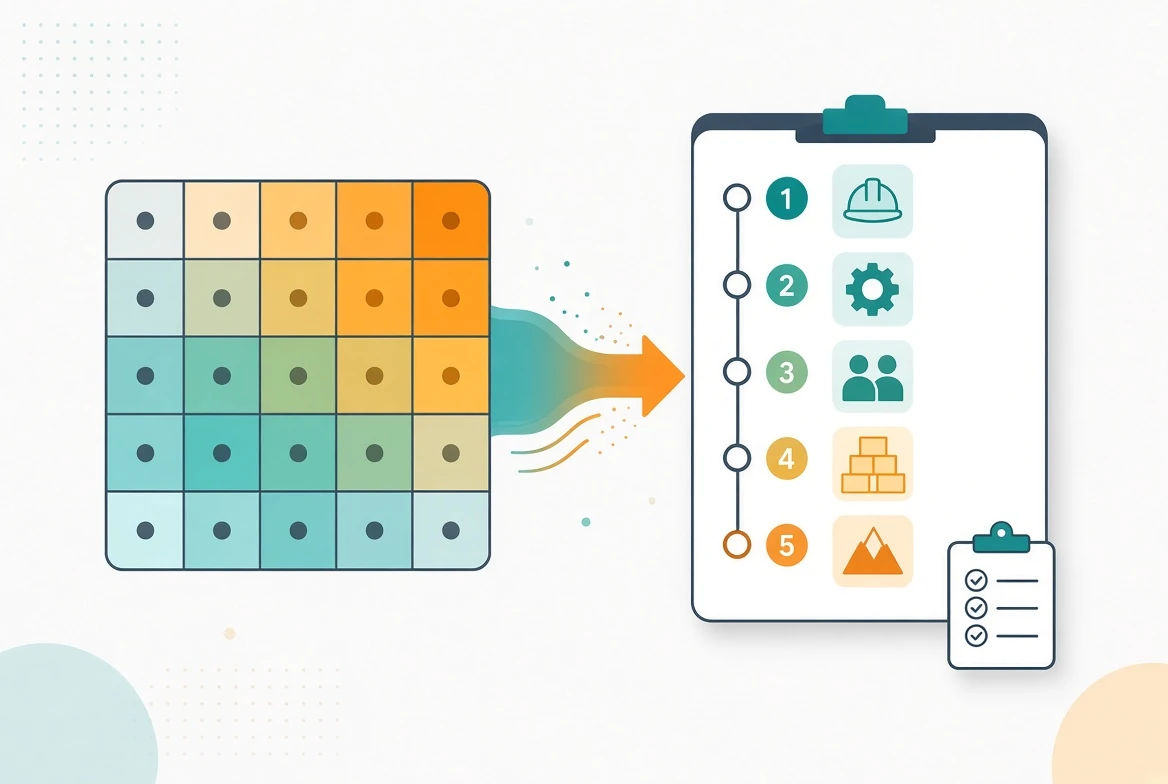
Risk Assessment vs Method Statement (RAMS): Key Differences
A risk assessment identifies what could cause harm; a method statement sets out how the work will be done safely. Here is how they differ, what UK law actually requires, and when you need both.

Employee Incident Report form: RIDDOR-Ready Template Guide
Ensure workplace safety with our RIDDOR-ready employee incident report form. Download the template and streamline your incident reporting today!