
What is permit to work? A guide for safety professionals
What is permit to work? A guide for safety professionals
A practical guide to understanding permit to work systems, how they function in practice, and why they remain a core control for high-risk activities under UK health and safety management.
TL;DR
- A permit to work controls high-risk tasks by verifying hazard assessments and safety measures before work begins.
- It requires dual signatures, clear communication, and continuous monitoring to maintain safety and prevent incidents.
- Digital systems support compliance by improving verification, record-keeping, and overall safety culture.
A permit to work is a formal documented system that authorises, controls, and monitors high-risk or non-routine tasks to confirm they are carried out safely. Defined by HSE HSG250, it is a management control, not a form-filling exercise. The system applies across construction, manufacturing, facilities management, and any sector where hazardous activities require planned authorisation before work begins. Understanding the permit to work process is the foundation of effective site safety management, and getting it right separates organisations that prevent incidents from those that react to them.
What is a permit to work system and what does it cover?
A permit to work system is a verified management control that confirms hazard assessments and safety controls are in place before any high-risk task starts. It is not a standalone safe system of work. The permit verifies that a safe system already exists and is ready to be enacted.

The system covers activities where the consequences of error are severe. Common examples include hot work such as welding or cutting, confined space entry, electrical isolation, working at height, and excavation work. Each of these activities carries the potential for fatalities if controls are absent or poorly communicated.
A complete permit system includes clear policies, defined procedures, trained personnel, and assigned accountabilities. Permits complement risk assessments but serve a distinct function. A risk assessment identifies hazards and proposes controls. A permit confirms those controls are physically in place at the moment work begins.
Common permit types and their hazards
Different activities require different permit types. The table below outlines the most widely used categories in UK industry.
| Permit type | Primary hazard | Key controls required |
|---|---|---|
| Hot work | Fire, explosion | Fire watch, extinguisher, area clearance |
| Confined space | Asphyxiation, toxic gas | Atmospheric testing, rescue plan, standby person |
| Electrical isolation | Electrocution | Lockout/tagout, isolation verification |
| Working at height | Falls | Edge protection, harness, rescue plan |
| Excavation | Collapse, buried services | Service drawings, shoring, exclusion zones |
Each permit type demands specific competencies from both the authoriser and the person performing the work. A confined space permit, for example, requires atmospheric monitoring before entry and a documented rescue procedure. A hot works permit demands a fire watch period after the task ends, not just during it.
How does the permit to work process function in practice?
The permit to work process follows a defined sequence. Each step must be completed before the next begins. Skipping steps is the most common cause of permit failure.
- Request. The person performing the work submits a request describing the task, location, duration, and hazards involved.
- Review. The authorising manager or competent person reviews the request against the risk assessment and checks that all isolations and controls are confirmed.
- Authorisation. The permit requires two signatures: the authoriser and the worker. This dual-control mechanism forces a mandatory safety conversation before work starts.
- Communication. The permit is displayed at the work location and shared with all relevant teams, including those whose work may be affected by the task.
- Monitoring. A supervisor or responsible person checks that controls remain in place throughout the task. Conditions on site can change rapidly.
- Suspension or cancellation. If conditions change or a new hazard emerges, the permit must be suspended immediately. Work cannot resume until a fresh review is completed.
- Close-out. On completion, the worker and authoriser both sign off. The permit is retained as a compliance record.
Shift handovers: the most dangerous moment
Shift handovers are the weakest link in most permit systems. When one team leaves and another arrives, permits in progress must be formally communicated, not assumed. Verbal handovers without written verification create gaps where controls are misunderstood or overlooked entirely.
Pro Tip: Require an outgoing supervisor to sign a handover log confirming the status of every active permit before leaving site. The incoming supervisor signs to acknowledge receipt. This single step closes the most common gap in permit continuity.
For construction sites specifically, shift handover best practices include a physical walkdown of active work areas before the incoming team begins. This confirms that isolations are intact and conditions match what the permit describes.
Why is a permit to work system critical for managing high-risk activities?
A permit to work system is critical because it forces confirmation of safety-critical details before work begins, creating shared visibility across teams about scope, hazards, isolations, and restrictions. Without this shared visibility, two teams can unknowingly create conflicting conditions. An electrical team re-energising a circuit while a maintenance team works on connected equipment is a real and recurring scenario. A permit system prevents it.
The permit also creates an audit trail. When an incident occurs, investigators can determine whether controls were authorised, whether the permit was current, and whether handovers were documented. This protects both workers and organisations under CDM 2015 and RIDDOR requirements, and supports evidence of effective management arrangements expected by the HSE.
A common misconception is that the permit document itself provides safety. It does not. Treating permit completion as form-filling creates false assurance while actual risks remain unaddressed. The permit is only as effective as the controls it verifies.
Benefits and common pitfalls
| Factor | Benefit when done well | Risk when done poorly |
|---|---|---|
| Authorisation | Clear accountability for task safety | Unauthorised work proceeds unchecked |
| Communication | All teams aware of active hazards | Conflicting operations create danger |
| Monitoring | Controls confirmed throughout task | Conditions change without response |
| Close-out | Compliance record retained | No evidence of safe completion |
| Handover | Safety continuity between shifts | Controls misunderstood or lost |
For organisations managing construction safety across multiple sites, the permit system also supports CDM 2015 principal contractor duties by demonstrating that high-risk activities are planned, coordinated, and controlled. On higher-risk projects, this disciplined approach also aligns with the intent of the Building Safety Act, where robust control of work and clear accountability are increasingly important.
What are the common challenges in implementing permit to work systems?
Practitioners consistently underestimate the time and resource commitment required for effective permit management. This leads to shortcuts, and shortcuts lead to compliance gaps. The challenges are predictable, which means they are also preventable.
The most common problems health and safety professionals encounter include:
- Paperwork fatigue. When permits are lengthy and repetitive, workers begin treating them as administrative obstacles rather than safety tools. Completion quality drops, and critical fields are left blank.
- Incomplete hazard assessments. A permit issued before all isolations are confirmed is worse than no permit at all. It creates a false sense of security.
- Competency gaps. Authorisers who lack technical knowledge of the task cannot meaningfully verify that controls are adequate. Competence must be demonstrated, not assumed.
- Resistance from personnel. Experienced workers sometimes view permits as unnecessary for tasks they have performed hundreds of times. This attitude is the precursor to most serious incidents.
- Inadequate training. Personnel who do not understand the purpose of the permit system cannot use it effectively. Training must cover the “why,” not just the “how.”
Digital permit systems address several of these challenges directly. They reduce paperwork fatigue through guided digital forms, create automatic audit trails, and send notifications to relevant parties when permits are issued, modified, or closed. For SMEs in particular, digital tools make permit management practical without requiring dedicated administrative resource.
Pro Tip: Embed permit to work as a non-negotiable step in your site induction and toolbox talk programme. When new workers understand from day one that permits are a verification tool protecting them personally, resistance drops significantly.
Permit to work must also sit within a broader control of work framework to be effective. Treating it as an isolated task disconnects it from the risk assessments, method statements, and supervision structures that give it meaning. The permit is the final checkpoint in a chain of controls, not a standalone document. For organisations planning hazardous construction activities, understanding builders risk and planning requirements alongside permit controls strengthens the overall risk management approach.
My view on where permit to work practice is heading
The most significant shift I have observed in permit to work practice is the move away from treating permits as paperwork and towards treating them as conversations. The dual-signature requirement has always existed, but for years many sites treated it as a box-ticking exercise. Two people signed a form without genuinely reviewing the controls together. That is changing, and the change is being driven by two forces: enforcement and technology.
HSE enforcement actions consistently cite inadequate permit systems as a contributing factor in serious incidents. That regulatory pressure is making organisations take the verification function seriously, not just the documentation function. The permit is now understood as evidence that a real conversation happened, not just that a form was completed.
Digital permit platforms are accelerating this shift. When a permit is issued on a mobile device, the system can require photographic evidence of isolations, GPS confirmation of location, and timestamped signatures. That level of verification was impossible with paper. It also creates an audit trail that holds up under investigation.
The cultural challenge remains the hardest part. Technology can enforce process, but it cannot replace the mindset that safety controls exist to protect real people. The organisations that get this right are the ones where site managers treat permit refusal as a sign of a healthy system, not an operational inconvenience. That attitude starts at the top and takes years to build. The permit to work system is the mechanism. The culture is what makes it work.
— Harry
How Lifesafety supports permit to work compliance
Lifesafety is built for health and safety professionals who need permit management that works in practice, not just in theory.
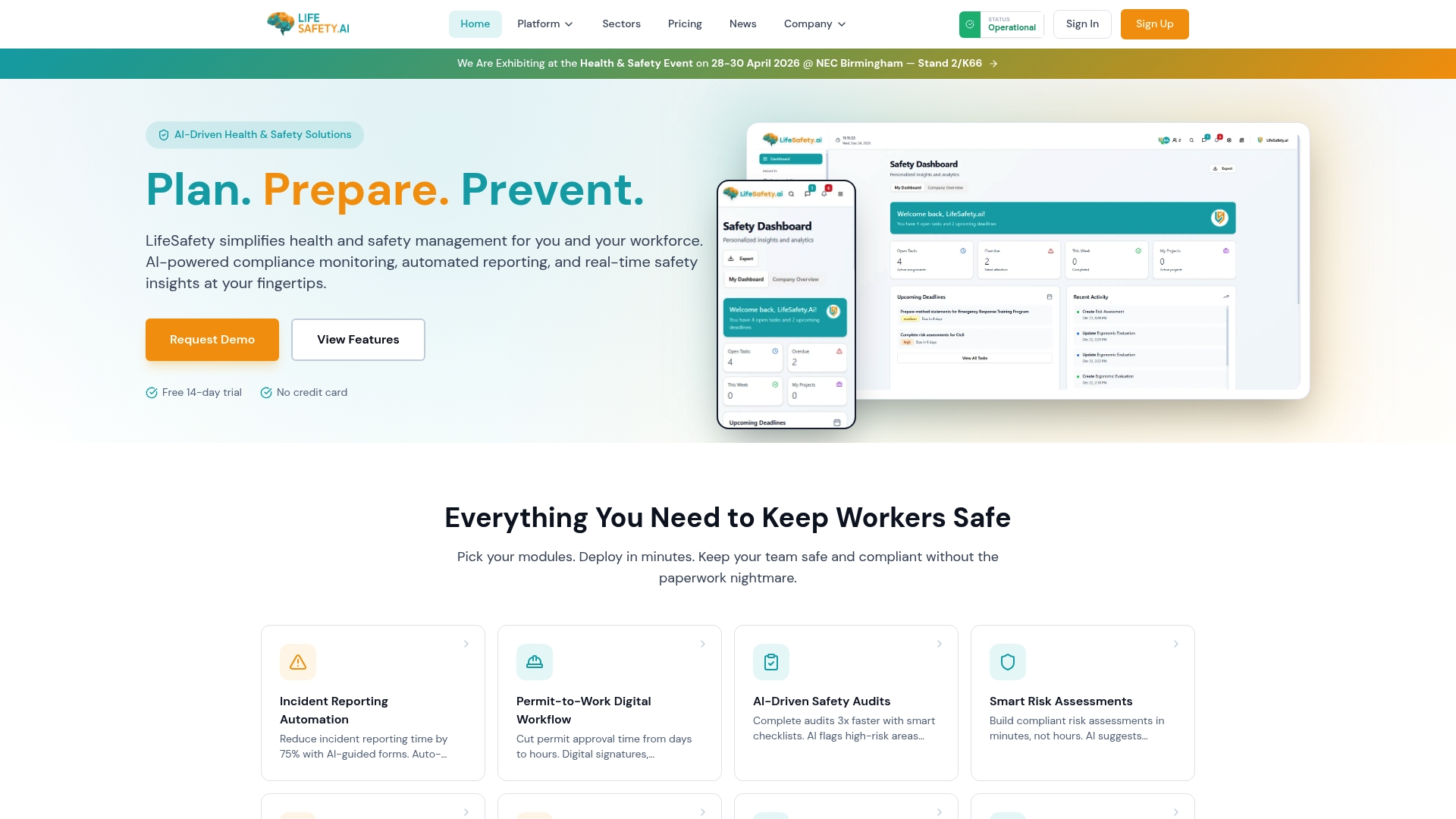
The Lifesafety permit to work module digitises the full authorisation workflow, from request and review through to sign-off and record retention. This helps organisations standardise control of work across construction, manufacturing, facilities, and contractor management environments.
In practical terms, digital permit workflows help teams:
- Verify controls before work starts with structured approval steps and mandatory fields.
- Improve accountability through named authorisers, workers, timestamps, and status tracking.
- Strengthen communication by making active permits visible to supervisors and affected teams.
- Support compliance evidence for HSE inspections, internal audits, and post-incident investigations.
- Reduce administrative burden while maintaining a clear audit trail aligned with UK safety expectations.
For duty holders working under CDM 2015, managing contractor interfaces, isolations, and high-risk activities through a consistent digital process can materially improve coordination. For organisations with reporting obligations under RIDDOR, better records and clearer evidence of control measures can also support incident review and corrective action.
Key takeaway
A permit to work is not just a document. It is a live control system for hazardous work. When it is properly designed, competently authorised, clearly communicated, and actively monitored, it helps prevent serious harm and demonstrates the standard of control expected by UK regulators.
Related Articles

Incident reporting software comparison: UK guide 2026
Discover our incident reporting software comparison for UK workplaces. Explore top options like Lifesafety, SafetyCulture, and more.

Safety management solutions for construction: UK SMS guide
Discover essential safety management solutions for construction sites in the UK. Learn how a mobile-first SMS can enhance safety and compliance.

Best health and safety software for UK workplaces: 2026 guide
Discover the best health and safety software for UK workplaces in 2026. Explore top picks like Lifesafety for compliance and efficiency!