What is a safety audit? Essential guide for UK compliance
What is a safety audit? Essential guide for UK compliance
TL;DR:
- Safety audits are comprehensive reviews verifying actual enforcement of safety procedures on site.
- Effective audits include site observations, staff interviews, and gap analysis to ensure compliance.
- Enforcement and safety culture are critical; audits must focus on behaviours, not just paperwork.
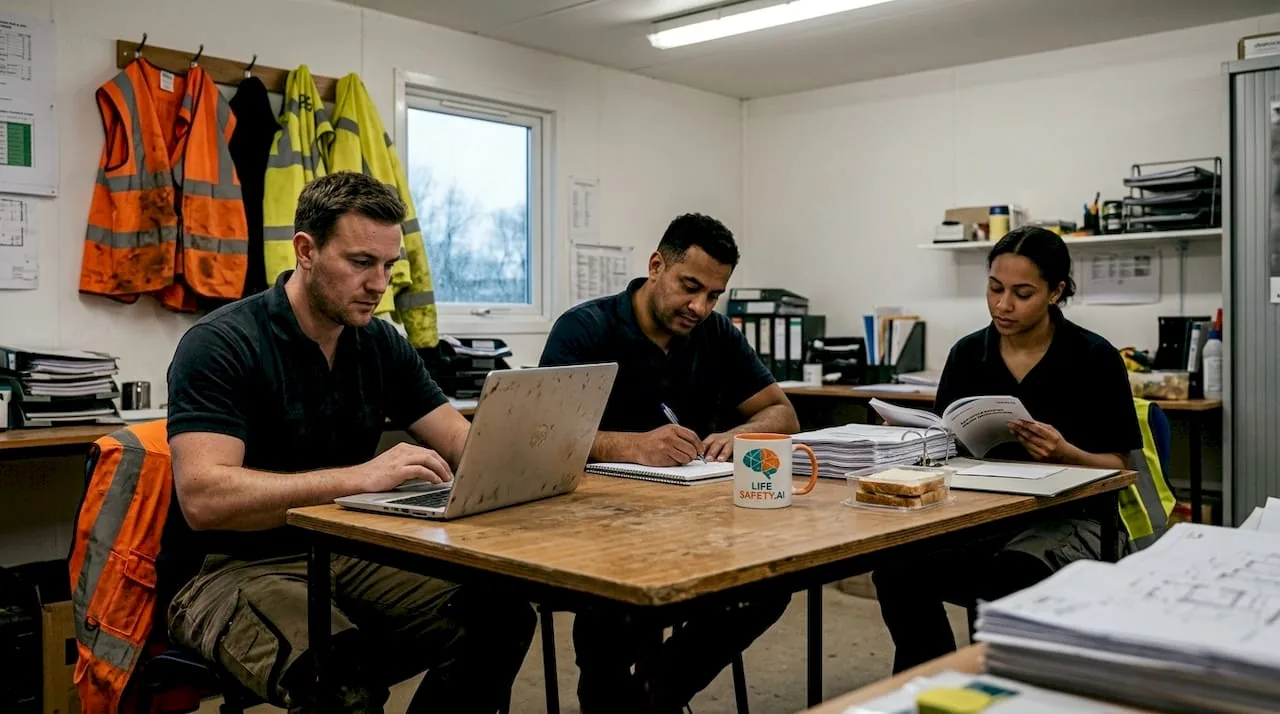
The construction fatality rate in the UK is five times the national average, yet many sites still treat safety audits as a box-ticking exercise. If you are a health and safety officer or decision-maker in construction or manufacturing, you will recognise the frustration: folders full of signed procedures, yet unsafe behaviours persist on the ground. A safety audit is not simply about paperwork. It is about verifying that your procedures are actually being followed, that risks are genuinely controlled, and that your organisation can demonstrate due diligence when it matters most. This guide clarifies what a safety audit is, how it differs from inspections and risk assessments, and how to apply it effectively across your sites.
Table of Contents
- Understanding safety audits in UK construction and manufacturing
- Key stages and processes of a safety audit
- Comparing safety audits, inspections, and risk assessments
- Applying safety audits to high-risk areas and temporary works
- A fresh perspective: Why enforcement, not paperwork, is the real key to audit success
- Next steps: Streamline safety audits with LifeSafety.ai
- Frequently asked questions
Key Takeaways
| Point | Details |
|---|---|
| Systemic compliance matters | Safety audits assess both procedures and their practical enforcement, not just paperwork. |
| High-risk focus saves lives | Prioritising audits in areas like temporary works and work at height addresses the most frequent accidents. |
| Regulations drive audit practice | CDM 2015 and BS 5975 define UK audit requirements for construction and manufacturing. |
| Effective audits prevent fines | Properly conducted audits demonstrate due diligence and reduce legal liability. |
| Enforcement is crucial | Ensuring behaviour change on site is the pivotal factor for audit success. |
Understanding safety audits in UK construction and manufacturing
A safety audit is a systematic, documented review of an organisation’s safety procedures, practices, and management systems. Unlike a quick walk-around, an audit examines whether your safety framework is functioning as intended, from written policies through to real-world application on site. It is structured, evidence-based, and designed to identify gaps between what is written and what is actually happening.
In UK construction, audits verify compliance with CDM 2015 and BS 5975, the two central frameworks governing construction safety and temporary works respectively. CDM 2015, the Construction (Design and Management) Regulations, places clear duties on clients, designers, and contractors to manage safety throughout a project’s lifecycle. BS 5975 governs temporary works procedures, an area where audit failures carry particularly serious consequences. Our CDM compliance overview explains how these duties translate into day-to-day site management.
It is worth being precise about terminology, because these terms are often used interchangeably when they should not be.
- Safety audit: A systematic review of management systems, procedures, and their enforcement across an organisation or project.
- Safety inspection: A physical check of a specific area, piece of equipment, or activity to identify immediate hazards.
- Risk assessment: A process for identifying potential hazards, evaluating the likelihood and severity of harm, and determining control measures.
Each serves a distinct purpose. Audits are broader and more strategic. Inspections are targeted and reactive. Risk assessments are predictive. Using our safety audits module alongside the wider safety modules helps you manage all three without duplicating effort.
The core purposes of a safety audit include:
- Verifying legal compliance with CDM 2015, RIDDOR, and relevant BS standards
- Confirming that safety procedures are enforced, not merely documented
- Identifying systemic weaknesses before incidents occur
- Demonstrating due diligence to regulators, clients, and insurers
- Supporting continuous improvement across safety management systems
When you approach audits with this clarity, they become a genuine management tool rather than an administrative burden.
Key stages and processes of a safety audit
A well-structured safety audit follows a clear sequence. Skipping stages, particularly the site observation and staff interview phases, is where most audits lose their value. Here is the process we recommend:
- Pre-audit planning: Define the scope, objectives, and relevant regulations. Identify which areas, activities, or management systems will be reviewed.
- Documentation review: Examine existing policies, method statements, risk assessments, training records, and previous audit findings.
- Site observation: Physically verify that documented procedures are being followed. Observe work at height, temporary works, plant operations, and PPE use.
- Staff interviews: Speak with operatives, supervisors, and managers to understand whether they know the procedures and whether those procedures are realistic.
- Gap analysis: Compare observed practice against documented requirements and regulatory standards.
- Corrective action plan: Assign clear ownership, timescales, and priority ratings to each identified gap.
- Final report: Produce a structured report with findings, evidence, and actions, distributed to relevant stakeholders.
The difference from safety inspections becomes most apparent at stages three and four. Inspections tend to stop at observation. Audits go further, asking why a gap exists and whether the management system itself is at fault.
One of the most common audit failures is treating the documentation review as the audit itself. Failures often occur where procedures exist on paper but are not enforced. A signed permit-to-work form means nothing if no one checks that the work matches the permit.
Edge cases deserve particular attention. Temporary works, such as scaffolding, falsework, and excavation support, are areas where our safety audits module can track compliance against BS 5975 checkpoints systematically. Work at height audits should verify not just the presence of edge protection but whether operatives are actively using it and whether supervisors are enforcing its use.
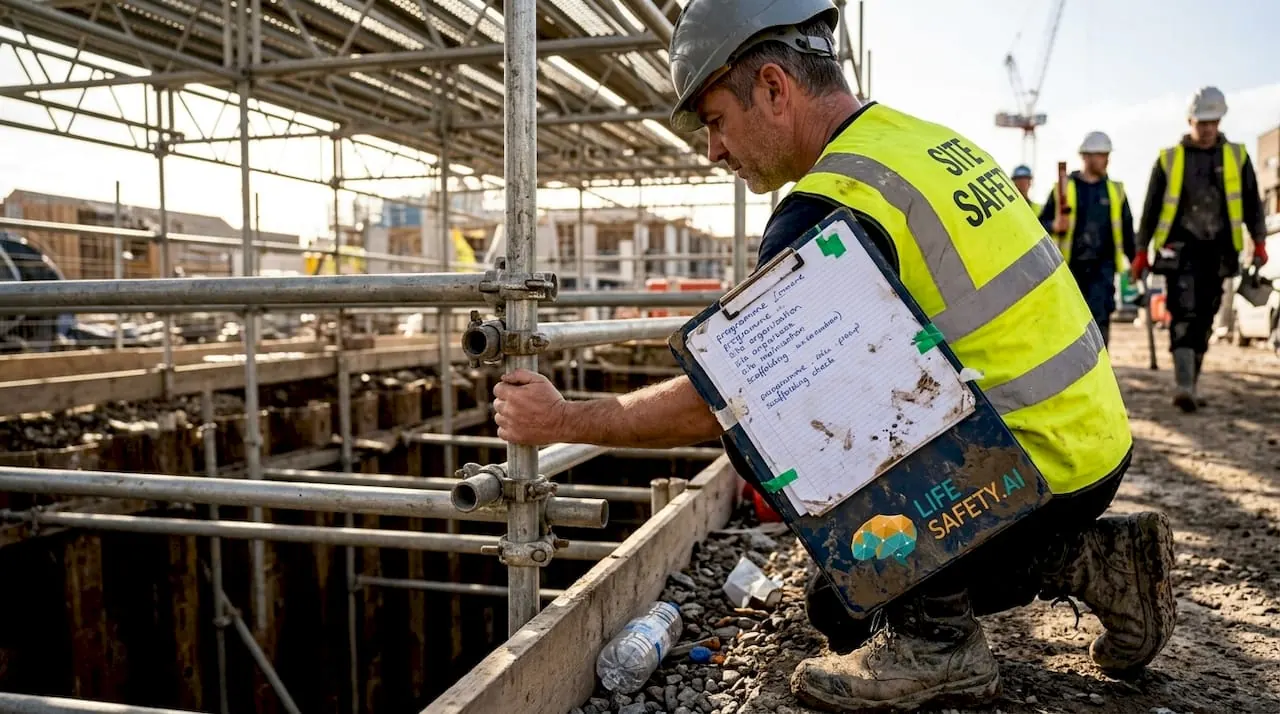
Pro Tip: During site visits, focus your observation on the moments when supervisors are not watching. Unsafe shortcuts tend to appear precisely when oversight is perceived to be absent. This tells you far more about enforcement culture than any document review.
Comparing safety audits, inspections, and risk assessments
Understanding which tool to use, and when, is essential for effective safety management. The table below sets out the key differences.
| Feature | Safety audit | Safety inspection | Risk assessment |
|---|---|---|---|
| Scope | Systemic and organisation-wide | Specific area or activity | Specific task or hazard |
| Frequency | Periodic, planned | Regular or triggered | Before new tasks or changes |
| Focus | Management system compliance | Physical hazards | Likelihood and severity of harm |
| Output | Audit report with corrective actions | Inspection checklist or report | Risk register or method statement |
| Regulatory link | CDM 2015, BS 5975, RIDDOR | HSE guidance, site rules | Management of Health and Safety at Work Regulations 1999 |
Each process is most useful in a different context:
- Use a risk assessment before starting any new activity, introducing new equipment, or changing a process.
- Use a safety inspection to check a specific area regularly, such as weekly scaffold inspections or daily plant checks.
- Use a safety audit to evaluate whether your entire safety management system is functioning and being enforced.
Our safety inspections module and risk assessment module work alongside the safety audits module to give you a complete picture. A joined-up approach reduces both incidents and liability exposure by ensuring hazards are identified, controls are defined, and compliance is verified in practice.
Audits demonstrate due diligence and can significantly reduce fines and legal liability in the event of an incident. Regulators and courts look for evidence that an organisation actively managed safety, not just that it had policies in place.
Audits target work at height and temporary works precisely because these are the areas where the fatality rate is highest. Focusing audit effort here is not optional; it is where the evidence of due diligence is most scrutinised.
Applying safety audits to high-risk areas and temporary works
Not all audit effort should be distributed equally. Construction fatality rates are five times the national average, and the highest concentrations of fatal incidents cluster around a small number of activity types. Directing your audit programme at these areas delivers the greatest impact.
| High-risk area | Common incidents | Key mitigation steps |
|---|---|---|
| Work at height | Falls from scaffolding, ladders, roofs | Verify edge protection, harness use, and supervisor enforcement |
| Temporary works | Collapse of falsework, excavation failure | Audit against BS 5975 checkpoints; verify appointed TWC role |
| Plant and machinery | Struck-by incidents, entrapment | Check segregation plans, operator competence records |
| Fire safety | Ignition from hot works, inadequate escape routes | Review hot works permits, fire risk assessments, and evacuation drills |
| Manual handling | Musculoskeletal injuries | Confirm training records and observe actual lifting techniques |
For construction site safety, the practical actions your audit team should take include:
- Confirm that the Temporary Works Coordinator (TWC) role is clearly assigned and active, not just named on a document.
- Verify that scaffolding inspection records align with what is physically present on site, using our scaffolding inspection module.
- Review hot works permits against actual work being carried out, and check that fire safety management procedures are being followed in real time.
- Cross-reference training records with observed competence during site visits.
- Review construction risk trends to ensure your audit scope reflects current HSE priorities.
Pro Tip: Engage frontline operatives directly during your audit. Ask them to walk you through what they do when something looks unsafe. Their answers reveal whether your safety culture is genuinely embedded or whether compliance exists only when management is watching.
A fresh perspective: Why enforcement, not paperwork, is the real key to audit success
Here is the uncomfortable truth behind many failed safety systems: most organisations do not lack procedures. They lack consistent enforcement. That distinction matters because incidents rarely happen due to an absence of paperwork. They happen because controls that exist on paper are tolerated when ignored in practice.
This is why a strong safety audit must test behaviour, supervision, and accountability. A site may have a compliant permit-to-work process, a signed induction record, and a complete training matrix, yet still expose workers to serious risk if supervisors allow shortcuts, if production pressure overrides controls, or if unsafe acts go unchallenged. In those circumstances, the management system is not working, regardless of how polished the documentation appears.
For UK duty holders, this has direct legal significance. Under CDM 2015, organisations must plan, manage, monitor, and coordinate work so that it is carried out without risks to health and safety. Under RIDDOR, serious incidents and dangerous occurrences may trigger reporting duties and subsequent scrutiny of whether controls were genuinely implemented. Under the Building Safety Act, accountability and demonstrable competence are increasingly central, especially on higher-risk buildings and complex projects.
Audit success therefore depends on asking harder questions, such as:
- Do supervisors intervene when they see unsafe behaviour?
- Are operatives confident enough to stop work if conditions change?
- Do managers follow through on corrective actions, or do actions remain open until the next audit cycle?
- Are repeated findings treated as isolated issues, or recognised as evidence of a deeper management failure?
- Does leadership reward safe delivery, or only fast delivery?
These questions move the audit from compliance theatre to meaningful assurance. They also help explain why some organisations with modest documentation perform better in practice than others with extensive paperwork. The difference is not administrative sophistication. It is whether expectations are enforced consistently at every level.
One useful test is to review repeat findings over time. If the same issues recur across multiple audits, such as missing edge protection, poor housekeeping, incomplete permits, or inconsistent plant segregation, the problem is no longer a local non-conformance. It is a leadership and enforcement issue. At that point, the corrective action should not simply be “remind staff”. It should address supervision, competence, workload, and accountability.
In practical terms, the strongest audit programmes do three things well:
- They prioritise critical risks such as work at height, temporary works, fire, lifting operations, and plant movement.
- They verify real behaviour through observation and interviews rather than relying solely on records.
- They close the loop by tracking actions to completion and escalating overdue or repeated failures.
If you want audits to reduce incidents rather than simply generate reports, this is the shift to make. Measure what happens on site, not just what sits in a folder.
Next steps: Streamline safety audits with LifeSafety.ai
Once you understand what a safety audit should achieve, the next challenge is consistency. Many teams know what good looks like, but struggle to deliver it across multiple sites, contractors, and high-risk activities. That is where digital systems make a measurable difference.
LifeSafety.ai helps UK construction and manufacturing teams standardise audit workflows, capture evidence in real time, and maintain a clear audit trail for internal assurance, client reviews, and regulatory scrutiny. Instead of relying on disconnected spreadsheets, paper forms, and email chains, you can manage audits through structured workflows aligned to operational risk.
Key benefits include:
- Standardised audit templates for construction, manufacturing, temporary works, fire safety, and site compliance.
- Centralised evidence capture including photos, notes, observations, and action tracking.
- Clear accountability with assigned owners, deadlines, and escalation for overdue actions.
- Integrated compliance support across CDM compliance, safety audits, inspections, and risk assessments.
- Better visibility of recurring issues so leadership teams can identify systemic failures rather than treating each finding in isolation.
This matters not only for operational performance, but also for legal defensibility. If an incident occurs, your organisation needs to show more than intent. It needs to show evidence of planning, monitoring, intervention, and follow-up. A robust digital audit trail supports that position far more effectively than fragmented records.
If your current audit process feels overly manual, inconsistent, or too focused on paperwork, now is the right time to review it. Start by mapping your highest-risk activities, checking whether repeat findings are being closed properly, and ensuring your audit criteria reflect current HSE expectations. From there, standardising the process through LifeSafety.ai can help you move from reactive compliance to proactive control.
Practical next step
Review your last three audit reports and identify repeated findings, overdue actions, and any gaps in evidence from site observations or interviews. Those patterns will show you where your audit process needs strengthening first.
Frequently asked questions
What is the main purpose of a safety audit?
The main purpose of a safety audit is to verify whether an organisation’s health and safety management system is working in practice. It checks not only whether procedures exist, but whether they are understood, implemented, and enforced on site.
How is a safety audit different from a safety inspection?
A safety inspection focuses on identifying immediate hazards in a specific area, activity, or item of equipment. A safety audit is broader and examines the effectiveness of the underlying management system, including documentation, supervision, worker understanding, and corrective action processes.
How often should safety audits be carried out in the UK?
There is no single legal frequency that applies to every organisation. Audit frequency should be based on risk, project complexity, incident history, client requirements, and regulatory exposure. High-risk construction activities, including temporary works and work at height, generally justify more frequent and more detailed audits.
Are safety audits a legal requirement?
Specific regulations may not always prescribe the word “audit”, but UK duty holders are required to plan, manage, monitor, and review health and safety arrangements. In practice, audits are one of the most effective ways to demonstrate compliance with duties under legislation such as CDM 2015, the Health and Safety at Work etc. Act 1974, and related regulations.
What should be included in a safety audit report?
A strong audit report should include the audit scope, criteria, areas reviewed, evidence gathered, findings, risk priorities, photographs or supporting records where relevant, and a corrective action plan with named owners and deadlines. It should also distinguish between isolated issues and systemic failures.
Why are temporary works a priority in safety audits?
Temporary works are a priority because failures can lead to catastrophic outcomes, including collapse, entrapment, and fatal injury. UK projects should audit temporary works against BS 5975, verify design and checking arrangements, and confirm that the Temporary Works Coordinator is actively managing the process.
How do safety audits support RIDDOR and HSE compliance?
Safety audits support RIDDOR and wider HSE compliance by providing evidence that hazards were identified, controls were monitored, and corrective actions were managed. If a reportable incident occurs, audit records can help demonstrate due diligence and show whether the organisation took reasonable steps to prevent harm.
What is the biggest mistake organisations make with safety audits?
The biggest mistake is treating the audit as a paperwork exercise. If the process does not include site observation, worker engagement, and follow-up on corrective actions, it may create a false sense of assurance while leaving real risks unmanaged.
Related Articles

Incident reporting software comparison: UK guide 2026
Discover our incident reporting software comparison for UK workplaces. Explore top options like Lifesafety, SafetyCulture, and more.

Safety management solutions for construction: UK SMS guide
Discover essential safety management solutions for construction sites in the UK. Learn how a mobile-first SMS can enhance safety and compliance.

Best Health and Safety Software for UK Workplaces: A Guide
Discover the best health and safety software for UK workplaces in 2026. Explore top picks like Lifesafety for compliance and efficiency!