
Types of Workplace Hazards: A 2026 Guide for Professionals
Types of workplace hazards: a 2026 guide for safety professionals
A practical guide to identifying, assessing, and controlling workplace hazards across construction, manufacturing, facilities, and high-risk operational environments, with clear links to UK duties under HSE guidance, COSHH, RIDDOR, CDM 2015, and the Building Safety Act.
TL;DR
- Workplace hazards include physical, chemical, biological, ergonomic, psychosocial, and safety risks.
- Each category requires a distinct identification method, inspection scope, and control strategy.
- Effective risk reduction depends on applying the hierarchy of controls, prioritising elimination and higher-order measures before administrative controls or PPE.
- In real workplaces, hazards often overlap, so inspections and controls should be integrated rather than siloed.
- A robust hazard register linked to risk assessments, training, inspections, and review dates supports compliance and audit readiness.
Workplace hazards are any source, situation, or act with the potential to cause harm to workers through injury, illness, or psychological damage. Established safety frameworks consistently group hazards into six primary categories: physical, chemical, biological, ergonomic, psychosocial, and safety hazards. Each category demands a different identification and control approach, and understanding those differences is the foundation of any credible workplace risk assessment.
For UK duty holders, hazard identification is not just good practice. It underpins compliance with core legal duties under the Health and Safety at Work etc. Act 1974, the Management of Health and Safety at Work Regulations 1999, COSHH, CDM 2015, and reporting obligations under RIDDOR. For health and safety managers, principal contractors, and site supervisors, knowing precisely which types of workplace hazards are present determines which controls are legally required and operationally necessary.
1. Physical hazards in the workplace
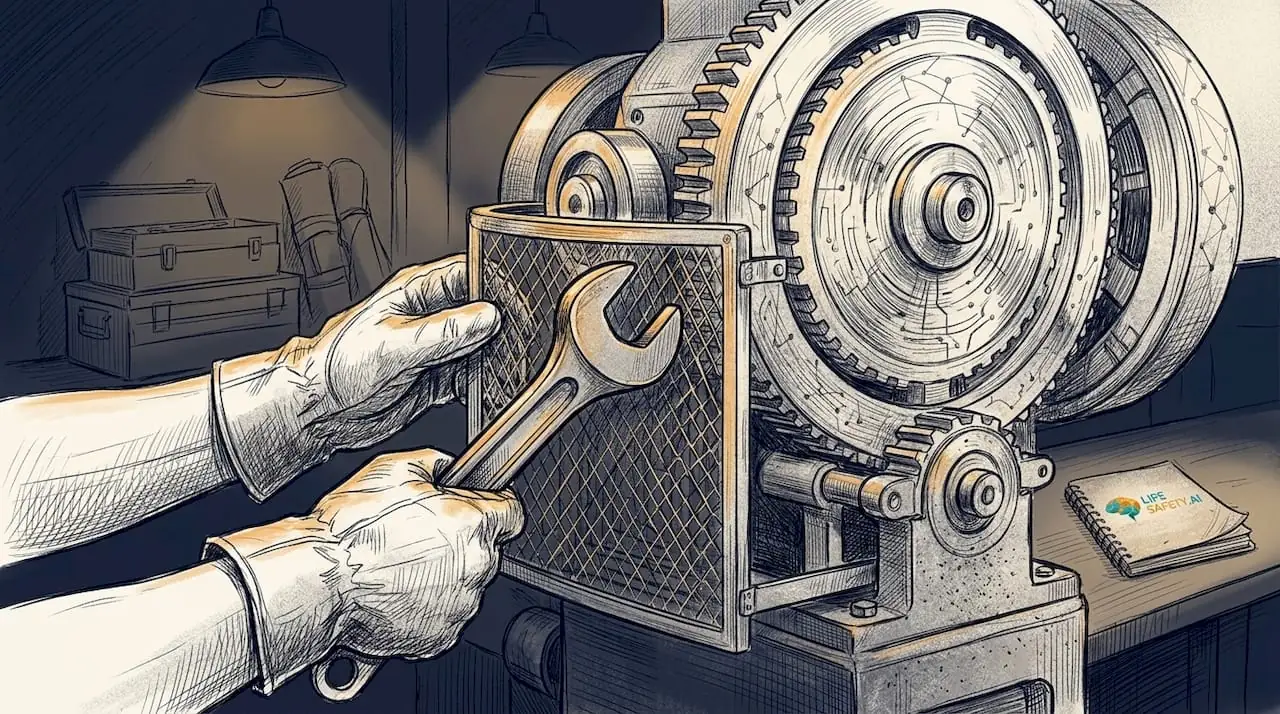
Physical hazards are among the most common risks on industrial, logistics, and construction sites. They include machinery in motion, excessive noise, extreme temperatures, vibration, radiation, slips, trips, falls, and inadequate lighting. In practice, these hazards often arise from a combination of task design, equipment condition, environmental factors, and unsafe working methods rather than a single isolated source.
Noise exposure above 85 dB over an eight-hour shift can cause permanent hearing damage if not properly controlled. Heat stress on outdoor sites, in foundries, or in poorly ventilated plant rooms can impair concentration, increase fatigue, and raise the likelihood of secondary incidents. Cold exposure, poor illumination, and vibration from hand-held tools can also contribute to both acute injury and long-term ill health.
For supervisors, the practical implication is clear: physical hazards require a combination of engineering controls, such as guarding, acoustic enclosures, extraction, and improved lighting, supported by administrative controls such as work-rest cycles, exposure monitoring, and planned maintenance. Where incidents occur, the severity and mechanism of harm may also trigger RIDDOR reporting, particularly where there is a specified injury, over-seven-day absence, or dangerous occurrence.
2. Chemical safety hazards
Chemical hazards arise from exposure to substances that can harm health through inhalation, skin contact, ingestion, or absorption. These hazards include solvents, dusts, fumes, gases, vapours, corrosives, sensitisers, carcinogens, and reactive substances. Classification under the Globally Harmonised System (GHS) determines labelling, hazard communication, and the content of Safety Data Sheets.
In the UK, chemical risk management sits squarely within COSHH. For safety managers, GHS alignment is not optional. A chemical programme that lacks current SDS documentation, correct labelling, suitable storage segregation, and evidence of worker instruction creates immediate compliance gaps. This is especially relevant in manufacturing, maintenance, cleaning operations, and refurbishment work where multiple substances may be introduced by contractors.
A well-structured chemical hazard register should link each substance to its GHS classification, SDS, storage requirements, exposure controls, emergency actions, and training records. This creates a single source of truth for audits, inspections, and operational planning. The LifeSafety.ai modules library supports this workflow through digital assessments, training records, and review tracking.
Pro tip
When building your chemical hazard register, map each substance to its GHS hazard class first. That single step connects inventory management, labelling checks, SDS filing, storage controls, and training requirements into one coherent workflow rather than several disconnected administrative tasks.
3. Biological hazards at work
Biological hazards include bacteria, viruses, fungi, parasites, bloodborne pathogens, and other micro-organisms that workers may encounter through direct contact, airborne transmission, sharps injuries, contaminated surfaces, or waste streams. The highest exposure risk is typically found in healthcare, waste management, laboratories, agriculture, cleaning, and certain facilities management activities.
Effective control follows the hierarchy of controls. The priority is to eliminate the source where possible, then substitute safer processes, then apply engineering controls such as negative pressure rooms, local containment, or designated hygiene stations. Administrative controls include exposure monitoring, vaccination programmes, cleaning schedules, hand hygiene protocols, and incident escalation procedures. PPE is the final barrier, not the first line of defence.
In UK settings, biological hazard management should also be integrated with occupational health arrangements, first aid provision, cleaning standards, and contractor controls. Where exposure leads to a reportable disease or dangerous occurrence, RIDDOR may apply depending on the work activity and circumstances.
4. Ergonomic hazards and musculoskeletal risks
Ergonomic hazards arise when the physical demands of work exceed the body’s sustainable capacity. Common examples include repetitive motion, awkward postures, excessive force, prolonged static positions, poor workstation design, and manual handling. In construction, warehousing, manufacturing, and maintenance, these risks are often normalised because they develop gradually rather than through a single dramatic event.
Musculoskeletal disorders remain a major cause of lost working days in the UK, making ergonomic control both a compliance issue and a productivity issue. Tasks involving lifting, carrying, pushing, pulling, repetitive assembly, overhead work, or kneeling should be treated as ergonomic hazards requiring formal assessment. The manual handling module can support consistent assessment and training records across teams and sites.
Suitable controls include workstation redesign, mechanical lifting aids, task rotation, load reduction, improved layout, and worker training. However, training alone is rarely sufficient. If the task design remains poor, the risk remains embedded in the work.
6. Safety hazards from machinery and electrical systems
Safety hazards differ from health hazards because they typically cause immediate physical injury rather than gradual deterioration. This category includes moving machinery, unguarded equipment, electrical systems, work at height, vehicle movements, falling objects, and unsafe material handling. These are the hazards most likely to result in serious injury, fatality, or a dangerous occurrence.
Electrical hazards deserve particular attention in construction and manufacturing. Faulty wiring, overloaded circuits, damaged cables, inadequate earthing, and poor isolation practices can lead to electrocution, arc flash, burns, and fire. The fire safety management features within LifeSafety.ai are especially relevant here, as electrical faults remain a leading cause of workplace fires in the UK.
Primary controls include machine guarding, residual current devices (RCDs), lockout/tagout, permit-to-work systems, inspection regimes, and competent maintenance. On construction projects, these controls should be coordinated through the wider site management system required by CDM 2015, including contractor competence, supervision, and safe sequencing of work.
7. Applying the hierarchy of controls across hazard types
The hierarchy of controls is the most reliable framework for prioritising risk reduction across all hazard categories. In descending order of effectiveness, the six levels are elimination, substitution, isolation, engineering controls, administrative controls, and PPE. Controls should be selected systematically, not reactively, if they are to deliver genuine and defensible risk reduction.
“The most effective control measure is to eliminate the hazard and associated risk. If this is not reasonably practicable, you must minimise the risk by working through the remaining control options.”
The principle of reasonable practicability governs control decisions in UK health and safety law. It requires duty holders to weigh the likelihood and severity of harm against the time, trouble, and cost of implementing a control. In practical terms, if a higher-order control is not selected, the decision should be documented and justified. This is especially important during HSE inspections, contractor reviews, and post-incident investigations.
A structured risk assessment module helps make these decisions traceable, reviewable, and audit-ready.
- Elimination: Remove the hazard entirely, for example by automating a dangerous manual task.
- Substitution: Replace a hazardous substance, tool, or process with a less hazardous alternative.
- Isolation: Separate the hazard from workers using barriers, enclosures, or restricted access.
- Engineering controls: Redesign equipment or processes to reduce exposure at source.
- Administrative controls: Change procedures, schedules, permits, supervision, or training arrangements.
- PPE: Provide personal protective equipment as the final layer of protection.
8. How hazard types overlap in practice
Hazard categories are useful for analysis, but real workplaces rarely present risks in neat isolation. A chemical vapour in a confined space may be a chemical hazard, a physical hazard due to oxygen displacement, and a psychosocial hazard because of the stress created by uncertainty and restricted escape. Likewise, a noisy, poorly lit production line may combine physical, ergonomic, and safety hazards in the same task area.
This overlap matters because single-category controls often fail. A respirator may reduce inhalation risk, but it does nothing to address poor ventilation, poor communication, or the anxiety created by an unpredictable environment. Effective control in overlapping scenarios requires integrated measures: engineering controls, monitoring, supervision, communication, and training working together.
Routine inspections are critical for this reason. If inspections are carried out through a narrow lens, important interactions between hazards will be missed. On complex sites, especially under CDM 2015, inspections should consider how design, sequencing, contractor interfaces, and environmental conditions combine to create compound risk.
Pro tip
When conducting site inspections, use a multi-category hazard checklist rather than separate checklists for each hazard type. This prompts inspectors to consider overlapping risks at each location instead of treating each category as an isolated issue.
9. Building a hazard register that supports compliance
A hazard register is only useful if it aligns with the wider risk management workflow. A compliance-ready register should map each identified hazard to its category, location, task, persons at risk, inherent risk, controls in place, residual risk, responsible owner, and review date. This structure supports internal assurance, contractor management, and external scrutiny under UK frameworks including RIDDOR, CDM 2015, and HSE inspection expectations.
The comparison below shows how each hazard type differs in its typical harm mechanism, primary control approach, and inspection focus. This is useful when designing inspection forms, audit schedules, and digital workflows.
| Hazard type | Typical harm mechanism | Primary control approach | Inspection focus |
|---|---|---|---|
| Physical | Immediate injury or chronic condition | Engineering controls, guarding, environmental control | Equipment condition, lighting, temperature, noise levels |
| Chemical | Inhalation, absorption, ingestion | SDS compliance, ventilation, COSHH controls | Labelling, storage, segregation, SDS availability |
| Biological | Infection, allergic reaction, contamination | Hygiene protocols, containment, vaccination | Exposure routes, cleaning standards, PPE condition |
| Ergonomic | Musculoskeletal disorder | Workstation redesign, task rotation, lifting aids | Posture, repetition, force, load weights |
| Psychosocial | Stress, anxiety, burnout | Work design, reporting systems, management support | Workload, supervision, communication, culture |
| Safety | Acute injury from machinery, electricity, falls, vehicles | Guarding, lockout/tagout, RCDs, access control | Equipment integrity, permits, isolation, exclusion zones |
Pro tip
Align your hazard register categories directly with your safety audits, risk assessments, incident reporting, and training workflows. When categories are consistent across the system, trends become easier to identify and corrective actions are easier to verify.
In practice, the strongest registers are not static spreadsheets. They are live operational tools linked to inspections, actions, evidence uploads, and review cycles. This is where digital systems add real value: they make it easier to demonstrate that hazards were identified, controls were implemented, and reviews were completed by the right people at the right time.
10. Turning hazard identification into a repeatable safety system
Identifying hazard types is only the starting point. The real test of a safety management system is whether hazard information is translated into repeatable action. That means clear ownership, timely review, competent supervision, and evidence that controls remain effective as work changes. On construction projects, this should be embedded into planning, coordination, and contractor management under CDM 2015. In occupied buildings and higher-risk premises, it should also support the governance expectations created by the Building Safety Act.
A repeatable system usually includes:
- Hazard identification during design, mobilisation, routine inspections, and change management
- Risk assessment using a consistent methodology and documented control selection
- Action tracking so corrective measures are assigned, monitored, and closed out
- Training and competence records linked to the hazards workers actually face
- Incident and near-miss learning to refine controls and update the hazard register
- Periodic review to confirm controls remain suitable as conditions, people, and processes change
This is also where reporting discipline matters. If a hazard leads to a serious injury, dangerous occurrence, or occupational disease, the organisation must be ready to assess whether the event is RIDDOR reportable, preserve evidence, and review whether the original controls were adequate. A mature safety system does not treat reporting as a separate administrative task; it treats it as part of the same risk intelligence cycle.
11. Key takeaways for safety professionals
For safety professionals working across UK construction, manufacturing, engineering, and facilities environments, the main lesson is straightforward: hazard categories are useful, but controls must reflect how work actually happens. Physical, chemical, biological, ergonomic, psychosocial, and safety hazards each have distinct features, yet they frequently interact in the same workplace.
- Use hazard categories to improve inspection quality and assessment accuracy.
- Apply the hierarchy of controls consistently and document why lower-order controls were chosen if higher-order options were not reasonably practicable.
- Expect hazards to overlap, especially in complex or fast-changing environments.
- Build a hazard register that links directly to actions, reviews, training, and evidence.
- Keep compliance in view by aligning your system with HSE expectations, COSHH, RIDDOR, CDM 2015, and the Building Safety Act where relevant.
If your current process relies on disconnected spreadsheets, paper forms, and separate training records, it becomes much harder to prove that hazards were identified and controlled in a timely way. A connected digital workflow makes that process more consistent, more visible, and easier to defend during audits or investigations.
To streamline hazard identification, risk assessment, inspections, and compliance evidence in one place, explore the LifeSafety.ai safety modules and related tools for audits, fire safety, COSHH, and operational risk management.
Related Articles

Incident reporting software comparison: UK guide 2026
Discover our incident reporting software comparison for UK workplaces. Explore top options like Lifesafety, SafetyCulture, and more.

Safety management solutions for construction: UK SMS guide
Discover essential safety management solutions for construction sites in the UK. Learn how a mobile-first SMS can enhance safety and compliance.

Best Health and Safety Software for UK Workplaces: A Guide
Discover the best health and safety software for UK workplaces in 2026. Explore top picks like Lifesafety for compliance and efficiency!