
Top 6 SafelogicAI.com Alternatives 2026
Top 6 SafelogicAI.com Alternatives 2026
Choosing health and safety compliance software that matches sector regulations and can be configured for site-specific processes takes more time than it should. Many platforms gate critical customisation and accident reporting behind paid modules or require complex setup before teams see real benefit. This comparison summarises pricing, reporting, training, and deployment speed so compliance professionals can match alternatives to operational requirements without time-wasting demos.
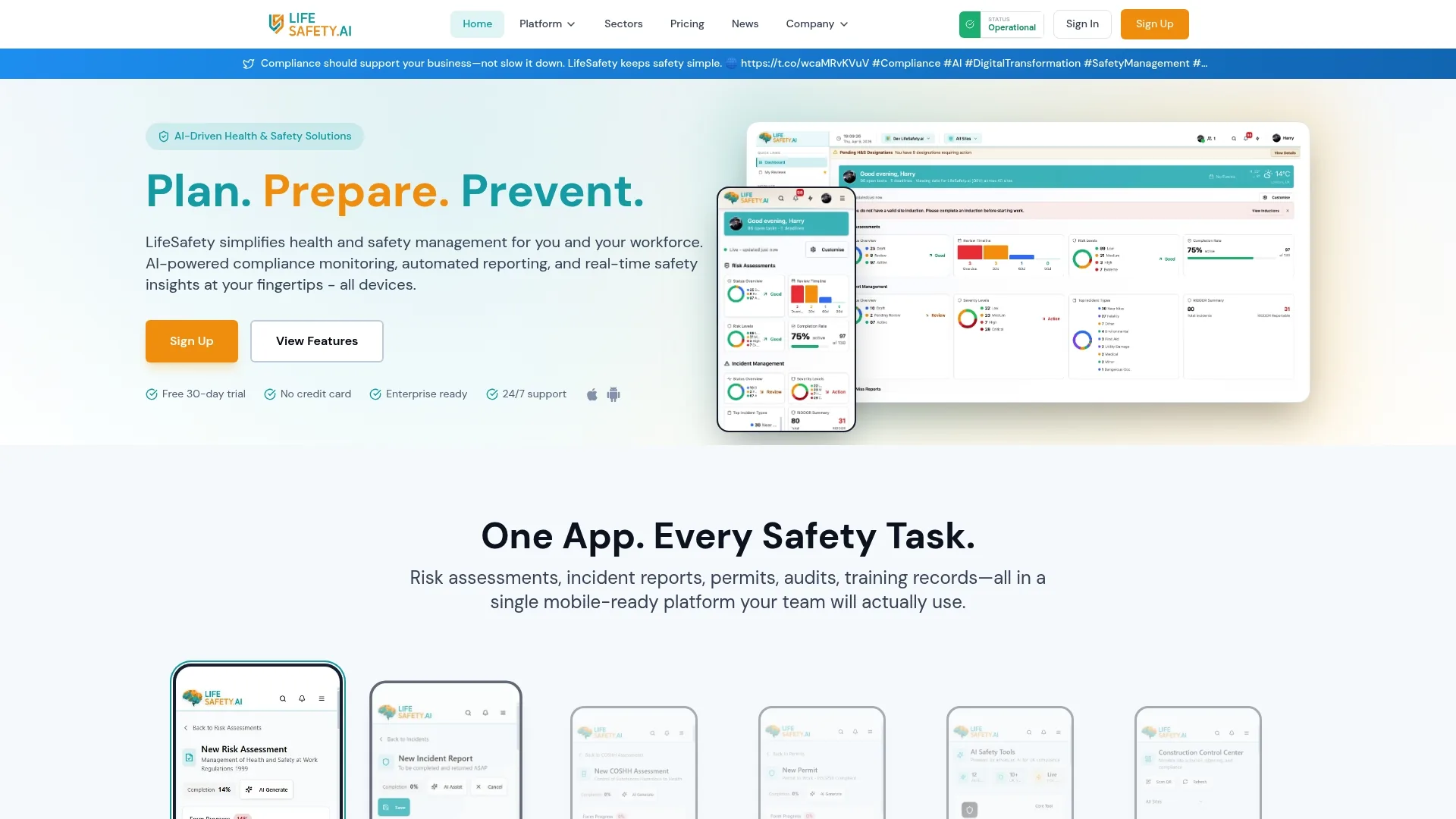
LifeSafety.ai
At a Glance
LifeSafety.ai reports being trusted by over 500 UK companies. That claim signals practical adoption among construction, manufacturing, and facilities teams. The platform centres on reducing paperwork through automated incident reports and mobile logging. Its modules are presented as deployable within minutes to speed initial roll-out.
Core Features
LifeSafety.ai bundles AI-powered compliance monitoring with risk assessments that suggest hazards and schedule automatic reviews. The system includes automated incident reporting with RIDDOR integration, digital permits with real-time status tracking, and COSHH handling that extracts data from SDS sheets. Mobile apps capture field reports and audits while customizable dashboards deliver real-time safety insights and remote access to cloud-hosted records via an open API.
Key Differentiator
The platform’s single notable strength is its focus on UK regulatory detail. LifeSafety.ai aligns workflows to RIDDOR, CDM 2015, and UK fire safety standards, and the vendor advertises attention to GDPR and ISO 27001 controls alongside UK-hosted data. That local regulatory alignment makes the product easier to map to regulator expectations and internal audit processes.
Pros
The product groups core H&S tasks into modules for incident reporting, risk assessments, permits, audits, COSHH, and training. Automation cuts manual paperwork, and produces standardised reports that speed regulatory submissions and internal investigations. Mobile apps let supervisors and site teams log events and photos on site, preserving timestamps and location data. Cloud hosting and API connectivity suit larger organisations that must integrate safety records with HR, estates, or ERP systems.
Cons
- The platform is comprehensive and may require dedicated training and configuration time before teams use all modules effectively.
Who It’s For
This product fits UK-based safety managers, compliance officers, and operations leaders working in construction, manufacturing, or facilities management. It suits organisations that need regulated reporting and want to centralise permits, audits, and COSHH records. Very small teams with only basic checklists will likely find the breadth of features more than they require.
Unique Value Proposition
LifeSafety.ai makes regulatory mapping explicit so your audit trail matches UK rules without heavy manual editing. That clarity reduces the time safety teams spend reformatting reports for RIDDOR and CDM 2015, and it simplifies handovers to compliance teams. For multi-site operators the result is fewer ad hoc spreadsheets and a single source of truth for safety records.
Real World Use Case
A UK construction firm uses the mobile apps to record near misses, attach photos, and trigger an automated RIDDOR-ready report for the safety manager. Supervisors use digital permits to control high-risk tasks and track status across multiple sites. The COSHH module extracts chemical data from SDS sheets so on-site supervisors get relevant controls without manual data entry.
Pricing
Pricing is not listed in the product data and is described as not applicable for this informational summary. Larger customers can expect enterprise-grade licensing and implementation effort given the platform’s modular scope and integration capabilities. Small organisations should request a scoped quote that reflects the modules they intend to activate.
Website: https://lifesafety.ai
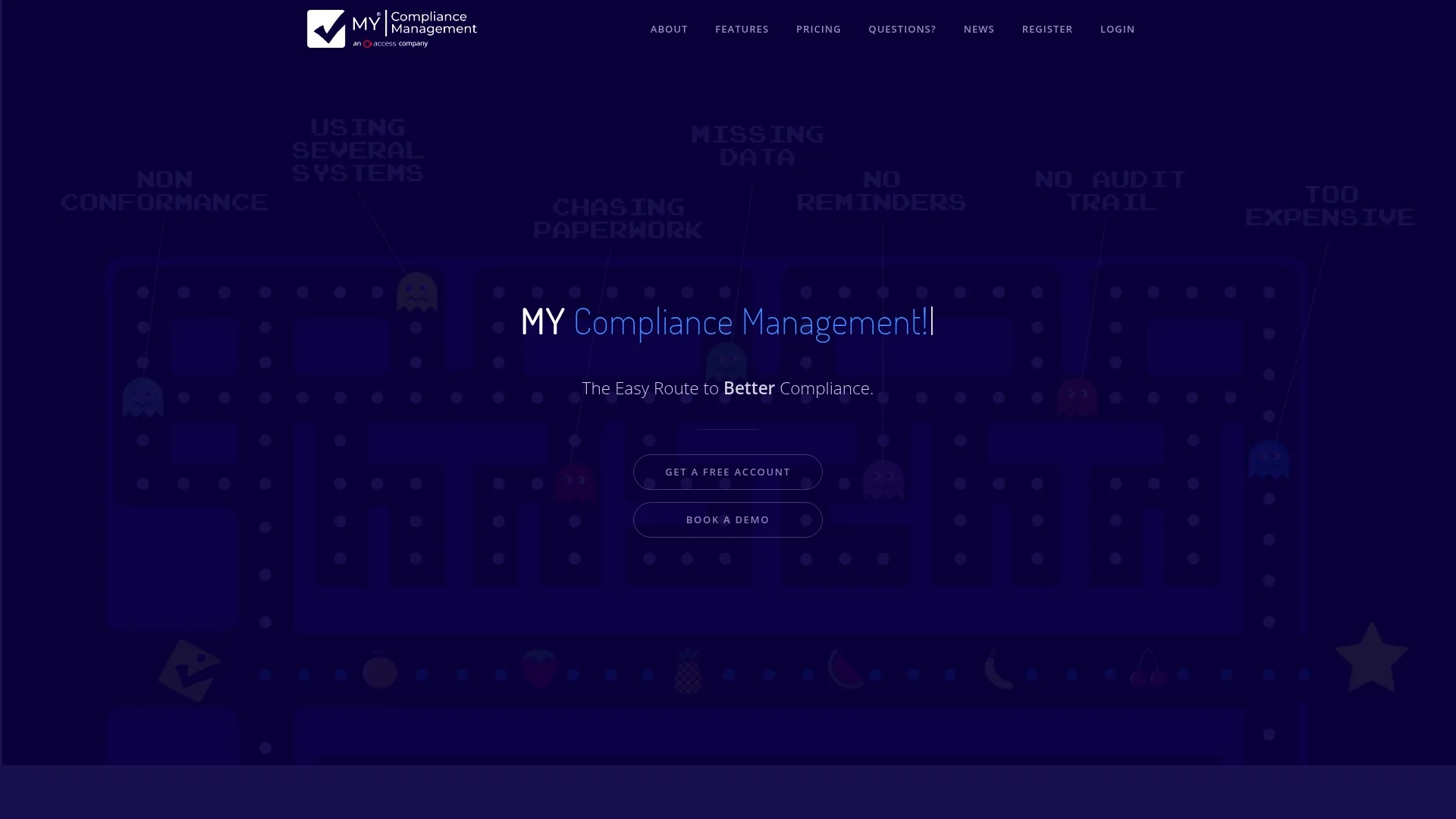
MY Compliance Management
At a Glance
A free base plan is available with optional paid modules and add ons. The system centralises legal updates, incident reporting, audits, training, asset and contractor records in a cloud based portal. Mobile apps support on site reporting and offline auditing for remote sites.
Core Features
Legal updates and a legal register builder sit alongside incident, accident, and near misses reporting so records remain searchable and auditable. You can create risk assessments, schedule audits and use checklists with mobile sign off and offline support. Training integrates with The Access Group library, and the platform covers permit to work, document control, asset and contractor management.
Key Differentiator
The vendor positions the product as an all in one platform that ties legal content directly into operational workflows and records. Mobile apps let site teams capture issues and sync when they return online. Modular options allow teams to enable only the functions they need for environmental, quality, and HSE obligations.
Pros
The system bundles a broad feature set including incident logging, audits, risk registers, and training management to reduce administrative overhead. Users report the interface is easy to adopt and video guides help speed staff training. Role based controls, detailed tracking, and dedicated support give safety teams visibility and a clear escalation path.
Cons
- Complex setup that can require substantive configuration and data migration before the system delivers full value.
- The system’s breadth can overwhelm teams without structured training and ongoing administration.
- Pricing for extra modules and higher tiers is not fully visible publicly, so total cost may be unclear.
- Some users request deeper customisation in reporting and enterprise integrations.
When It May Not Fit
Organisations with minimal compliance needs will find the platform larger than necessary. Teams seeking a plug and play tool with zero setup may struggle because initial configuration and migration take effort. A persistent internet connection is required for full functionality, although offline mobile reporting is available for field work.
Who It’s For
Compliance professionals managing HSE, environmental, or quality standards will find the platform relevant. It suits small to large organisations in manufacturing, construction, and healthcare with multiple compliance streams. Project teams needing mobile audits and a central legal register get clear benefits from this approach.
Real World Use Case
A manufacturing firm runs scheduled audits, logs incidents, and tracks training within the same system. Site teams use mobile apps to record near misses and sync changes when connection returns. Compliance officers pull legal register reports and assign corrective actions from one dashboard.
Pricing
A free plan covers core modules and basic user access, with optional paid modules and higher tier plans available. The vendor does not list all module prices publicly, so speak to sales for a tailored quotation.
Website: https://my-compliance.co.uk
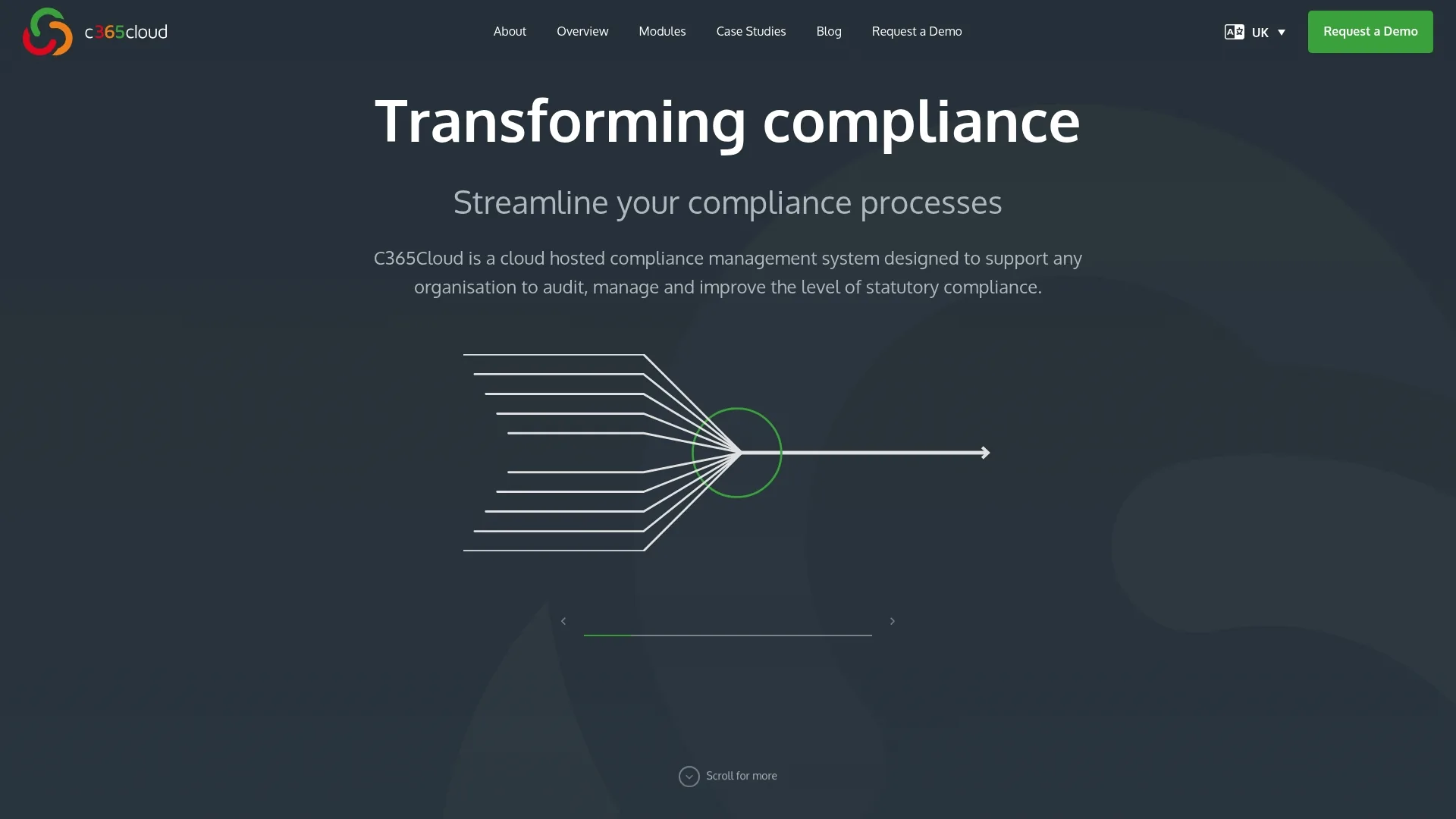
C365Cloud
At a Glance
Over 100 modules focus the product on large-scale statutory compliance across property estates. The suite groups health and safety, PPM, and audit workflows for multi-site organisations. That scope makes the product a specialist choice for public sector and facilities managers.
Core Features
C365Cloud delivers a modular compliance system with dashboards and alerts that show enterprise wide status across properties. It extracts actions from survey reports and automates follow up so teams spend less time on manual transcription. The system supports mobile enabled data transfer and offers modular pricing tied to selected modules and property count, and it integrates with NHS SBS, G-Cloud, and Northern Housing Consortium frameworks.
Key Differentiator
The platform’s breadth of modules sets it apart. The vendor positions C365Cloud as a catalogue of more than 100 discrete compliance modules built for enterprise and public sector use. That design favours organisations that need dedicated workflows per discipline rather than a single flat checklist.
Pros
The modular catalogue gives covered teams direct, role specific tools for fire, asbestos, legionella, and PPM tasks, which reduces the need for many separate point solutions. Automation of action extraction from survey reports reduces manual data entry and improves traceability of remedial tasks. Cloud hosted deployment and mobile enabled capture let field teams submit inspections from site and let managers view consolidated status centrally.
Cons
- Some organisations report the breadth of modules creates a steep learning curve without focused training.
- Pricing depends on chosen modules and property count, which can make costs hard to compare for smaller estates.
- Implementation for complex tenant structures may need dedicated configuration resources and time.
When It May Not Fit
If you manage a single site or a very small portfolio, the modular scope may be excessive and costly. Organisations with minimal IT support may find initial configuration taxing. If you need rapid, out of the box simplicity for one discipline, a leaner tool will be a better match.
Who It’s For
Large property owners, NHS trusts, local authorities, and facilities management companies with multiple sites will see the most value. The product suits teams that must track statutory duties across dozens or hundreds of locations. Organisations that require framework compliance with NHS SBS or G-Cloud will find the platform aligned to procurement needs.
Real World Use Case
A local authority uses C365Cloud to schedule safety inspections across its estate and capture results on mobile devices. Inspection reports auto generate actions and assign remedial tasks to contractors. Managers gain a single view of outstanding risk and completion rates across properties.
Pricing
Pricing is modular and based on the number of compliance modules and properties licensed. Exact costs are not listed publicly and must be requested from the vendor.
Website: https://c365cloud.co.uk
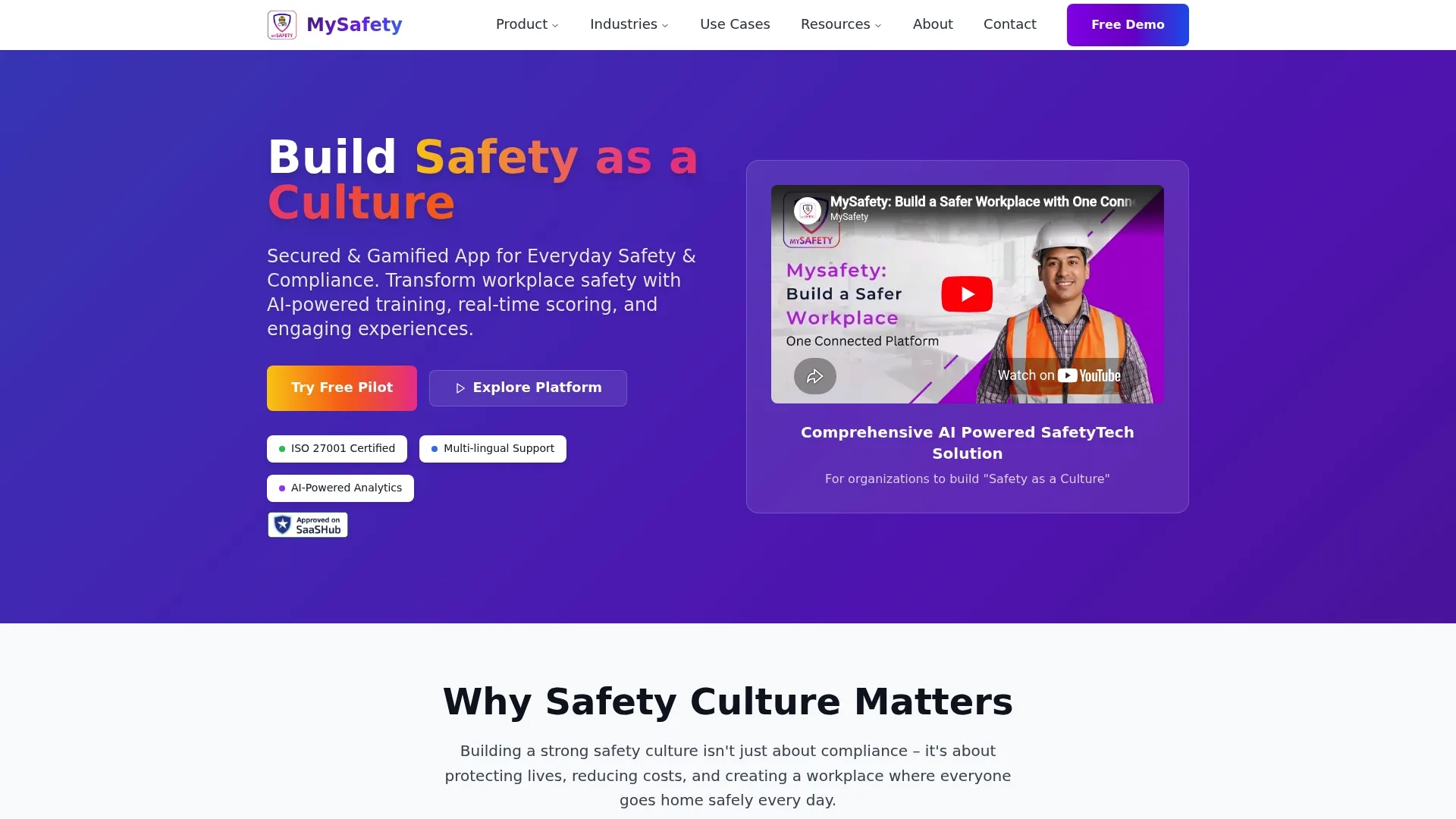
MySafety
At a Glance
MySafety’s marketing materials state it holds ISO 27001 certification and is GDPR compliant. The vendor lists a starting price of $799/month for the base package that covers up to 1,000 users and one site. The product emphasises gamified training, AI safety analytics, and mobile-first hazard reporting with photo capture.
Core Features
The platform combines AI safety analytics with gamified microlearning and multilingual mobile access, and it logs hazards with photos and real-time alerts. Compliance tracking keeps audit-ready evidence in a single dashboard while the content library includes OSHA-aligned short videos. The vendor also offers integrations with construction and ERP tools to feed site data into the safety workflows.
Key Differentiator
MySafety focuses on pairing proactive AI pattern detection with workforce engagement. The combination of short-form training, mobile reporting, and behavioural prompts is designed to improve participation rather than only document compliance after the event. For organisations with dispersed teams, that can help increase reporting frequency and visibility of unsafe conditions.
Pros
The platform is mobile-first and easy to position for frontline use, especially where rapid hazard capture matters. Gamified learning may improve completion rates for refresher content and toolbox-style training. AI analytics can help identify recurring trends, and multilingual access supports diverse workforces common in construction and logistics.
Cons
- Pricing is published in dollars, which may be less convenient for UK buyers budgeting in pounds and comparing local suppliers.
- Training content references OSHA alignment, so UK organisations may need to verify suitability against HSE expectations, RIDDOR, and CDM 2015 duties.
- The base package is limited to one site, which may reduce value for multi-site operators unless higher tiers are purchased.
- Some organisations may prefer deeper UK-specific compliance workflows over engagement-led features.
When It May Not Fit
If your priority is formal UK statutory reporting, permit control, or detailed contractor compliance, MySafety may require additional validation before adoption. It is less obviously tailored to UK legal frameworks than platforms built around RIDDOR, COSHH, and CDM 2015 from the outset. Buyers in heavily regulated estates or principal contractor environments may want stronger native compliance depth.
Who It’s For
MySafety suits organisations that want to improve workforce engagement, hazard reporting, and training participation through a mobile-first experience. It may appeal to international teams, contractors, and businesses with a strong behavioural safety focus. Companies with younger or highly distributed workforces may find the user experience particularly attractive.
Real World Use Case
A contractor uses MySafety to push short training modules to operatives before shifts and encourage hazard reporting through mobile prompts. Supervisors receive alerts when repeated unsafe access issues are logged in one area. Management reviews trend dashboards to target interventions and refresher briefings.
Pricing
The vendor lists pricing from $799 per month for the base package covering up to 1,000 users and one site. Additional sites, features, or enterprise requirements are likely to increase cost, so UK buyers should request a full quotation and confirm implementation scope.
Website: https://mysafetyapp.io
viact.ai
At a Glance
viact.ai is positioned as an AI video analytics platform for construction, industrial, and infrastructure environments. Rather than centring on traditional compliance recordkeeping, it focuses on live site visibility through camera-based monitoring. That makes it a different category of alternative for teams prioritising proactive hazard detection.
Core Features
The platform uses computer vision to detect unsafe behaviours, PPE non-compliance, restricted zone breaches, plant proximity risks, and other site events from live video feeds. Alerts can be triggered in real time to supervisors, helping teams intervene before incidents escalate. Dashboards support trend analysis across projects and can be used to monitor recurring exposure patterns.
Key Differentiator
viact.ai stands out through its emphasis on real-time visual monitoring. For high-risk construction and industrial operations, that can provide a more proactive layer of control than systems that only record incidents after they occur. It is particularly relevant where principal contractors want stronger oversight of dynamic work areas.
Pros
Real-time alerts can support earlier intervention on unsafe acts and conditions, especially on large or fast-moving sites. Video analytics may improve visibility where supervisors cannot physically observe every workface. The platform can also help generate evidence for behavioural trends, contractor performance reviews, and targeted safety campaigns.
Cons
- It is not a full replacement for broader compliance management, incident reporting, permit control, or COSHH administration.
- Camera infrastructure, connectivity, and privacy governance can increase implementation complexity and cost.
- UK buyers must carefully assess GDPR implications, worker consultation, and proportionality of surveillance measures.
- False positives or alert fatigue may reduce operational value if rules are not tuned properly.
When It May Not Fit
If your organisation mainly needs digital forms, audits, risk assessments, and statutory reporting, viact.ai may be too specialised. Smaller businesses without fixed camera coverage or dedicated site technology support may struggle to justify the setup. It is best viewed as a proactive monitoring layer rather than a complete HSE management system.
Who It’s For
Large construction projects, infrastructure schemes, logistics yards, and industrial facilities are the strongest fit. It suits organisations that already have established compliance processes but want to strengthen live risk detection. Principal contractors and major asset owners may find it useful where high-risk interfaces need continuous oversight.
Real World Use Case
A major construction project uses viact.ai to monitor exclusion zones around lifting operations and identify repeated PPE breaches near access points. Supervisors receive alerts and intervene before unsafe behaviours become incidents. Safety leaders then review trend data to adjust inductions, signage, and supervision plans.
Pricing
Public pricing is not typically listed and is likely to depend on camera count, analytics modules, project scale, and support requirements. Buyers should request a tailored proposal and confirm data hosting, retention, and privacy controls for UK deployment.
Website: https://viact.ai
Protex AI
At a Glance
Protex AI is another safety technology platform focused on computer vision and workplace risk detection. It is commonly discussed in manufacturing, warehousing, and logistics settings where vehicle movements, pedestrian interfaces, and repetitive unsafe behaviours create ongoing exposure. Like viact.ai, it is more focused on prevention through observation than on full compliance administration.
Core Features
The platform analyses existing CCTV or camera feeds to identify unsafe interactions such as forklift and pedestrian conflicts, unauthorised access, and PPE issues. It provides dashboards, event review, and trend reporting to help safety teams understand where controls are failing. Some deployments also use the system to support coaching and operational improvement programmes.
Key Differentiator
Protex AI’s differentiator is its focus on extracting safety value from visual data already present in many workplaces. For organisations with mature CCTV coverage, that can reduce the need for entirely new reporting behaviours from frontline staff. It is especially relevant where vehicle safety and movement management are major concerns.
Pros
The platform can help identify leading indicators that are often missed in manual inspections, particularly in busy operational environments. It may support stronger evidence for targeted interventions, layout changes, and traffic management reviews. For warehousing and manufacturing, this can complement existing HSE systems by highlighting where risk is actually occurring.
Cons
- It does not replace core modules such as incident management, risk assessments, permits, training records, or document control.
- Successful deployment depends on camera quality, site layout, and governance over privacy and data use.
- UK organisations must ensure worker consultation and GDPR compliance are addressed before implementation.
- Costs can be difficult to benchmark without a detailed scoping exercise.
When It May Not Fit
Protex AI may not fit organisations looking for a straightforward compliance platform to manage audits, legal registers, and statutory records. It is also less suitable where camera coverage is limited or where the main risks are administrative rather than operational. Smaller firms may find the investment disproportionate unless they have a clear high-risk use case.
Who It’s For
Warehousing, manufacturing, logistics, and industrial operators with significant vehicle and pedestrian interaction are the strongest fit. It suits businesses that already run established compliance systems and want an additional layer of proactive risk intelligence. Multi-site operators may also benefit from cross-site trend visibility.
Real World Use Case
A distribution centre uses Protex AI to identify repeated near-miss patterns between forklifts and pedestrians at loading bay crossings. The safety team uses event data to redesign walkways, improve barriers, and reinforce traffic rules during shift briefings. Over time, management tracks whether interventions reduce unsafe interactions.
Pricing
Pricing is generally provided on request and will depend on site count, camera coverage, analytics scope, and support arrangements. Buyers should confirm whether deployment uses existing infrastructure and what data processing controls apply in the UK context.
Website: https://protex.ai
Comparison of alternatives
The right alternative depends on whether your priority is formal compliance management, live operational visibility, or workforce engagement. UK duty holders should assess each option against practical requirements such as RIDDOR reporting, CDM 2015 coordination, contractor control, permit to work, COSHH, and evidence retention for HSE scrutiny. For higher-risk sectors, the best outcome often comes from selecting a platform that supports both day-to-day operational use and defensible audit trails.
| Platform | Best For | Strengths | Watchouts | Pricing Visibility |
|---|---|---|---|---|
| LifeSafety.ai | UK construction, manufacturing, facilities | Strong UK compliance alignment, RIDDOR workflows, permits, COSHH, mobile reporting | May require training and configuration to unlock full value | Quote required |
| MY Compliance Management | Broad HSE, quality, environmental compliance | Free base plan, legal register, audits, training, contractor records | Setup complexity and unclear total module cost | Partial public pricing |
| C365Cloud | Large estates, public sector, FM | 100+ modules, statutory property compliance, framework alignment | Can be excessive for smaller portfolios | Quote required |
| MySafety | Engagement-led safety programmes | Gamified training, mobile hazard reporting, AI analytics | Less UK-specific compliance depth, dollar pricing | Starting price published |
| viact.ai | Live construction and industrial monitoring | Real-time video analytics, proactive alerts, unsafe behaviour detection | Not a full compliance suite, privacy and infrastructure considerations | Quote required |
| Protex AI | Warehousing, logistics, manufacturing | CCTV-based risk detection, vehicle-pedestrian insights, trend analysis | Needs strong governance and does not replace core HSE administration | Quote required |
How to choose the right platform
Before committing to any supplier, define whether your main objective is compliance administration, operational control, or predictive risk reduction. In UK construction and manufacturing, software should support not only internal efficiency but also defensible evidence for regulators, clients, and insurers. A practical selection process should test how well each platform handles real workflows rather than polished demo scenarios.
- Map your legal duties to software requirements, including RIDDOR, COSHH, PUWER, LOLER, fire safety, and CDM 2015 where relevant.
- Check frontline usability for supervisors, contractors, and operatives using mobile devices in live site conditions.
- Review reporting outputs to confirm incident records, investigations, and corrective actions are audit-ready.
- Assess implementation effort including migration, configuration, training, and integration with HR or estates systems.
- Confirm data governance covering UK hosting, GDPR, retention periods, and access controls.
- Validate total cost by checking module pricing, user limits, site limits, and support charges.
Final thoughts
For UK organisations that need a broad compliance platform with clear alignment to local regulation, LifeSafety.ai stands out because it directly addresses the practical realities of RIDDOR reporting, permit control, COSHH management, and multi-site audit evidence. MY Compliance Management is a credible broad alternative where legal registers and modular expansion matter. C365Cloud is strongest for large estates and statutory property compliance, while MySafety, viact.ai, and Protex AI are more specialised around engagement or proactive monitoring.
The best choice is the one that fits your operating model, not the one with the longest feature list. In regulated environments, software should reduce administrative burden while strengthening control, visibility, and evidence quality. If your business needs a platform built around UK health and safety practice rather than generic global workflows, that should carry significant weight in the decision.
Related Articles

Workplace safety software for construction teams
Discover top-rated workplace safety software for construction. Improve incident tracking, compliance, and safety analytics with Lifesafety!

LifeguardAI.co.uk alternatives for UK safety managers: 2026
Discover top lifeguardai.co.uk alternatives for UK safety managers. Explore Lifesafety and other innovative solutions to enhance workplace safety.

Site audit recommendations: your 2026 action plan
Unlock the power of effective site audit recommendations. Follow our 2026 action plan to boost indexing, enhance content quality, and improve site speed.