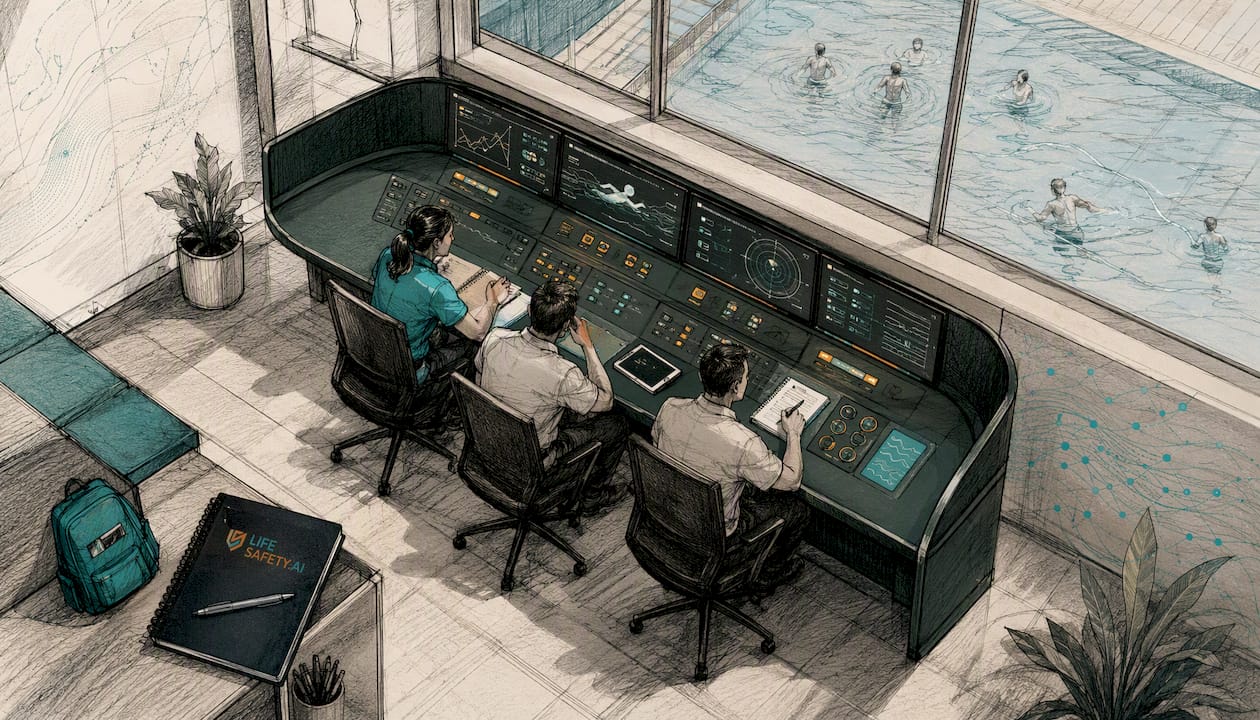
LifeguardAI.co.uk alternatives for UK safety managers: 2026
LifeguardAI.co.uk alternatives for UK safety managers: 2026
A practical comparison of AI-enabled safety platforms and monitoring approaches for UK duty holders, safety managers, leisure operators, and multi-site organisations balancing operational risk, GDPR, and statutory compliance.
TL;DR
- Lifesafety offers UK workplaces a comprehensive, GDPR-compliant AI safety management platform for multi-site incident reporting and risk assessment.
- Alternative solutions include aquatic computer vision systems for pools, wearable sensors for lone workers, and edge cameras for low-bandwidth or sensitive environments.
- Conduct thorough pilots, verify data policies, and involve legal teams to ensure effective, compliant AI safety deployment.
For UK health and safety managers seeking AI-driven safety management, Lifesafety is our recommended enterprise-ready alternative to lifeguardai.co.uk. It covers the full breadth of workplace safety workflows, from incident reporting and risk assessments to PPE detection via computer vision, all within a GDPR-compliant, RIDDOR-ready cloud platform.
The shortlist of alternative categories to consider:
- Lifesafety (recommended): enterprise H&S SaaS with AI automation, compliance workflows, and multi-sector deployment
- Aquatic CV specialists: camera-based drowning-detection systems for pool operators
- Wearable-first systems: body-worn sensors for lone workers and remote sites
- Edge-compute camera devices: local-processing cameras for low-bandwidth or sensitive environments
- Hybrid safety-management platforms: centralised incident and compliance hubs that combine multiple detection inputs
If your primary concern is RIDDOR compliance, DPIA readiness, and multi-site H&S management, Lifesafety is the strongest fit. If you operate commercial pools and need dedicated aquatic monitoring, an aquatic CV specialist may complement your platform. The Royal Life Saving Society’s guidance remains the statutory reference for lifeguard staffing regardless of which AI layer you deploy.
Table of Contents
- What are the best lifeguardai.co.uk alternatives for UK workplaces?
- How we selected and compared these alternatives
- What does Lifesafety offer UK safety managers?
- What do aquatic CV specialists offer, and where do they fall short?
- Which other approaches suit non-pool or mixed-site environments?
- How do you choose between Lifesafety and other alternatives?
- What ROI should UK operators expect from AI safety platforms?
- UK compliance checklist for AI-driven monitoring
- Key takeaways
- AI safety tools in UK workplaces: a practitioner’s view
- Start your Lifesafety pilot: a practical next step for UK teams
- Useful sources and further reading
What are the best lifeguardai.co.uk alternatives for UK workplaces?
| Capability | Lifesafety | Aquatic CV specialists | Wearable-first systems | Edge-compute cameras | Hybrid platforms |
|---|---|---|---|---|---|
| Primary function / detection | AI H&S management, PPE CV, incident workflows | Continuous pool-zone monitoring, underwater analytics | Body-worn sensors, lone-worker alerts | Local video processing, pool/site monitoring | Multi-input incident and compliance hub |
| Real-time alerting | Mobile app, dashboard, automated alerts | Smartwatch, workstation, audio/visual | Wearable vibration, SMS, app | On-site siren, SMS, app | Dashboard, SMS, email |
| GDPR & UK compliance | Audit trails, RIDDOR-ready reports, DPIA-friendly | Data-retention controls, GDPR-aligned archiving | Data minimisation by design | Local processing limits cloud data transfer | Varies by vendor |
| Deployment model | Cloud SaaS, fast onboarding, 30-day trial | On-site camera integration, remote setup | Device provisioning, cloud sync | On-premise edge device, minimal cloud | Cloud or hybrid |
| Integration options | CCTV, HR, rostering, LMS, BMS | Existing pool CCTV, pool management systems | HR, lone-worker platforms | Existing CCTV, BMS | API-dependent |
| Sectors supported | Construction, manufacturing, healthcare, facilities, education, logistics, retail | Aquatic facilities, leisure centres | Construction, utilities, lone-worker environments | Pools, low-bandwidth sites | Multi-sector |
| Pricing shape | Per-user/per-site subscription, tiered | Site licence or per-pool subscription | Per-device or per-user | Hardware + software licence | Subscription, tiered |
| Pilot availability | 30-day free trial | Typically single-pool pilot | Device trial period | Pilot installation | Demo or trial |
| Support & training | Onsite, remote, SLA-backed | Remote setup, ongoing support | Remote, onboarding guides | Professional installation included | Varies |
Best-for summary:
- Lifesafety: multi-site UK workplaces needing end-to-end H&S compliance, RIDDOR reporting, and AI automation across sectors
- Aquatic CV specialists: leisure operators whose primary risk is pool drowning and who want dedicated zone analytics
- Wearable-first systems: construction firms or utilities managing lone workers in remote or high-risk environments
- Edge-compute cameras: sites with poor connectivity or strict data-residency requirements
- Hybrid platforms: organisations consolidating multiple safety data streams into one compliance record
Pro Tip: Pairing Lifesafety with a specialist aquatic CV layer for pool areas gives you RIDDOR-ready incident logging across the whole estate while keeping pool-specific detection granular.
How we selected and compared these alternatives
We evaluated alternatives against eight criteria: compliance readiness (GDPR, DPIA support, RIDDOR-aligned logging), detection method and environment fit, alerting latency, integration capability with existing CCTV and workplace systems, deployment speed, pilot and trial terms, support and training quality, and commercial model transparency.
Evidence sources included UK public-sector procurement guidance, available vendor datasheets, operator case-study materials, and industry guidance from bodies such as the Royal Life Saving Society. We also reviewed UK local authority procurement appendices that reference GDPR and data-retention requirements for AI monitoring in public aquatic facilities.
- Compliance readiness: does the vendor provide a DPIA template or support? Are data-retention policies documented?
- Detection method: does it match your environment such as pool, construction site, warehouse, or mixed-use estate?
- Alerting latency: what is the claimed alert-to-response time, and is it verified in a pilot environment?
- Integration: does it connect to your existing CCTV, HR, or rostering systems without full hardware replacement?
- Deployment speed: can you be live within days, or does it require weeks of installation?
- Pilot terms: is a scoped, time-limited pilot available with defined acceptance criteria?
- Support and SLA: is onsite or remote support included, and what are the response-time commitments?
- Commercial model: is pricing transparent, and are there per-user, per-site, or tiered options?
Pro Tip: Vendor performance claims vary significantly by environment. Always run a scoped in-situ pilot before committing to a full deployment, and measure alert-to-response time as your primary acceptance metric.

What does Lifesafety offer UK safety managers?
Lifesafety covers the full H&S management cycle in a single cloud platform. Core modules include incident reporting, risk assessments, safety audits, digital permit workflows, COSHH compliance, training and competency tracking, and PPE detection using computer vision. Dashboards and a mobile app give site managers real-time visibility without being desk-bound.
On compliance, Lifesafety is built for the UK regulatory environment. Audit trails are RIDDOR-ready, supporting incident management workflows that map directly to statutory reporting requirements. The platform’s secure cloud architecture and access controls are designed to support DPIA documentation, and data-retention policies are configurable to match your organisation’s requirements.
Deployment is fast. The cloud SaaS model means most modules are live within minutes of provisioning, and a 30-day free trial lets procurement teams validate fit before committing. Subscription pricing is available per-user or per-site, with tiered options for larger estates. Sectors served include construction, manufacturing, healthcare, facilities management, education, logistics, and retail.
Lifesafety has been recognised for its AI impact, having won the AI Impact Award at the MK STEM Awards 2025, reflecting practical deployment in UK workplaces.
Pro Tip: Lifesafety integrates with existing CCTV and rostering systems, so you avoid a full hardware replacement. Map your current system endpoints before the trial to accelerate integration testing.
What do aquatic CV specialists offer, and where do they fall short?
Aquatic computer-vision systems continuously monitor pool zones, analysing swimmer movement above and below the water surface to detect distress signals. Alerts typically reach lifeguards via smartwatch, workstation dashboard, or audio-visual alarms. Patron-flow analytics give operators data on zone occupancy and peak-load patterns.
The strengths are clear for pool-focused operators. Dedicated underwater analytics and zone-based monitoring address the specific challenge of detecting a submerged, unresponsive swimmer before a lifeguard’s eye catches it. Many systems integrate with existing pool CCTV, avoiding rip-and-replace capital expenditure.
The limitations matter for broader H&S teams:
- Sector fit is narrow: most aquatic CV systems are designed exclusively for pool environments and do not extend to construction, manufacturing, or multi-use facilities.
- GDPR handling varies: check data-retention policies, footage access controls, and whether the vendor provides a DPIA template.
- Incident logging formats differ: confirm that alert and incident records can be exported in a format compatible with RIDDOR reporting.
- Staffing rules remain unchanged: AI-assisted monitoring supports lifeguards; it does not replace them, and statutory staffing levels set by Royal Life Saving Society guidance still apply.
For procurement, pilot in a single pool lane first, verify DPIA support, and clarify data-retention periods before signing a site licence.
Which other approaches suit non-pool or mixed-site environments?
| Approach | Best for | Key trade-off |
|---|---|---|
| Wearable-first systems | Lone workers, remote construction, utilities | Strong personal alerting; limited environmental monitoring |
| Edge-compute cameras | Low-bandwidth sites, data-residency requirements | Reduces cloud data transfer; higher upfront hardware cost |
| Safety-management platforms (e.g. Lifesafety) | Multi-site estates, broad H&S compliance | Widest workflow coverage; pool-specific CV requires a specialist add-on |
| Aquatic CV specialists | Leisure centres, public pools | Deep pool analytics; limited beyond aquatic environments |
When to combine: a safety-management platform paired with an aquatic CV layer covers both pool-specific detection and estate-wide compliance in one audit trail. For construction sites, pairing Lifesafety with wearable lone-worker devices gives you both environmental monitoring and personal-alert coverage, with all incident records centralised for investigation and trend analysis.
This mixed-model approach is often the most practical route for organisations operating across construction, facilities management, education, and public leisure. It aligns well with the needs of duty holders managing different risk profiles under one governance framework.
How do you choose between Lifesafety and other alternatives?
The right choice depends on your risk environment, compliance obligations, and operating model. If you need a platform that supports incident reporting, risk assessments, audits, permits, training, and AI-assisted detection across multiple sites, Lifesafety is the most complete option in this shortlist.
If your estate is dominated by aquatic risk, a specialist pool-monitoring system may be justified as the primary detection layer. However, most UK organisations still need a central compliance system to manage investigations, corrective actions, and reporting obligations beyond the pool environment.
For safety managers in construction and manufacturing, the decision should also consider how the technology supports duties under HSWA, Management of Health and Safety at Work Regulations, CDM 2015, and, where relevant, the Building Safety Act. AI tools should strengthen supervision, evidence capture, and control verification rather than create a false sense of automation.
- Define the primary risk: drowning detection, lone-worker protection, PPE compliance, permit control, or enterprise incident management.
- Map legal requirements: identify where RIDDOR, GDPR, HSE guidance, CDM 2015, or sector-specific standards apply.
- Assess current infrastructure: review CCTV estate, connectivity, HR systems, rostering, and mobile device readiness.
- Run a pilot: test in a live environment with agreed success criteria, including alert latency, false positives, and user adoption.
- Validate governance: involve legal, IT, data protection, and operational stakeholders before scaling.
Practical rule: choose the platform that best supports your whole safety process, not just the first alert. Detection without investigation, action tracking, and defensible records rarely satisfies UK compliance expectations.
What ROI should UK operators expect from AI safety platforms?
Return on investment should be measured across both hard savings and risk reduction outcomes. In practice, UK operators often see value from faster incident reporting, reduced administrative burden, improved audit readiness, and earlier intervention on unsafe conditions.
For multi-site employers, the strongest ROI usually comes from standardising workflows. A single platform for incidents, risk assessments, inspections, and corrective actions reduces duplication and improves visibility for senior leadership. It also supports more consistent evidence if the HSE, insurers, clients, or principal contractors request records.
In pool environments, ROI may also include reduced response time to swimmer distress, better zone coverage, and improved operational insight into occupancy patterns. In construction and manufacturing, ROI is more likely to come from fewer missed inspections, stronger permit discipline, better PPE compliance, and improved close-out of corrective actions.
- Administrative efficiency: less manual paperwork and fewer disconnected spreadsheets
- Faster response: earlier alerts and quicker escalation to supervisors or responders
- Better compliance posture: stronger audit trails for RIDDOR, internal investigations, and client assurance
- Improved trend analysis: clearer visibility of recurring hazards, locations, and behaviours
- Reduced operational friction: easier coordination across sites, contractors, and departments
The most credible ROI case is built during a pilot. Track baseline metrics before deployment, then compare reporting speed, action close-out time, inspection completion rates, and incident quality after implementation.
UK compliance checklist for AI-driven monitoring
AI-enabled monitoring can support safer operations, but UK employers must still demonstrate lawful, proportionate, and well-governed use. The checklist below is a practical starting point for safety, legal, and data protection teams.
- Complete a DPIA: assess privacy risks, lawful basis, retention, access controls, and proportionality.
- Confirm RIDDOR workflow readiness: ensure incidents can be investigated, classified, and exported into statutory reporting processes.
- Review worker consultation requirements: engage employees, safety representatives, and unions where appropriate.
- Check signage and transparency: make monitoring visible and understandable to workers, visitors, and service users.
- Validate retention settings: define how long footage, alerts, and incident records are stored and why.
- Restrict access: apply role-based permissions and maintain audit logs for footage and case records.
- Test accuracy in context: verify performance in your actual environment, not just vendor demonstrations.
- Document human oversight: AI should support competent decision-making, not replace it.
- Align with CDM 2015 where relevant: ensure monitoring supports planning, coordination, and control of construction risk.
- Consider Building Safety Act implications: for higher-risk buildings and accountable persons, maintain robust evidence of safety management decisions.
What good governance looks like
A compliant deployment usually combines clear purpose limitation, documented oversight, staff training, technical controls, and periodic review. If a vendor cannot clearly explain how data is processed, retained, secured, and exported, treat that as a procurement risk.
Key takeaways
- Lifesafety is the strongest alternative for UK organisations needing broad, enterprise-grade health and safety management with AI support.
- Aquatic CV specialists are valuable for pool-specific risk but usually need to sit alongside a wider compliance platform.
- Wearables and edge devices solve specific operational problems and can be effective in hybrid deployments.
- Pilots matter: test alert speed, false positives, usability, and integration before scaling.
- Compliance cannot be bolted on later: involve legal, IT, and data protection teams from the start.
- Human oversight remains essential: AI should strengthen supervision and evidence, not replace competent safety management.
AI safety tools in UK workplaces: a practitioner’s view
In practice, the most successful AI safety deployments are not the most technically complex. They are the ones that fit existing operations, are accepted by frontline teams, and produce records that stand up to scrutiny. Safety managers should be wary of solutions that promise autonomous protection without clearly showing how incidents are reviewed, escalated, and closed out.
For construction and manufacturing, the operational reality is that risk changes quickly. Temporary works, contractor interfaces, plant movement, hot works, confined spaces, and permit-controlled tasks all require dynamic oversight. A platform that combines reporting, action tracking, and evidence capture is often more valuable than a narrow detection tool on its own.
For leisure and public-sector operators, the challenge is often balancing public safety, staffing, and privacy. Here, AI can add a useful layer of vigilance, but governance must be especially robust. Public confidence depends on transparency, proportionality, and clear accountability.
The best results usually come when organisations treat AI as part of a broader safety management system: one that includes competent people, clear procedures, regular review, and leadership commitment.
Start your Lifesafety pilot: a practical next step for UK teams
If you are comparing lifeguardai.co.uk alternatives and need a platform that supports broader UK health and safety management, a structured Lifesafety pilot is the most practical next step. Start with one site or one business unit, define measurable outcomes, and involve operational users from day one.
- Select a pilot scope: choose one site, one department, or one risk area such as incident reporting, inspections, or PPE monitoring.
- Set acceptance criteria: define what success looks like, including reporting speed, user adoption, action close-out, and integration performance.
- Prepare governance documents: complete DPIA inputs, confirm retention settings, and align internal approvals.
- Map integrations: identify CCTV, HR, rostering, LMS, or BMS connections needed for the trial.
- Train users: ensure supervisors, managers, and administrators understand workflows and escalation paths.
- Review outcomes after 30 days: compare baseline and pilot metrics, then decide whether to scale.
Explore Lifesafety modules for incident reporting, risk assessments, and broader incident management workflows to assess fit for your organisation.
Useful sources and further reading
- HSE guidance on RIDDOR
- HSE guidance on CDM 2015
- Building Safety Act 2022
- ICO UK GDPR guidance and resources
- Local authority procurement appendices referencing AI monitoring controls
- Lifesafety platform overview
Final recommendation: if your organisation needs a defensible, scalable, and UK-focused safety platform rather than a single-purpose monitoring tool, Lifesafety is the most practical alternative in this category. Where specialist detection is needed, add it as a layer, but keep your compliance record centralised.
Related Articles

Workplace safety software for construction teams
Discover top-rated workplace safety software for construction. Improve incident tracking, compliance, and safety analytics with Lifesafety!
Site audit recommendations: your 2026 action plan
Unlock the power of effective site audit recommendations. Follow our 2026 action plan to boost indexing, enhance content quality, and improve site speed.
Role of automation in high-risk industries
Discover the role of automation in high-risk industries. Learn how it enhances safety, reduces hazards, and improves compliance in workplaces.