
Health & safety compliance: practical UK workplace guide
Health & safety compliance: practical UK workplace guide
TL;DR:
- Compliance in UK workplaces requires practical risk management, not just paperwork.
- Effective safety depends on real controls, worker consultation, and continuous review.
- Digital tools help ensure consistent, proactive safety actions in construction and manufacturing.
Workplace safety compliance is far more consequential than a filing cabinet full of forms. Fatal injuries in construction reached 35 in 2024/25, representing roughly 28% of all 124 workplace fatalities nationally, with manufacturing contributing a further significant share. These figures are not administrative footnotes; they represent real people and real failures. For compliance officers and decision-makers in construction and manufacturing, understanding what the law genuinely demands and how to deliver it efficiently is both a legal obligation and a moral one. This guide breaks down the framework, the methodologies, and the practical tools that make compliance work in the real world.
Table of Contents
- What is health and safety compliance?
- Key methodologies for achieving compliance
- Compliance in construction: CDM, documents, and edge cases
- Compliance in manufacturing: machinery, hazardous substances, and equipment
- Why compliance means more than paperwork: a fresh perspective
- Empower compliance with smart solutions
- Frequently asked questions
Key Takeaways
| Point | Details |
|---|---|
| Legal duties matter | Understanding and fulfilling your duties under HSWA and CDM is fundamental to workplace safety. |
| Focus on real risks | Prioritise dynamic controls and effective risk assessment over simply producing documents. |
| Sector-specific rules | Construction and manufacturing each have unique compliance triggers, documents, and inspection standards. |
| Active involvement needed | Compliance only works when workers are engaged and responsible roles are filled early. |
What is health and safety compliance?
At its core, health and safety compliance in the UK means fulfilling legal duties under the Health and Safety at Work etc. Act 1974 (HSWA) and its supporting regulations to secure the health, safety, and welfare of employees and anyone else affected by work activities. It is not simply about producing documents. It is about demonstrating, in practice, that you have identified risks and taken reasonable steps to control them.
The legal standard the HSWA sets is ‘so far as is reasonably practicable’, often abbreviated as SFRP. This principle, also known as ALARP (As Low As Reasonably Practicable), requires employers to weigh the level of risk against the cost, time, and effort of reducing it. If a risk is significant and control is achievable, you must act. This is not a vague suggestion; it is an enforceable duty.
‘Failure to comply can cost lives and millions annually in fines and lost time.’
Responsibility falls primarily on employers, but also on the self-employed, those in control of premises, designers, and principal contractors. Anyone with authority over how work is done carries a share of the duty. Key obligations under HSWA include:
- Providing a safe place of work and safe systems of work
- Ensuring plant and equipment are maintained to a safe standard
- Providing information, instruction, supervision, and training
- Consulting with workers on health and safety matters
- Preparing and keeping current a written safety policy for organisations with five or more employees
For a practical starting point, our construction site safety tips and compliance management features offer sector-specific guidance tailored to UK workplaces.
Key methodologies for achieving compliance
Understanding the law sets the foundation, but effective compliance is built through hands-on processes. The most important of these is the risk assessment. A risk assessment must be ‘suitable and sufficient’, which means it identifies real hazards, evaluates who is at risk, determines appropriate controls, and is reviewed regularly. It is not a template exercise. An assessment that does not reflect actual site conditions or task specifics will not satisfy HSE inspectors and, more critically, will not protect your workers.
The hierarchy of controls is the structured approach professionals use to select those controls. In order of priority:
- Eliminate the hazard entirely where possible
- Substitute the hazardous process or material with a safer alternative
- Engineer physical controls such as guarding, ventilation, or edge protection
- Administer safe systems of work, permits, and training programmes
- PPE as the last line of defence, never the primary strategy
Moving down this list means accepting weaker protection. Your goal is always to eliminate or substitute first.
Worker consultation is another non-negotiable element. Employees doing the work often identify hazards that management overlooks. Engaging them formally, through safety representatives or direct consultation, strengthens your assessment quality and your legal position. Competence matters equally. Ensuring that personnel have relevant qualifications, inductions, and refresher training is part of demonstrating diligence.
Record-keeping is essential but must remain purposeful. Maintain current risk assessments, training records, inspection logs, and incident reports. These are evidence of your control system, not the control system itself.
Pro Tip
HSE inspectors look for evidence of active risk control, not document volume. If your paperwork describes controls that do not exist in practice, you are exposed. A common myth is that producing more documents means safer operations. It does not. Focus your risk assessment process on real controls, and use documentation to evidence what you have already done. Explore risk management tips to support this approach.
Compliance in construction: CDM, documents, and edge cases
Construction operates under one of the most detailed regulatory frameworks in UK industry. The Construction (Design and Management) Regulations 2015, known as CDM 2015, assign specific duties to three key parties: the client, the principal designer, and the principal contractor. The client must appoint these roles in writing before significant design work begins. The principal designer manages pre-construction health and safety. The principal contractor manages the construction phase plan and site safety.

One of the most misunderstood distinctions in CDM is whether a project is notifiable. Here is a simple comparison:
| Project type | Threshold | Additional requirements |
|---|---|---|
| Standard CDM project | Any construction work | Risk assessment, construction phase plan, H&S file |
| Notifiable CDM project | Over 30 working days with 20+ workers simultaneously, or over 500 person-days | F10 notification to HSE, principal designer and principal contractor mandatory |
Essential documents for any construction project include the CDM construction phase plan, pre-construction health and safety information, risk assessments, and the health and safety file. For notifiable projects, the F10 notification must be submitted to the HSE before work begins.
Edge cases deserve particular attention. Demolition and shared multi-employer sites carry heightened risk because responsibility is often split across parties. Method statements for demolition must be precise, and clear agreements on who controls what must be documented from day one.
‘In construction, compliance failures can escalate quickly to criminal proceedings.’
Common pitfalls to avoid include:
- Appointing principal designer or principal contractor too late in the project lifecycle
- Failing to submit the F10 for notifiable works before breaking ground
- Insufficient high-risk controls for work at height or near excavations
- Poor information-sharing between contractors on shared sites
Construction compliance also increasingly intersects with wider building governance. On higher-risk buildings, dutyholders should ensure their CDM arrangements align with the expectations of the Building Safety Act, especially where design changes, competence, and the golden thread of information are concerned. While CDM and the Building Safety Act are distinct regimes, poor coordination between them can create avoidable gaps in accountability and evidence.
Managing these responsibilities across complex projects is where digital tools add real value. Our managing CDM responsibilities module is built specifically for this challenge.
Compliance in manufacturing: machinery, hazardous substances, and equipment
Manufacturing brings a distinct set of regulatory demands, shaped by the nature of the equipment and substances involved. Four regulations define most of the compliance landscape:
- Supply of Machinery Regulations: govern the safe design and placing on the market of machinery
- PUWER (Provision and Use of Work Equipment Regulations): require equipment to be suitable, maintained, and used by trained personnel
- LOLER (Lifting Operations and Lifting Equipment Regulations): cover safe planning, supervision, and inspection of lifting operations
- COSHH (Control of Substances Hazardous to Health): require assessment and control of exposure to hazardous substances
The manufacturing compliance picture is also shaped by sobering data. The non-fatal injury rate in manufacturing stands at 1,936 per 100,000 workers in 2024/25, above the all-industry average. This underlines that even without fatalities, poor controls carry a significant human and financial cost.
| Compliance risk | Common cause | Regulatory reference |
|---|---|---|
| Machinery entanglement | Missing or bypassed guarding | PUWER, Supply of Machinery |
| Chemical exposure | Inadequate COSHH assessment | COSHH Regulations |
| Lifting equipment failure | Missed inspection intervals | LOLER |
| Noise-induced hearing loss | No reduction at source | Noise at Work Regulations |
Consider a practical example. A manufacturer introduces a new cleaning solvent without completing a COSHH assessment. Workers develop respiratory symptoms within weeks. The resulting HSE investigation finds no assessment, no controls, and no training records. The regulatory response includes improvement notices, potential prosecution, and reputational damage, all of which were entirely preventable.
Pro Tip
Going beyond minimum legal requirements is both a competitive and ethical advantage. Using noise emission declarations, investing in engineering controls such as acoustic enclosures, and auditing equipment risks regularly signals genuine diligence to inspectors and insurers alike.
Why compliance means more than paperwork: a fresh perspective
We have worked alongside compliance teams in construction and manufacturing long enough to recognise a pattern. Organisations that struggle most with safety outcomes are often those generating the most paperwork. This sounds counter-intuitive, but it reflects a real dynamic: document production can become a substitute for action rather than evidence of it.
The most effective compliance officers we encounter invest their energy in dynamic risk control. They prioritise edge protection before work at height begins, lock-off systems before maintenance, and clear task briefings before any hot work. They integrate principal designer input early, challenge weak RAMS, and make sure supervisors understand not just what the paperwork says, but what good control looks like on the ground.
This is where many organisations go wrong. They treat compliance as a retrospective exercise, something to tidy up after the work has already started. In reality, compliance is strongest when it is embedded into planning, procurement, supervision, and review. A construction phase plan that sits unread in a site cabin is not compliance. A COSHH assessment that never changes when substances change is not compliance. A training matrix that shows attendance but not competence is not compliance.
There is also a cultural dimension. Workers quickly recognise whether management is serious about safety or simply serious about appearing compliant. If near misses are ignored, if supervisors bypass controls to save time, or if consultation is tokenistic, the paperwork loses credibility. By contrast, when leaders act on findings, stop unsafe work, and review controls after change, compliance becomes visible and trusted.
For UK dutyholders, this practical mindset is especially important where legal duties overlap. A serious incident may trigger internal investigation, insurer scrutiny, contractual consequences, and in some cases RIDDOR reporting obligations. On complex projects, it may also raise questions under CDM 2015 and, for relevant developments, the Building Safety Act. Good compliance systems therefore need to be live, connected, and capable of showing who knew what, when, and what action followed.
The fresh perspective is simple: documents should follow control, not replace it. When that principle is understood, compliance becomes more efficient, more defensible, and far more effective at preventing harm.
Empower compliance with smart solutions
Modern compliance management is increasingly digital for a reason. Construction and manufacturing environments change quickly, and static folders do not keep pace with changing risks, shifting responsibilities, or inspection demands. Smart systems help organisations standardise what matters while still adapting to site-specific realities.
Used properly, digital tools can support compliance by helping teams to:
- Assign dutyholders and track accountability across projects and sites
- Produce and update risk assessments, method statements, and construction phase plans consistently
- Schedule inspections, maintenance, and statutory examinations before deadlines are missed
- Capture incidents, near misses, and corrective actions in real time
- Maintain an auditable record for HSE inspections, client reviews, and internal assurance
For construction teams, this means better control of CDM appointments, F10 notifications, permit systems, and contractor coordination. For manufacturers, it means stronger oversight of PUWER inspections, COSHH registers, LOLER examinations, and training records. In both sectors, the value lies in consistency and visibility.
LifeSafety.ai is designed to support that practical approach. Our platform helps teams move beyond fragmented spreadsheets and disconnected templates by bringing core compliance activities into one structured workflow. Whether you need support with risk assessments, CDM compliance, COSHH assessments, or safety audits, the aim is the same: make compliance easier to manage and harder to overlook.
That matters because the best compliance systems do not just help you pass an inspection. They help you prevent the incident that would have triggered it.
Frequently asked questions
What does health and safety compliance mean in the UK?
It means meeting legal duties under the Health and Safety at Work etc. Act 1974 and supporting regulations by identifying hazards, controlling risks, consulting workers, and maintaining safe systems of work. It is about practical control measures, not just documentation.
Is paperwork enough to show compliance?
No. Paperwork is important as evidence, but HSE inspectors will expect to see that the controls described in your documents are actually in place and working. A well-written assessment with poor implementation will not provide a strong defence.
When is a construction project notifiable under CDM 2015?
A project is generally notifiable when it is expected to last more than 30 working days with more than 20 workers on site at the same time, or exceed 500 person-days. In those cases, an F10 notification must be submitted to HSE.
What are the main compliance regulations in manufacturing?
The main ones commonly encountered are PUWER, LOLER, COSHH, the Supply of Machinery Regulations, and the Noise at Work Regulations. Which apply will depend on the equipment, substances, and processes used in your operation.
How does RIDDOR fit into compliance?
RIDDOR is a reporting duty for certain work-related injuries, diseases, dangerous occurrences, and fatalities. It is one part of compliance, not the whole of it. If an incident is reportable, you must submit it correctly and on time, but you must also investigate causes and improve controls.
Why is worker consultation so important?
Because workers often understand the real risks of a task better than anyone else. Consultation improves the quality of risk assessments, helps identify practical controls, and supports legal compliance under UK health and safety law.
Can digital tools improve compliance performance?
Yes. Digital systems can improve consistency, visibility, and accountability by helping teams manage assessments, inspections, training, incidents, and statutory deadlines in one place. They are especially useful in fast-moving construction and manufacturing environments.
Related Articles
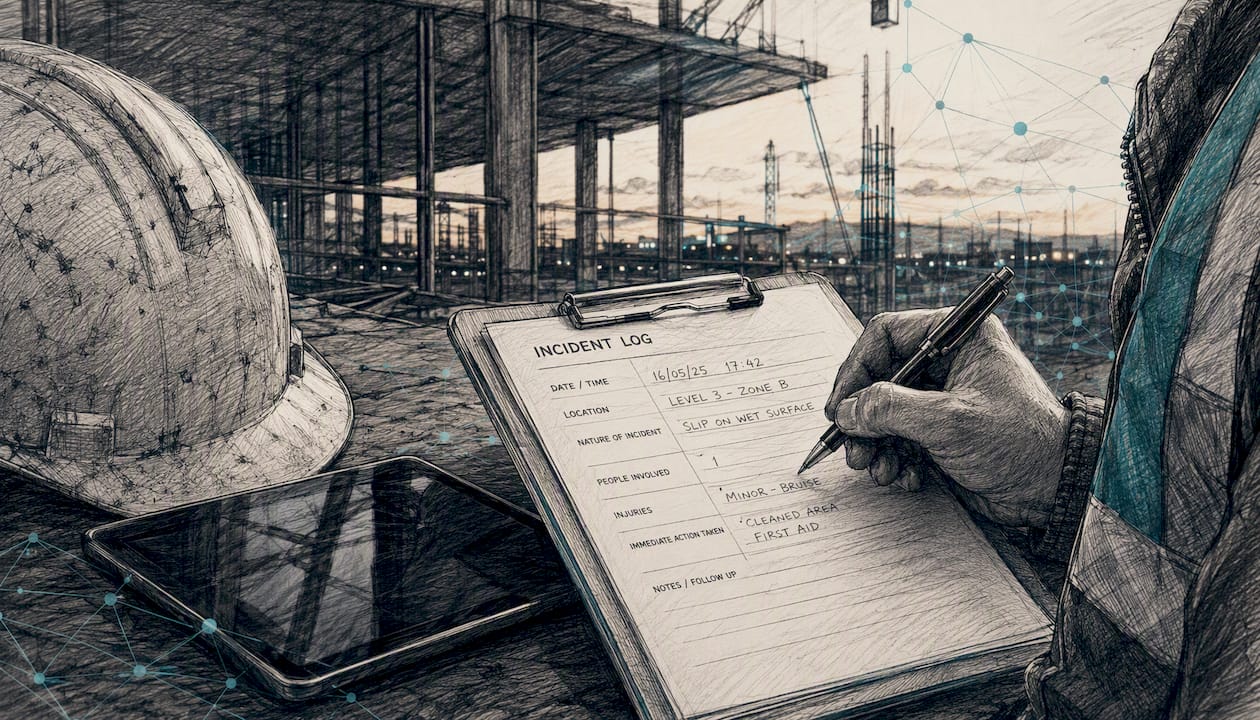
Incident reporting software comparison: UK guide 2026
Discover our incident reporting software comparison for UK workplaces. Explore top options like Lifesafety, SafetyCulture, and more.

Safety management solutions for construction: UK SMS guide
Discover essential safety management solutions for construction sites in the UK. Learn how a mobile-first SMS can enhance safety and compliance.

Best health and safety software for UK workplaces: 2026 guide
Discover the best health and safety software for UK workplaces in 2026. Explore top picks like Lifesafety for compliance and efficiency!